
Peter Navarro torn apart by economic experts for missing the obvious
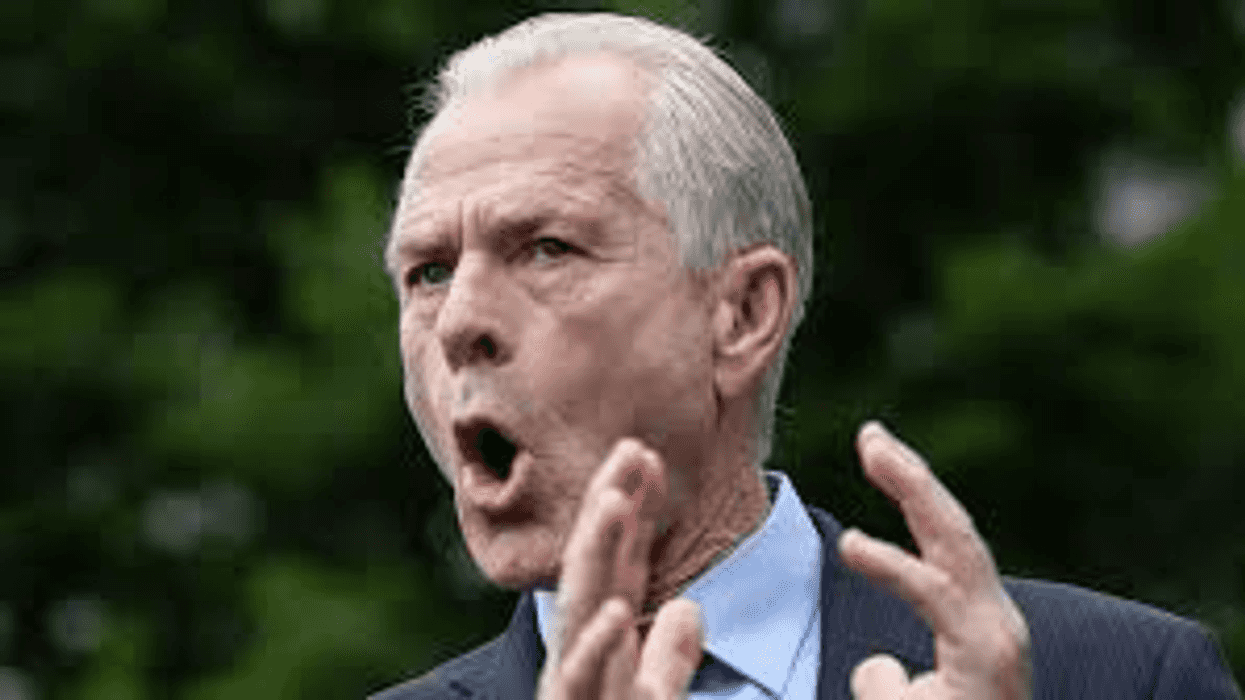

One of President Donald Trump’s top economic advisers is being torn apart by experts for a recent editorial that stated the obvious as if it was profound and new.
“The White House is releasing a report documenting the great transshipment scam: a shadow network of more than 40 countries enabling sleight of hand to deceive American consumers and customs officials about where their exports really originate,” Peter Navarro, Senior Counselor to the President for Trade and Manufacturing, wrote for The New York Times on Thursday. “In the process, these countries are robbing the United States of tens of billions of dollars a year and countless manufacturing jobs.”
Navarro added, “Transshipment is driven by tariff arbitrage: When a product from one country faces a higher U.S. tariff than it would from another country, the difference becomes a profit opportunity, and even a business model in its own right.”
Navarro, who has previously been criticized for originating tariffs that have harmed the economy and supporting Trump’s Big Lie about the 2020 presidential election, was roundly ridiculed online for stating the obvious.
“In which crack Trade Cop Peter Navarro discovers what actual trade experts have explained for ages: high & variable tariff regimes - like his boss's - encourage duty evasion (legal & illegal), limiting the tariffs' efficacy,” Scott Lincicome, Vice President of the libertarian think tank The Cato Institute, posted on X. “Great job, Officer!”
University of California — San Diego economics professor Kyle Handley was similarly scathing on X.
“I think it's important to distinguish between: (a) tax avoidance (what Navarro is describing here) and is usually a legal transformation of a set of parts into a recliner using VNM labor, and (b) tax evasion, which is transshipping through 3rd countries and relabeling the origin, typically illegal,” Handley wrote. “And (c) none of this reallocation of shipments and operations would happen if the US was still trading on an MFN tariff basis with most partners.”
On a separate social media platform, Bluesky, journalist David Beard slammed The New York Times for depicting Navarro’s views as credible by platforming him without context.
“I guess fully identifying Peter Navarro would have been a dealbreaker for NYT Opinion in publishing him,” Beard wrote. “NYT readers never learned that the author had served a four-month sentence at the Federal Correctional Institution in Miami on two counts of contempt of Congress.”
Also on Bluesky, Tufts University political scientist Daniel Drezner tried to be measured but still ultimately criticized Navarro.
“Credit where due: Peter Navarro is correct to observe that U.S. tariffs and other restrictions have triggered a massive spike in transshipment,” Drezner wrote. “But I’m dubious that any U.S. Policy will stop it. And the new trade deals he references don’t cover a lot of markets.”
These criticisms are reminiscent of another occasion when Navarro wrote an editorial attempting to defend economic positions perceived as self-evidently absurd. In March, Navarro argued that Trump’s invasion of Iran would lower rather than raise gas prices.
“The burden of the Iran Terror Premium rarely appears as a dramatic economic shock,” Navarro wrote for The Wall Street Journal. “Instead, it behaves more like a parasite on the global economy — quietly draining growth through slightly higher fuel prices, transportation costs and production expenses year after year.”
Continuing that “the economic logic is clear,” Navarro concluded that “if the geopolitical risk associated with Iran were reduced, oil prices would fall toward their underlying supply-and-demand equilibrium. Market evidence suggests equilibrium prices could be well below $60 a barrel.”
Dr. Robert J. Shapiro, a top economic adviser to Presidents Bill Clinton and Barack Obama, characterized Navarro's position as ignorant.
“What Navarro said kind of demonstrates that he doesn't understand markets,” Shapiro explained to AlterNet. “If there is a risk premium, it's only for oil futures — not for the price of oil today, not for the spot price — and then only when the risk is imminent. And so the price of oil rose by $10 in the runup to the launch of the war on Iran, which shows that it's not baked in.” Laughing, Shapiro added “these are commodities that are bought, sold and traded every day. They have a daily price, and the price reflects the supply and demand that day — and indeed in the morning, midday, afternoon or evening. So the notion that it was already built in is also clearly refuted by the fact that the price rose."
Responding to earlier criticism of Navarro, White House spokesman Kush Desai told AlterNet at the time that "these ‘economists’ are idiots. Peter Navarro is an American Patriot whose loyalty to the President and the American people is unimpeachable.”

