
White House 'knife fight' as Trump commerce officials battle national security aides
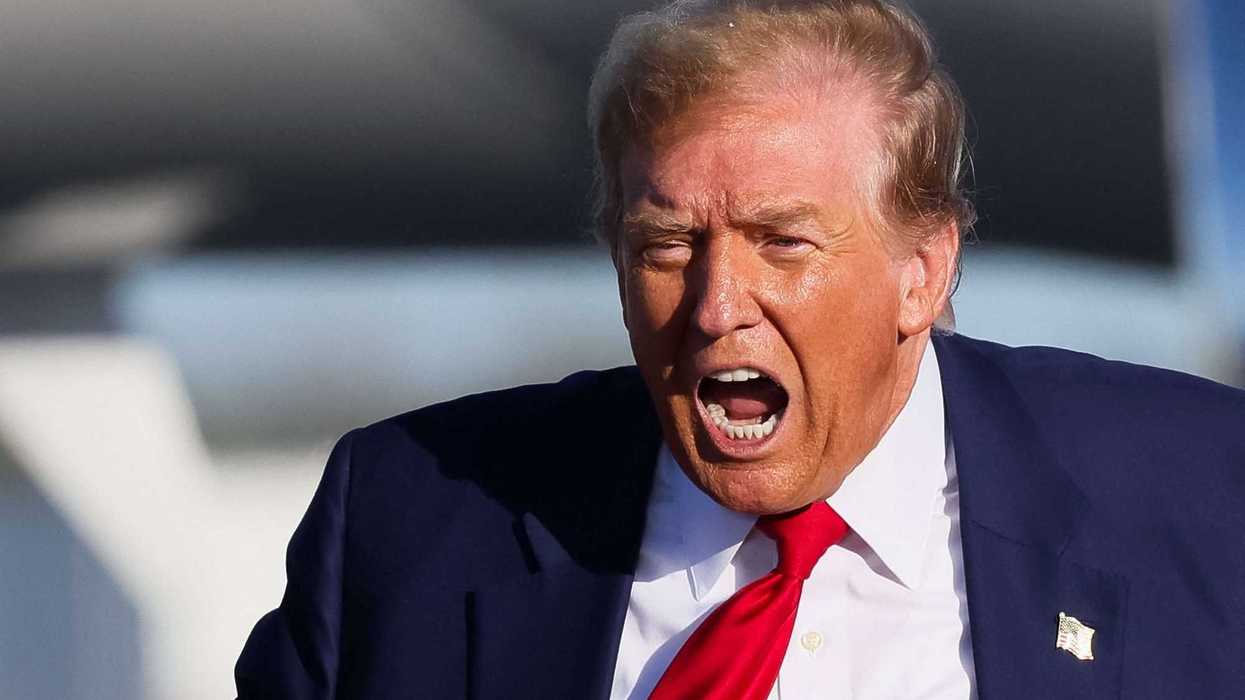
President-elect Donald Trump at a campaign event in Freeland, Michigan, on 1 May. Photograph

President-elect Donald Trump at a campaign event in Freeland, Michigan, on 1 May. Photograph
According to new reporting from the Washington Post, officials in President Donald Trump’s administration are “sharply split” over who will control the future of artificial intelligence security. The fight pits officials from the Commerce Department against those in national security in what one insider described as a “knife fight” over which part of the government will oversee a technology that could have profound implications for the economy and global security. The argument ramped up recently as the White House grapples with emerging cybersecurity threats posed by new advanced AI models that will make hackers more dangerous than ever.
“Anthropic has said that Mythos is more effective than humans at identifying vulnerabilities in software, creating widespread concerns that it could be used by even inexperienced hackers to launch complex attacks on the energy grid, banks, and government agencies,” reports the Post. “In response, the White House’s Office of the National Cyber Director has proposed developing a large center within the Office of the Director of National Intelligence that would evaluate new AI models, giving intelligence agencies a significant new role in AI policy. That proposal has faced opposition from officials at the Commerce Department, which houses an AI center that evaluates new models through voluntary agreements with companies.”
Insiders claim that the department's AI center has built a robust evaluation system and hired AI experts with advanced degrees that some in the agency argue make it better positioned for the testing role. Intelligence communities, however, also have no shortage of cybersecurity and AI experts.
“The Commerce Department, especially under Trump, has promoted a pro-industry strategy as it tries to ensure that American companies can remain competitive with China,” the Post explained. “Shifting testing to the intelligence community could lead to greater scrutiny of the cybersecurity and national security risks that new AI models present.”
But a recent announcement that Anthropic’s latest model is superhumanly capable of analyzing and identifying vulnerabilities in security systems has forced some in the administration to reconsider the president’s hands-off approach to regulation.
Under the Biden Administration, “AI developers were required to notify the government when they were building advanced models and share the results of testing with the Commerce Department. The Biden administration also established the U.S. AI Safety Institute under Commerce’s National Institute of Standards and Technology, which was part of a global network of centers that evaluated AI models. In a sign of the new administration’s shift, Trump removed 'Safety' from the agency’s name and rebranded it as the Center for AI Standards and Innovation.”
But now, administration officials are sharply divided on whether AI models should be evaluated on a voluntary or mandatory basis. “That’s very much a topic of active debate,” said one source. “There are those in the intelligence community and elsewhere who think it needs to be mandatory.”
“They’re re-litigating everything on AI policy right now,” said Chris McGuire, senior fellow at the Council on Foreign Relations and former senior technology policy aide at the National Security Council. “Is it voluntary testing? Mandatory testing? Voluntary limits on what’s released? Mandatory limits?”
A recent sign of tension came when the Commerce Department’s Center for AI Standards and Innovation on Friday took down a website that announced the agency’s new partnerships to test models from Microsoft, Google, and xAI. According to the Post, the website was removed due to sentiments within the White House.
Last week, National Economic Council Director Kevin Hassett suggested that new models could be tested much the way the Food and Drug Administration tests new drugs, “so that they’re released to the wild after they’ve been proven safe.” This idea “sparked widespread consternation in the industry, as they appeared to be a complete reversal of the Trump administration’s approach to AI regulation.”
Within hours of Hassett’s statement, White House Chief of Staff Susie Wiles — who, the Post notes, “seldom posts on social media" — said on X that the president was not “in the business of picking winners and losers.”

