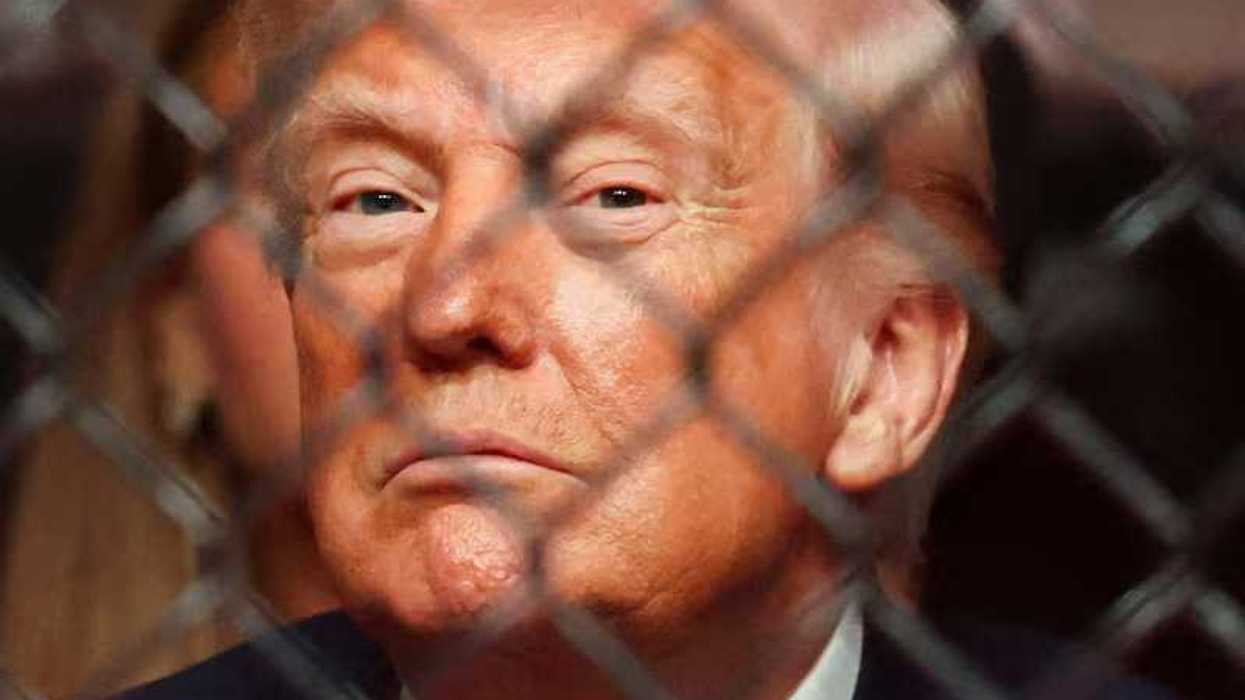
A new tell-all book has spilled no shortage of tea regarding the secrets of the Trump administration, and one figure who has spent time in President Donald Trump’s orbit is amplifying one point in particular: the real reason Trump ran for president in 2020 and 2024.
On Tuesday, lawyer George Conway — formerly married to first-term Trump advisor Kellyanne Conway and considered for roles in the administration, now a Democratic candidate — retweeted a New Yorker review of Maggie Haberman and Jonathan Swan’s Regime Change, which digs up the current administration’s dirt and contends that ‘Trump ran in 2024 for one reason above all: ‘This was about staying out of prison.’”
“Yep,” agreed Conway. “And Maggie first reported in early 2019 that Trump may have run in 2020 for that very same reason.” He attached a March 2019 post by Haberman, in which she revealed that “some POTUS advisers” believed a key “impetus for running again” was because “he could have criminal exposure in [Southern District of New York] cases if he isn’t in office.”
The SDNY court presided over a number of cases against Trump, resulting in 34 felony counts of falsifying business records to conceal payments made to pornstar Stormy Daniels. Other indictments were dismissed after Trump won the 2024 election. As the New Yorker review put it, “After facing multiple indictments, impeachments, and criminal convictions, Trump returned to the White House with retribution on his mind: ‘I was the hunted, and now I’m the hunter.’”
The review also cited another eyebrow-raising anecdote from the book relating to the New York trials, writing, “We have always known that Trump is a narcissist. Haberman and Swan make clear the dimensions of his malady. During Trump’s hush-money trial in New York, he heard that a mentally ill man, ‘consumed by conspiracy theories,’ had set himself on fire in a park nearby. ‘Do you think he did it for me?’ Trump asked an aide. ‘Let’s tell people that he did it for me.’”
Beyond Trump’s criminal motivations for office, the book shared an often embarrassing behind-the-scenes look at the president’s day-to-day life and policy disasters. As the New Yorker notes, for example, “Trump employs one aide, a young woman named Natalie Harp, who follows him around all day, handing him glowing notices from the right-wing press and occasionally sending him adoring letters (‘You are all that matters to me’).” In another instance, “When Elon Musk, who raised some three hundred million dollars for Trump’s campaign, blasts the President over his budget bill, Trump says, ‘They always leave me. They always do this. This is why I can’t have friends.’ He instructs Harp to bring him his phone. He calls Musk twice. Both times, he gets voice mail.”
Sometimes, the stories revealed in the book came with dire consequences. As the New Yorker explains, “Haberman and Swan provide an astonishing account of Benjamin Netanyahu’s trip, just four months ago, to the White House Situation Room, where the Israeli Prime Minister persuaded Trump to join him in what would be a strategic catastrophe. Netanyahu assured the President that together they would topple the Iranian regime and end its nuclear ambitions before it ever had a chance to close the Strait of Hormuz. Haberman and Swan report that the Secretary of State called Netanyahu’s plan ‘bull—-.’ The C.I.A. director declared it ‘farcical.’ Whatever. ‘Sounds good to me, the President told the Prime Minister.’ Everyone fell into line. Well played, sir!”