
Wall Street 'bust' can't be ruled out amid tumultuous economy
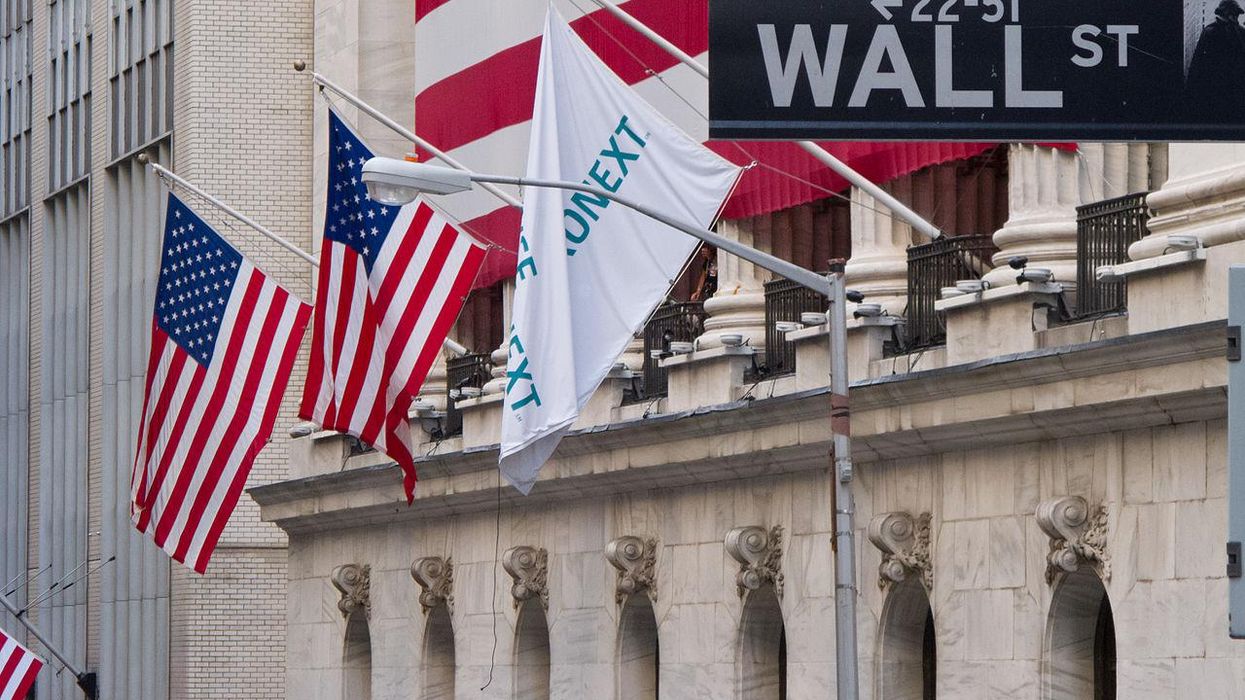
The New York Stock Exchange in 2012, Wikimedia Commons
The New York Stock Exchange in 2012, Wikimedia Commons

The New York Stock Exchange in 2012, Wikimedia Commons
Financial columnist and CNBC co-anchor is urging folks to put the brakes on before they invest in artificial intelligence.
Speaking to MS NOW's "Morning Joe," Andrew Ross Sorkin discussed his book "1929," which explores the first stock market crash that triggered the Great Depression. It prompted him to warn viewers that "understanding the economics in the AI boom" is necessary in order to prevent a "bust," which, he said, is a possibility if the financial system is too "leveraged."
The Bureau of Labor Statistics released new data on Thursday showing November's numbers, but it may not tell the whole story due to some missing details.
With the information provided, Joe Scarborough said it showed a "cooling" in the inflation rate and cited the rising jobless rate.
"I think we have to look at this particular number with skepticism, this idea that we've had inflation come down so materially on the [consumer price index] number, I think has a lot of people scratching their heads, quite surprised," said Sorkin.
Sorkin also said that it's possible some of the pricing numbers came from late November when things were heavily discounted for "Black Friday."
He predicted that he would not have accurate numbers for another month.
One of the key points in Sorkin's book is that he notes just how much was "missed" in 1929. He was asked what he thinks analysts are missing today.
"Oh, goodness," Sorkin began. "I think the things, if we're missing something, is really just understanding the economics of what's happening in the AI boom in order to prevent, hopefully, a bust. To understand some of the leverage where the debt is inside the system right now, I think, unlike even in 2008, it is very hard right now to understand how much leverage, how much debt, how much borrowing is going on."
The reason, he said, is that after 2008, major borrowing from big banks no longer works.
"Frankly, because of a lot of the regulations we put in place, this entire other industry known as the shadow banking system, known as private credit, has emerged," said Sorkin. "And in that world, there is very little disclosure. And so we just don't know. And I think that is the piece of it. Even inside the Federal Reserve, I would say they don't even know really how intertwined and how much leverage is in the system."
- YouTube www.youtube.com

