
Trump’s wild 250-foot statue plan 'doesn't pass the laugh test': historian
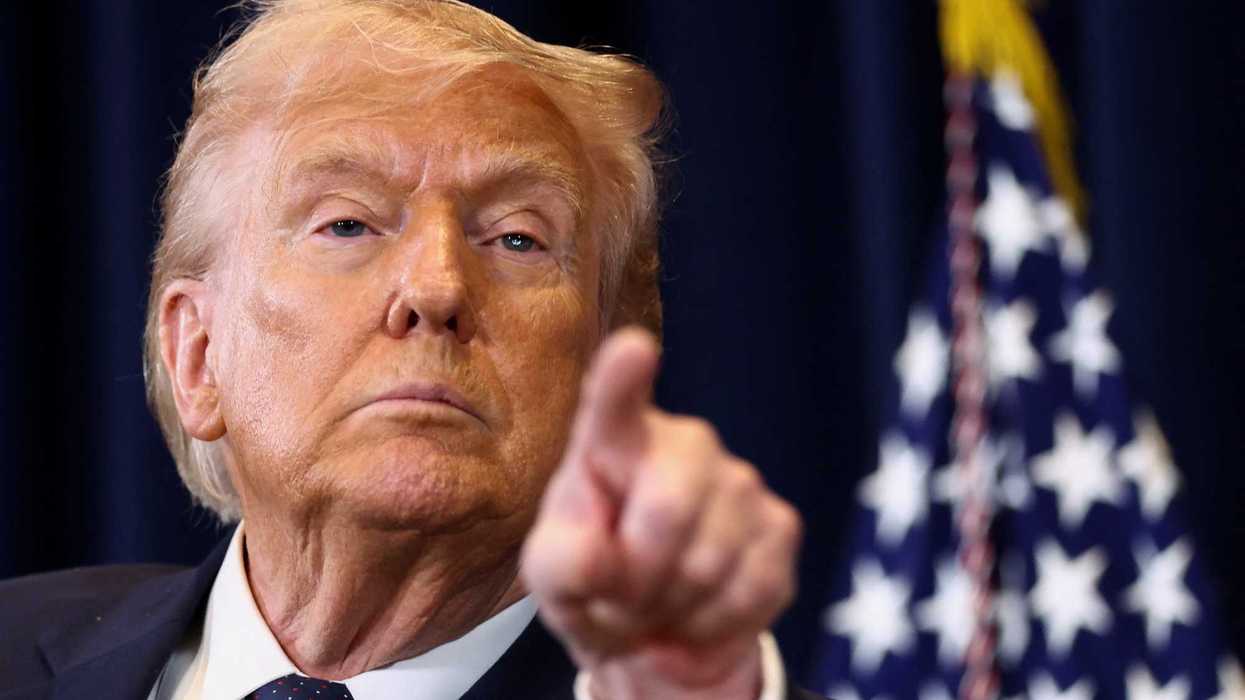

As debate intensifies over a proposed 250-foot statue of Donald Trump, a fundamental constitutional question remains: Does Congress have the authority to approve such a monument? At the center of the president’s argument is a century-old law that Trump and his allies may invoke to justify the project, though critics dismiss the proposed monument as a vanity project.
The central question is whether a 1925 law gives Trump the authority to build the arch, despite more recent language mentioning congressional approval for new monuments in the nation’s capital. The administration argues that Congress already approved the project based on the 1925 law, highlighting an unrealized plan by the Arlington Memorial Bridge Commission from the 1920s, which proposed two tall, narrow columns spaced far apart at the western end of a new bridge across the Potomac River. The administration says the proposed arch follows the original vision of that plan.
One historian finds Trump’s argument comical. “The idea that this proposal is somehow justified by what happened in the 1920s and ’30s with the proposals for the bridge — not to be blunt about it, but it just doesn’t pass the laugh test,” David Maloney, the District of Columbia’s state historic preservation officer, told the National Park Service in a recorded meeting in September, as reported by The New York Times.
According to USA Today, in addition to the statute’s height, the overall monument is proposed to be extravagant. It would be twice the height of the nearby 99-foot Lincoln Memorial nearby, with two gilded eagles would sit above the arch's legs, and a gilded winged figure holding a torch would sit at the top. The arch would stand across the Potomac River, seemingly facing the Lincoln Memorial. The development will feature an observation deck overlooking the surrounding area and will also include a surrounding plaza, granite pavers, landscaping, a stone seat wall, and pedestrian crosswalks with lighting.
Critics have several issues with Trump’s proposed monument: its size and its location. It is slated to sit near the Arlington National Cemetery, with many veteran groups, local advocacy organizations, and historic preservationists in opposition. Trump is being asked to reduce the planned height or choose a different site overall.
But Trump and co are pushing back. “The empty Memorial Traffic Circle built in 1940 does not complete the grand design authorized and envisioned by the Arlington Memorial Bridge Commission and by Congress as enacted in the 1925 law,” Paoletta wrote on X this week. “It is a disgrace to our nation and her noble veterans.”

