

Economists are afraid to admit the uncomfortable truth about Trump's strategy
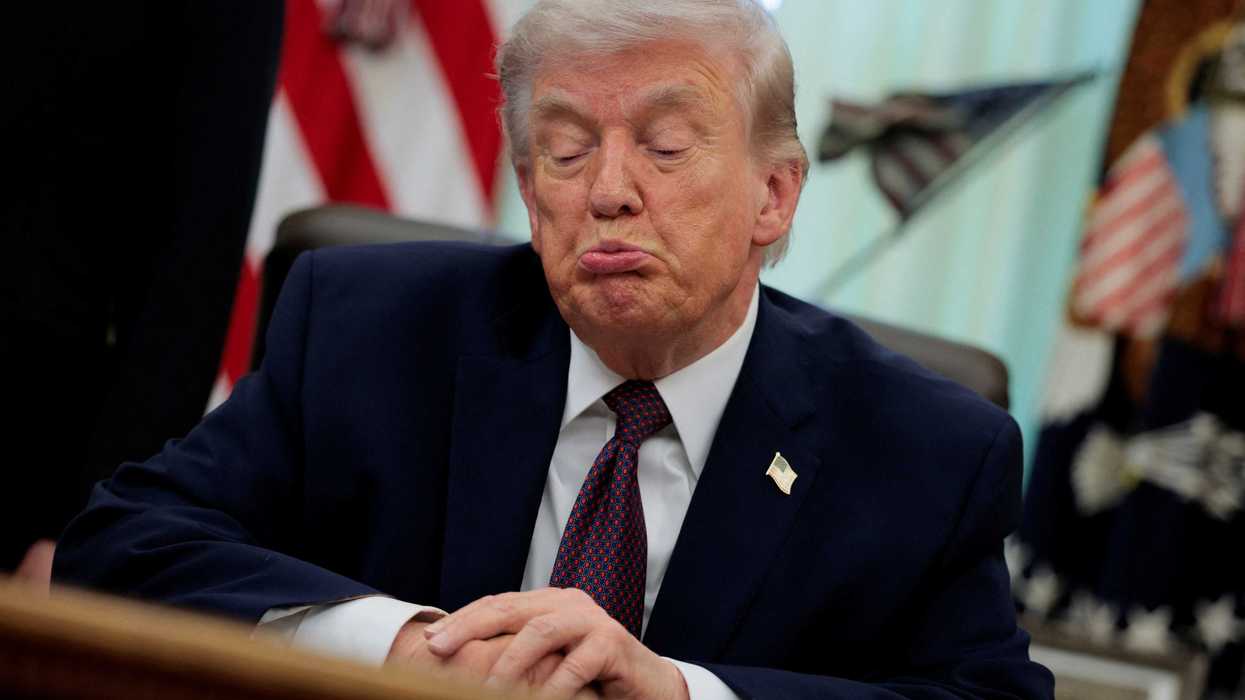
In recent weeks, a few progressive Democrats have knocked off a few progressive Democratic incumbents in primaries in very blue congressional districts. That has the president buzzing about "communism." Some moderate Democrats are buzzing, too.
But for the GOP, it has nothing to do with economics, and for Democrats, it has almost nothing to do with ideology. Donald Trump and his allies are doing what they always do: fear-mongering. Meanwhile, Democratic voters, according to G Elliott Morris, are not voting in socialists. They're voting out incumbents they believe are not fighting hard enough.
Trump: "I would be the greatest communist in history. I'd be right up there with Leneeen." pic.twitter.com/X2i9cNokOf
— Aaron Rupar (@atrupar) July 8, 2026
Some of these new progressive Democrats call themselves socialists, but their policy ideas are hardly socialist in the Red Scare sense that the Republicans prefer. For instance, government-run grocery stores, an idea that New York City Mayor Zohran Mamdani is pursuing, is a bid to increase competition among food retailers and bring prices down.
If that's socialist, it also benefits the consumer and frees the market.
Meanwhile, some of the policies that Donald Trump has pursued since returning to the White House are so socialist that they verge on things that Joseph Stalin might have approved of. The president is consolidating the means of production in order to increase prices as well as his grip on the economy. In a real sense, Trump is creating a cartel.
And he's the boss.
For more insight, I got in touch with Patrick Watson. A senior analyst for Mauldin Economics, he's one of the few economists to point out that what Trump is doing is close to what leaders of the Chinese Communist Party might do. And he's among the few to concede that, as bad as Trump is, the economy might limp along under the weight of his legacy for decades.
"The Soviet Union lasted 70-plus years," Patrick told me in the short interview below. "Communist China is doing OK, thanks partly to the CCP's willingness to adapt capitalist tools. Many smaller Trump-like regimes have survived decades."
The Republicans are screaming about communists these days. Maybe they should look in the mirror. What are some of the economic policies you have seen since Donald Trump returned that you would consider to be in the realm of communism?
The most obvious is his having the government buy equity stakes in private companies. I've lost track of how many, but it's over a dozen now. Some are well-known, like Intel and US Steel, others not. Government owning the "means of production" is as Marxist as it gets.
Stranger still, there's really no reason for this. If the president and/or the Congress want businesses to operate in certain ways for the public good, they can do it with statutes or regulations. No need to spend taxpayer money buying equity shares.
The way Trump talks, he wants to do a lot of this.
Lenin would be proud.
That goes to another aspect of "communism," which is that it's not really about owning some of the means of production. In Trump's hand, it's about dominance and control.
All this makes a lot more sense if you assume corrupt motives. The way some of these purchases are connected to Trump family members says that's highly possible. I'd bet to some degree he does it simply because he can. It makes him feel good.
There's another less-noticeable aspect. When the government does favors for one company, it simultaneously disfavors others. Some of this could be aimed at punishing those Trump perceives as enemies. Also very Mao-like.
What's striking about the right screaming about communists is that it's rooted in policy. Actual policies pushed by Democrats (or democratic socialists) are about fairness and equality and a market that's truly free to compete. What are some of the policies, or policy ideas, that you have seen that the right calls communist but actually are not?
According to the right, pretty much every Democratic policy idea is communist. It's a reflex attack. They don't even try to make sense.
The classic example is the Affordable Care Act. The right has spent over a decade now calling it communist. If so, then most of the developed world is even more communist since everyone has some version of government-funded healthcare.
Their attacks on the Federal Trade Commission, Lina Khan and anti-trust enforcement generally are another one. The Democratic goal is to promote more competition and restrain monopolistic behavior. That's pro-market policy. Adam Smith would love it. GOP policy is more the opposite of pro-market. It enables monopolies instead of restraining them.
It's all fairly transparent. The point of saying "communist" is to make Democrats seem like foreigners in their own country. I would imagine economists like yourself don't recognize the complaint as an economic one. What do you think? What do economists say?
Professional economists aren't saying as much as they should, in my opinion, probably because so many are associated with universities and think tanks that Trump is intimidating. I think most know this is all impulsive or ideological nonsense. A prosperous economy that "lifts every boat" is not this administration's goal. It's just a talking point.
Among the broader political class, the free-market rhetoric is more like a religious belief. Many have been taught it all their lives. They don't stop to question whether it really helps people. If it's not working, their answer is to do it harder.
In their world, Democrats have been so demonized for so many years that anything a Democrat says is automatically scored as a bad idea at best. More likely, it's outright evil they will impulsively fight against.
I don't want to make businesses sound like Trump's victims. The biggest firms are benefiting from Trump's crony capitalism, even as he accuses people who would reform that system of being communist. The pain of that corruption is being felt by people right down to their toes in the form of high prices and inflation. It's not sustainable is it?
Ultimately no, it's not sustainable. But it might be sustained for a long time. The Soviet Union lasted 70-plus years. Communist China is doing OK, thanks partly to the CCP's willingness to adapt capitalist tools. Many smaller Trump-like regimes have survived decades.
Trump seems to recognize what worked for ancient Rome. Give the people just enough bread and circuses to survive and a successful resistance has a hard time. Now, that may not work in a modern technological state like the US. I think we're running an experiment right now to find the answer.
Economically, my gut says things will have to get a lot worse before we see real change. Too many people are just "comfortable enough." Rocking the boat is risky, in their view. But eventually, a wave capsizes the boat.

