A major democracy fights to maintain the rule of law – this time, it’s Israel
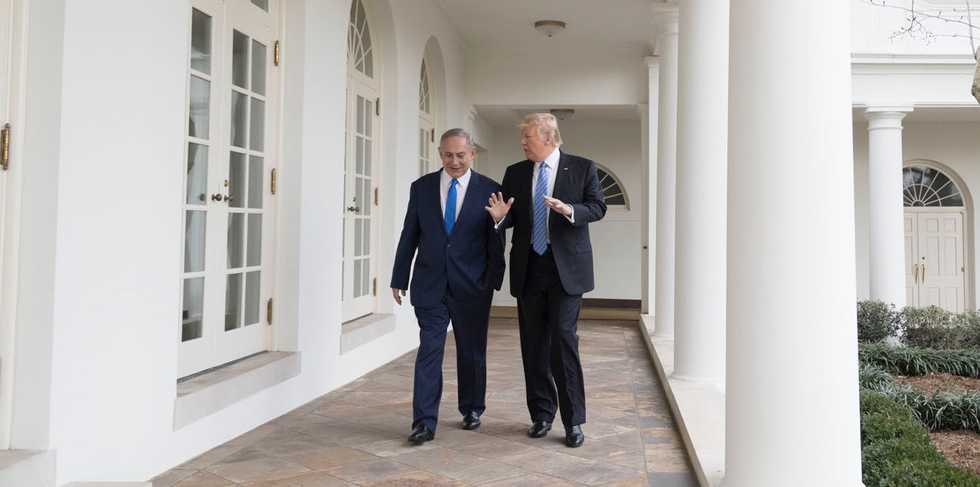
President Donald Trump and Israeli Prime Minister Benjamin Netanyahu walk along the Colonnade, Wednesday, Feb. 15, 2017, back to the Oval Office of the White House in Washington, D.C. (Official White House Photo by Shealah D. Craighead)
At the same moment, former White House Russia expert Fiona Hill was testifying before the House Intelligence Committee about the Trump Administration’s efforts to influence Ukraine to seek investigations into his political opponents.
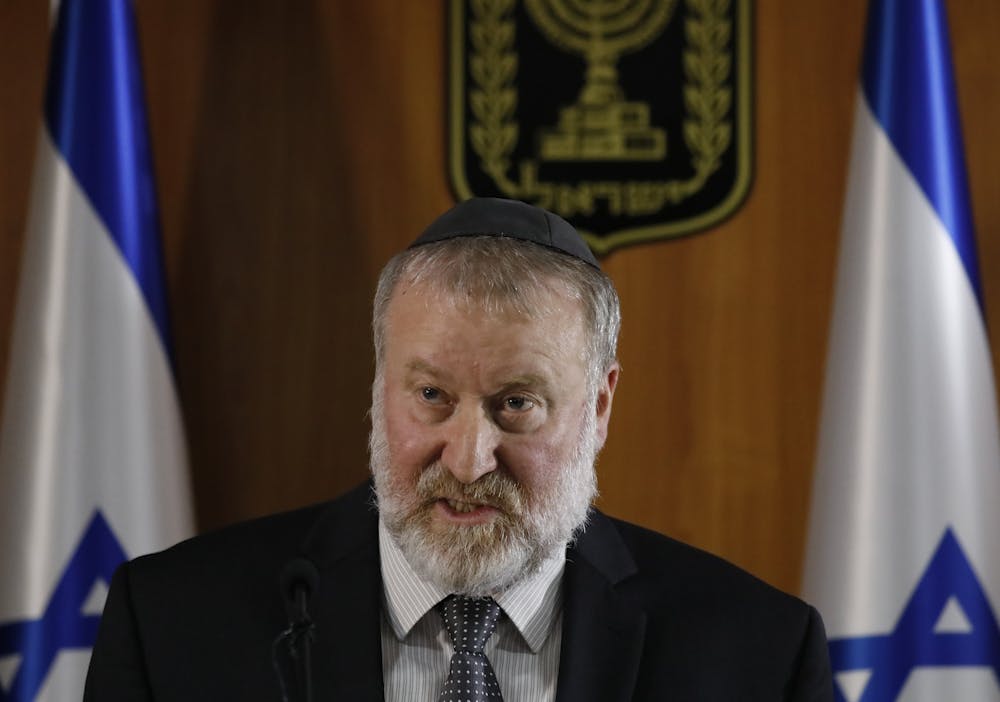
The speech and actions of Mandelblit and Hill demonstrated that the two democracies were fighting to maintain the rule of law.
“The public interest requires that we live in a country where no one is above the law,” Mandelblit said when announcing the indictment.
As a rhetoric scholar, I noticed immediately that the announcement echoed House Democratic Speaker Nancy Pelosi declaring the start of the formal impeachment investigation into President Donald Trump by saying “No one is above the law.”
Trouble for Bibi
Netanyahu, called “Bibi,” has a history of successfully fighting off charges of corruption. He has long been known as “the magician” in Israel for his political skills and ability to survive challenges.
Among the gatekeepers of Israel’s democracy are Attorney General Mendelblit, a member of the executive branch, who was willing to indict a sitting prime minister.
Israel’s 22 newspapers, representing the spectrum of opinions held by Israelis, are likewise gatekeepers and trustees of Israeli democracy.
A recent editorial in the leading newspaper, Haaretz, about who should head the government was headlined “Anyone but Bibi.”
Haaretz’ editorial board wrote, “the possibility of a national unity government that includes Benjamin Netanyahu, who is fueled by incitement, is the worst option of all. To Netanyahu’s ‘credit’ it should be said that he is doing everything in his power to remind the public of who he is and the poisonous materials from which another government headed by him would be composed.”
Trump and Netanyahu have long supported each other. They’re shown here after Trump signed a proclamationat the White House, March 25, 2019.
A poll conducted one month before the October 2019 Israeli election showed that Netanyahu was backed by a majority, with 60% saying he improved Israel’s international standing. They see him as a canny politician who biographer Anshel Pfeffer says has developed a careful foreign policy that does not favor military action, and an economic policy that has created a flourishing Israeli marketplace.
The same poll said 49% of Israelis saw him as lacking integrity.
New factors
Mandelblit was appointed attorney general by Netanyahu. His decision to indict a sitting prime minister is evidence that he resisted and escaped the powerful gravity of polarization.
Mandelblit moved forward with the indictment the day after Netanyahu rival Benny Gantz, the head of the Blue and White party, failed to form a government.
The indictment introduces new and tricky legal and political questions that were in the distance, but not an immediate issue, in the first two 2019 elections. If Netanyahu asks the Knesset for immunity from prosecution, will the members grant the request? Should the indictment influence how voters assess the candidates?
In the U.S., voters may well cast their votes next year for a president who has been impeached by the House.