
Democratic presidential candidates declare war on anti-union ‘right-to-work’ laws

Although President Barack Obama was reelected in 2012, Republicans enjoyed many victories during the Obama years — and that included northern states, where they successfully passed so-called “right-to-work” laws in Rust Belt states like Wisconsin, Michigan and Indiana. Right-to-work laws, correctly described by union leaders as “right to work for less laws,” were once a predominantly southern phenomenon, but became a reality in states that previously rejected them. And journalist Jonathan Oosting, in an article for the Detroit News, reports that rolling back right-to-work laws is one of the issues that Democratic presidential candidates have been campaigning on.
Sen. Bernie Sanders of Vermont, Oosting reports, is vehemently opposed to right-to-work laws. And South Bend, Indiana Mayor Pete Buttigieg, another presidential hopeful, recently told union members in Detroit that while right-to-work laws make “states look good in CEO surveys…. quality of life actually goes down.”
When a right-to-work law went into effect in Michigan in 2013, it was a big change for what had been a very pro-union Rust Belt state: under that law, unions cannot require union membership as a condition of employment. Seeing Michigan, of all places, become a right-to-work state was a major blow to organized labor in the United States.
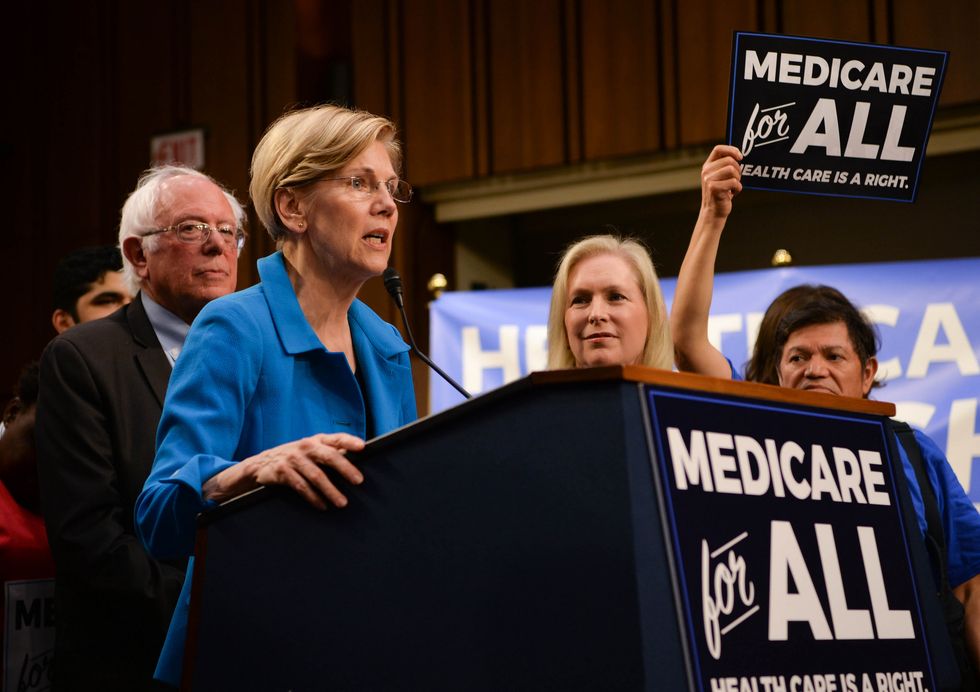
But Sanders would like to see “right to work for less laws” abolished. And Oosting reports that other Democratic candidates have joined him in that opposition, including Sen. Elizabeth Warren of Massachusetts, Sen. Kirsten Gillibrand of New York, Sen. Kamala Harris of California and Sen. Cory Booker of New Jersey.
President Donald Trump, Ooosting notes, favors right-to-work laws at the state level, and Republican Sen. Rand Paul of Kentucky has said that Trump would be willing to sign a federal right-to-work bill into law. But such a bill isn’t going to come about as long as Democrats have a majority in the House of Representatives.
Dale Belman, a labor relations expert at Michigan State University, told the Detroit News that “right-to-work results in lower wages for blue-collar and lower-white-collar workers” but “higher profits for firms” and “clearly acts to weaken some unions.”
Buttigieg asserted that right-to-work has been detrimental in his state, saying, “If you look at what it’s done in my state, you look at what it’s done in a lot of states, it essentially accelerates a race to the bottom and makes workers worse off.”

