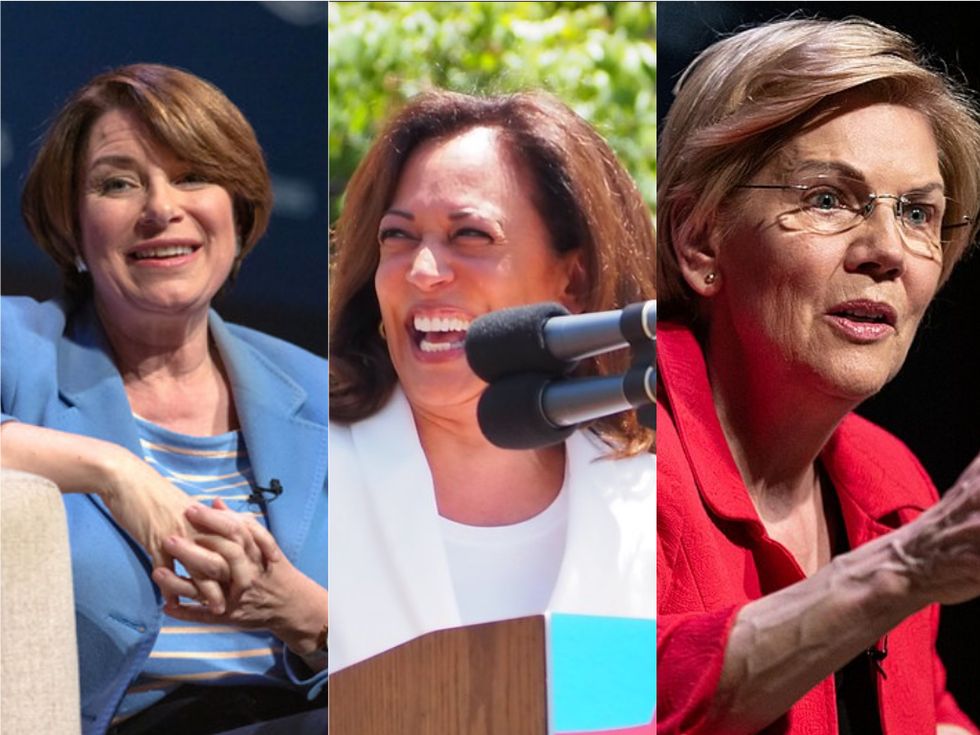
Women and people of color remain drastically underrepresented in elected positions in the U.S., but it’s not your imagination that that’s started to change since 2016. A new report from the Reflective Democracy Campaign has the numbers, and one key insight: it’s not that women and people of color are so much less likely to win than white men. It’s that they’re less likely to be on the ballot to begin with.
The dramatic increase in women—Democratic women—in Congress after the 2018 elections is pretty widely known, but it’s not just that. Across all elected officials, white men went from 65% of seats in 2015 to 62% in 2019, with white women clawing their way up from 25% to 27% and women of color from 3% to 4%, while men of color held steady at 7%. Women of color, the report notes, are still particularly underrepresented, but they’re also climbing quickly in some areas, with a 40% increase in congressional seats and a 38% increase in state legislative seats since 2015.
We’re still looking at massive under-representation, but if the rate of change could accelerate as much in the next two years as it did in the past two years, we might be starting to talk about real change. And it’s important to remember that, while sexism is real especially at the presidential level, there is nothing inherently less “electable” about women or people of color, based on this big data set.