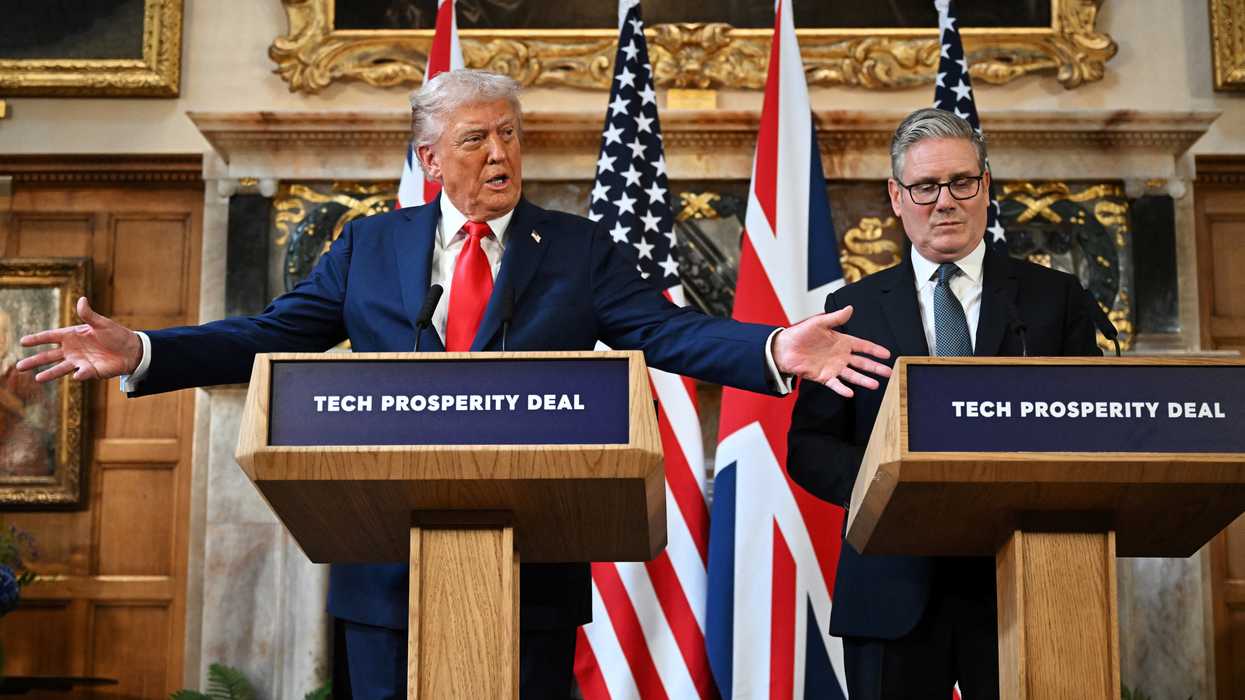
The U.K. has reportedly ceased a nearly century-long agreement to share intelligence with the U.S., according to inside sources who spoke with The i Paper, citing President Donald Trump's erratic and aggressive behavior, as well as his tendency towards "screwing over allies."
In a report published Wednesday, sources indicated to the outlet that the vital security relationship shared between the U.S. and the U.K. "has been plunged into uncertainty," in the wake of "Washington’s threats to Greenland, its ambition to interfere in European politics and public outrage over Britain’s refusal to join the US war with Iran." Trump's repeated insults towards Britain's past military engagements with the U.S. and "personal insults" towards Prime Minister Kier Starmer have also driven the decision.
The joint intelligence-sharing relationship between the U.S. and the U.K. dates back to 1941, with "the exchange of information on Japanese and German ciphers" prior to the former's official entry into World War II. Since then, the partnership, known as "Two Eyes," has evolved into "a cornerstone of the Western alliance, with intelligence and military officials working together to combat all manner of threats, from direct war to clandestine operations."
According to one source in the U.K. Foreign Office, Trump's desire for an "America First" agenda has turned into a habit of "screwing over allies," with no indication that he will change course anytime soon. In the face of this behavior, the source said that the U.K. "cannot trust" its longtime ally for the time being. The i Paper further cited another recent report from the Financial Times, which revealed that American officials are being asked to leave meetings within U.K. government departments whenever "sensitive information" is being discussed.
Another British intelligence official told The i Paper that the decision was "tit for tat," arguing that it only came in response to the "similar hostilities" perpetrated by the U.S. John Foreman, the former Defense Attaché for the U.K. to Russia, added that “trust once gone is hard to restore."
"If the U.S. aren’t willing to ensure that UK secrets remain classified, then restrictions will have to be put in place," Foreman said. "But [this is] hard when intelligence sharing is so deep and wide.”
A senior official with NATO also told the outlet that Trump's rhetoric earlier in the year about annexing Greenland was "creating tensions and distrust" between the U.S. and its longtime European allies, including the U.K.
“We used to get beers together, but now it’s really strange," the source said. "I have been fighting in Iraq and Afghanistan side-by-side with Americans. This is very disruptive in a way that I have never thought of before because it is so unrealistic and surprising.”