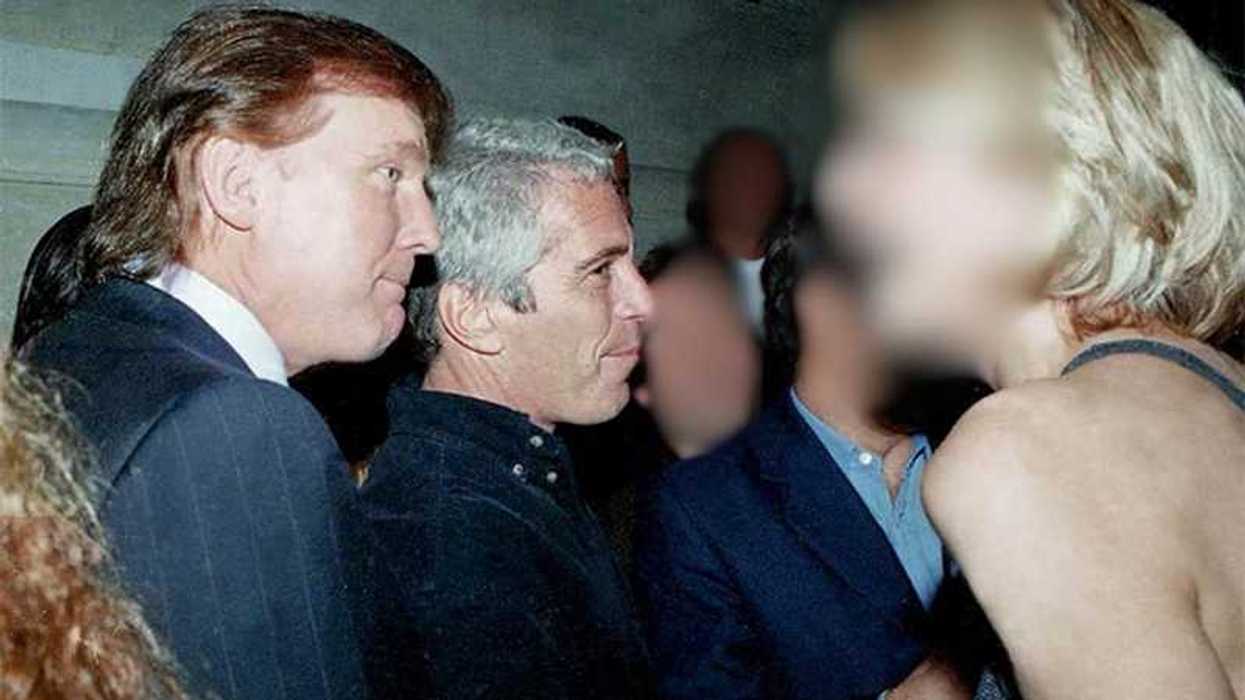
The Trump administration's botched rollout of the Epstein files, as well as the revelations contained within them, have produced a world where even "normal" people have become conspiracy theorists, according to the new analysis from Salon.
Published on Monday, the breakdown from Salon senior writer Andi Zeisler examined how the fallout of the files has impacted the wider culture. She noted that the revelations about Jeffrey Epstein, the deceased sex trafficker with close connections to Donald Trump and numerous other elite public figures, have unsurprisingly provided a wealth of new material for conspiracy theorists, but additionally, they also seem to have spread conspiratorial thinking beyond the typical boundaries.
"The Epstein files were always going to be a gift to conspiracy theorists, and have indeed resulted in a raft of brand new theories, including one that has Epstein alive and well and living in Israel," Zeisler wrote. "But parsing the tranches of documents — the most recent release puts the total at roughly 3.5 million pages — turns out to be making [normal people] feel suspicious too. All over social media, people with no ties to conspiracy communities are unsettled by what they reveal: The sheer breadth of Epstein’s network, the casual references to abuse, the confirmation of everything that hid in plain sight."
According to Zeisler, the chaotic state in which the files were released to the public by the Justice Department has also contributed to this phenomenon, as it forced the public to make their own sense of things.
"There’s no order to the files themselves: No indexing, no differentiation between material evidence and uninvestigated complaints, missing files and overenthusiastic redactions — a build-your-own-conspiracy board minus the red twine," Zeisler explained.
Others have also argued that the Trump administration's handling of the disclosure has sown doubt amongst the public in a way that the president might never be able to shake. Despite pledging to release the files on the campaign trail in 2024, once in office, Trump became highly resistant to the idea, with his officials in the DOJ and FBI claiming at one point that there were no files. Once an act of Congress forced their disclosure, the DOJ missed several deadlines for the full release and released numerous pages with heavy redactions. The sum of it all has been a situation in which a plurality of the public believes that the government is covering something up.
Conspiracy theory expert Anna Merlan told Zeisler that the sheer magnitude of Epstein's connections to powerful figures also made it difficult for people to escape conspiratorial thinking, as the revelations about his connections contained in the files painted a picture of someone with vast influence.
"[Epstein] had so much to do with so many famous and powerful people, and was involved in so many things," Merlan said. "So part of the reason we’re seeing [the Epstein files] and going, 'Wow, he’s everywhere, he’s the grand unified answer to every bit of corruption that is plaguing us,' is because, by design, he tried to be everywhere. He worked very, very hard at it."