
Trump’s tanking approval is even worse than it looks: analysis
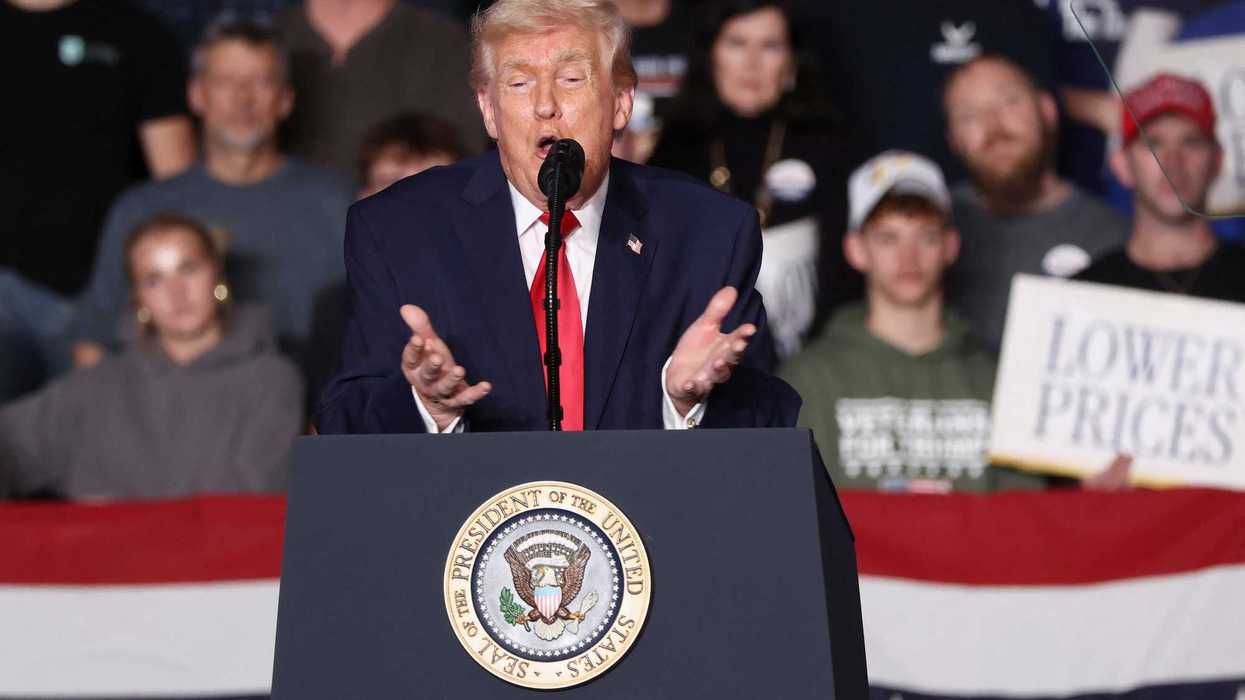
U.S. President Donald Trump in Clive, Iowa, January 27, 2026. REUTERS/Kevin Lamarque
U.S. President Donald Trump in Clive, Iowa, January 27, 2026. REUTERS/Kevin Lamarque

U.S. President Donald Trump in Clive, Iowa, January 27, 2026. REUTERS/Kevin Lamarque
The United States' 2026 midterms are a little over nine months away, set for Tuesday, November 3. And President Donald Trump's weak approval ratings in a long list of polls are a major source of anxiety for Republican strategists, who fear that Democrats have a good shot at recapturing the U.S. House of Representatives and perhaps the U.S. Senate as well if the midterms see a major blue wave. Democrats, however, realize that the Senate is an uphill climb for them.
Polls released in late January found Trump's overall approval at 37 percent (Pew Research Center), 41 percent (Echelon Insights), 39 percent (YouGov/The Economist) or 38 percent (Ipsos/Reuters).
In an opinion column published on February 2, MS NOW's Zeeshan Aleem argues that Trump's poll numbers are even worse than they seem.
Aleem uses the Pew poll to make his point, noting that Trump "appears to have lost a significant amount of support from a critical sector of his own party since last year."
"According to the Pew Research Center, which surveyed more than 8000 U.S. adults between January 20 and January 26, Trump's approval rating has dropped from 40 percent in the fall to 37 percent today — and 50 percent say that the Trump Administration's actions have been worse than they expected, versus 21 percent who say they’re better than expected," Aleem explains. "But here's where it gets strikingly bad for the president: 'Only about a quarter of Americans today (27 percent) say they support all or most of Trump's policies and plans, down from 35 percent when he returned to office last year. That change has come entirely among Republicans,' Pew reported."
Pew's 27 percent figure, according to Aleem, "is a decent proxy for" Trump's "core base, the swath of the public that's likely to sign off on anything he does."
"Part of what's driving it appears to be Trump's failure to address the affordability crisis," Aleem writes. "In November, a Politico poll, conducted by Public First, found that a majority of Trump voters believed he was partially or entirely responsible for an economy that many of them believe suffers from an unprecedented cost-of-living crisis. …. Another likely factor is the salience of Trump's aggressive immigration enforcement agenda, which has resulted in the killing of two U.S. citizens in brutal shootings."
Aleem adds, "Trump's approval on immigration has plummeted across many surveys over the past year, and 'abolish ICE' has skyrocketed in popularity. Kristen Soltis Anderson, a Republican pollster, wrote in The New York Times on Thursday, (January 29) that her polling showed that Trump's immigration rating had flipped from 55 percent approval to 55 percent disapproval in the past year…. The president's growing unpopularity is a major opportunity for the pro-democracy coalition on the left to expand and contain Trump’s power. That could come in the form of persuading disenchanted Republicans to flip toward Democrats during the midterms, or building broader backing for protest movements against Trump’s assaults on democratic features of the country — many of which are surely yet to come."
Zeeshan Aleem's full MS NOW column is available at this link.

