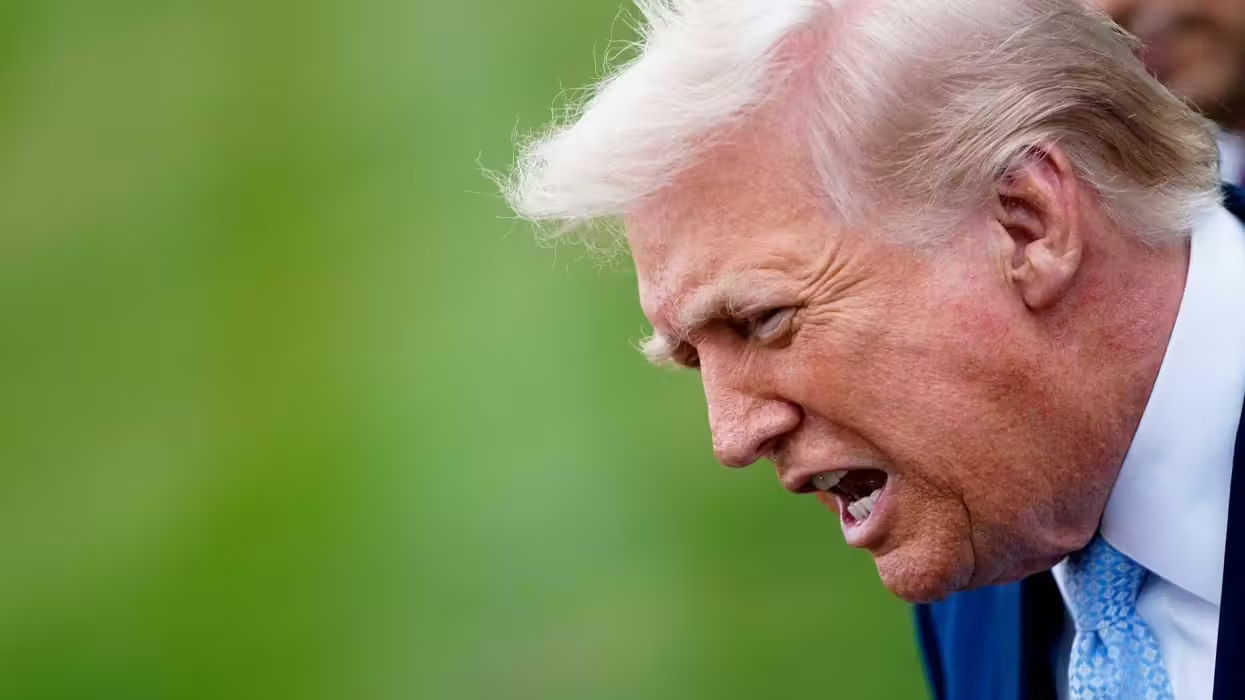
Law and Crime reports that a federal judge in California could not stop himself from demolishing President Donald Trump’s lawsuit against California chicken ranchers with a slate of jokes.
In what one columnist described as “suing us for being too nice to chickens,” Trump’s federal government claimed California’s more stringent egg regulations of giving chickens more room to move “contributed to the historic rise in egg prices by imposing unnecessary red tape on the production of eggs.”
"Through a combination of voter initiatives, legislative enactments, and regulations, California has effectively prevented farmers across the country from using a number of agricultural production methods which were in widespread use — and which helped keep eggs affordable,” DOJ lawyers argued in the 16-page lawsuit.
The dispute was that higher standards that California forced on local egg sales forced seller to impose those same standards in other states.
But on Wednesday, U.S. District Judge Mark Scarsi — who was appointed by Trump in his first term — granted California its motion to dismiss due to the Department of Justice's "failure to allege facts supporting a cognizable theory of standing."
“As the opinion begins, Scarsi frames the lawsuit as an attempt by the federal government ‘to enforce the pecking order between federal and state laws’ and notes the ‘clutch of intervenors’ who were previously allowed to participate in the case,” writes Law and Crime writer Colin Kalmbacher.
The DOJ based its lawsuit on the idea that federal law — in this case, the Egg Products Inspection Act of 1970 — preempts state laws passed by ballot initiatives and the state legislature. But Kalmbacher said the judge did not even bother to analyze the preemption arguments for the issue of “standing.”
"Three of Defendants and Defendant-Intervenors' motions challenge Plaintiff's constitutional standing to maintain this lawsuit," said Scarci. "And unlike with the chickens and eggs at issue here, there is no question that an analysis of standing must come first."
Scarci argued that the government had not tried make a cognizable argument for their case, pointing out that the Trump administration needed “to meet a high and exacting standard,” said Kalmbacher.
"The United States fails to plead facts toward any of the elements," said the judge. "In its briefs, the federal government asserts that it 'is suffering an ongoing injury to its sovereignty because the Sales Ban and Labeling Requirements violate the EPIA and are expressly preempted.'"
Instead, Scarci accused Trump’s attorneys of providing “undisguised legal conclusions in search of substantiating facts,” and called the DOJ's basic premise "a mistake."
The judge also accused Trump’s attorneys of putting “all its eggs in the sovereign-injury theory of standing,” and did not rule out that “other standing theories may be articulable on repleading."