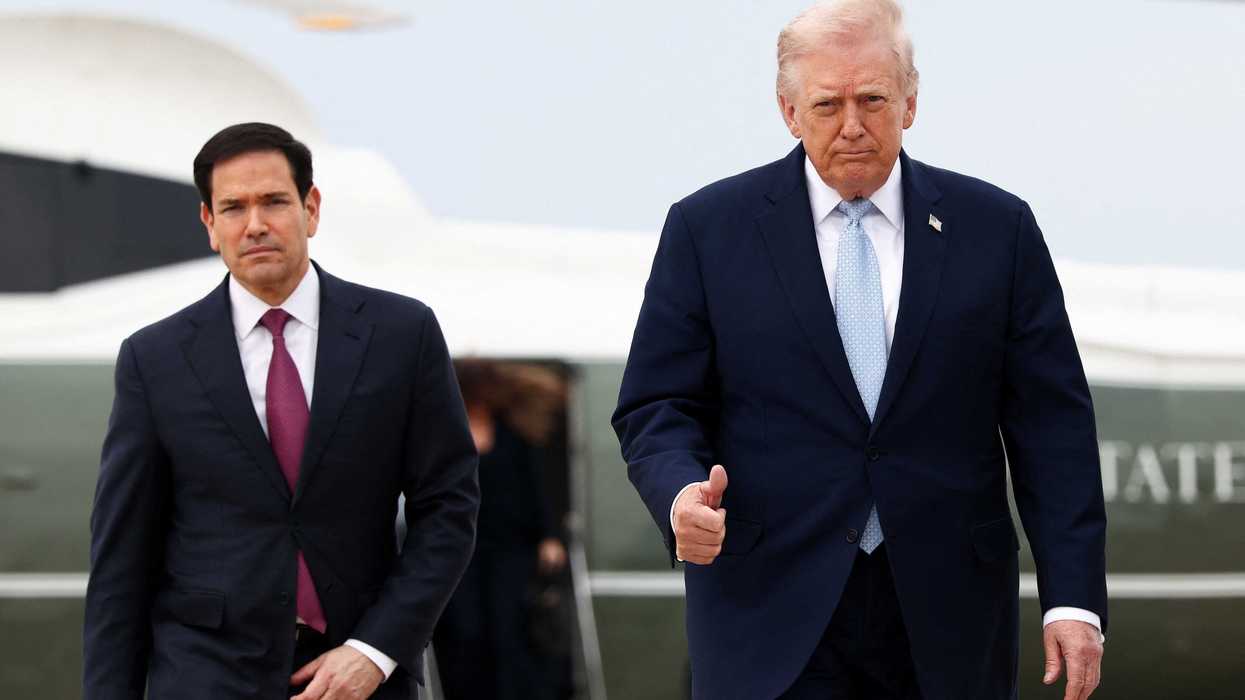
On March 10, the New York Times' Glenn Thrush reported that U.S. Attorney General Pam Bondi was moving from an apartment in Washington, D.C. to housing on a military base in response to threats from drug cartels and others. And she isn't the only Donald Trump appointee who moved to a military base despite not working directly for the Pentagon; others have ranged from U.S. Secretary of State Marco Rubio to White House Deputy Chief of Staff Stephen Miller. Historically, those homes were reserved for senior military officers.
Salon's Chauncey DeVega examines this trend in an article published on March 24, warning that it is exactly the type of thing one finds in authoritarian regimes.
"Cabinet members have traditionally lived in the wealthy enclaves of Washington, D.C., or Northern Virginia," DeVega explains. "But instead of choosing homes in Georgetown, Kalorama, McLean or Great Falls, some officials in Donald Trump's Cabinet and among his White House staff — including Secretary of State Marco Rubio, Defense Secretary Pete Hegseth, Attorney General Pam Bondi and former Secretary of Homeland Security Kristi Noem — are living in secure military housing, citing safety concerns. In doing so, they are embracing the literal architecture of authoritarianism."
DeVega continues, "The security concerns are very real. According to a recent study, violent online rhetoric against prominent public officials in the U.S. increased dramatically between 2021 and 2025. But for most, if not all of American history, senior government officials accepted the personal risk as part of the job. The symbolism of living among their fellow Americans mattered. It is a damning indictment of the Trump Administration that its policies are so unpopular and have caused so much pain and anger among the American people that senior officials are hiding from them."
Steven Levitsky, author of the 2018 book "How Democracies Die" and a professor of government at Harvard University in Cambridge, Massachusetts outside Boston, is among the scholars who finds this trend disturbing.
Levitsky told the New York Times, "It is something you never see in a democracy. Government officials live on military bases or other sorts of fortified zones in authoritarian regimes."
According to DeVega, the fact that Bondi, Rubio, Miller and other Trump appointees are living on military bases demonstrates that "American democracy is continuing to collapse."
"America's norms and institutions long ago surrendered to Trump's MAGA movement, and granting his closest Cabinet officials and staffers military housing is just the latest example of how the president is consolidating power and building a cult of personality," DeVega warns. "He is also in the process of redesigning the nation's capital in his own image by bulldozing historic sites, slapping his name on a presidential memorial, erecting new monuments for his own glory and hanging banners bearing his face on government buildings. This comes in addition to his administration's assault on freedom of speech, thought and the press; civil society; voting rights; and civil and human rights — all in the name of patriotism and destroying the enemy within."
The Salon journalist adds, "The walled city his most trusted agents live behind is itself a metaphor for Trump's wider authoritarian project."