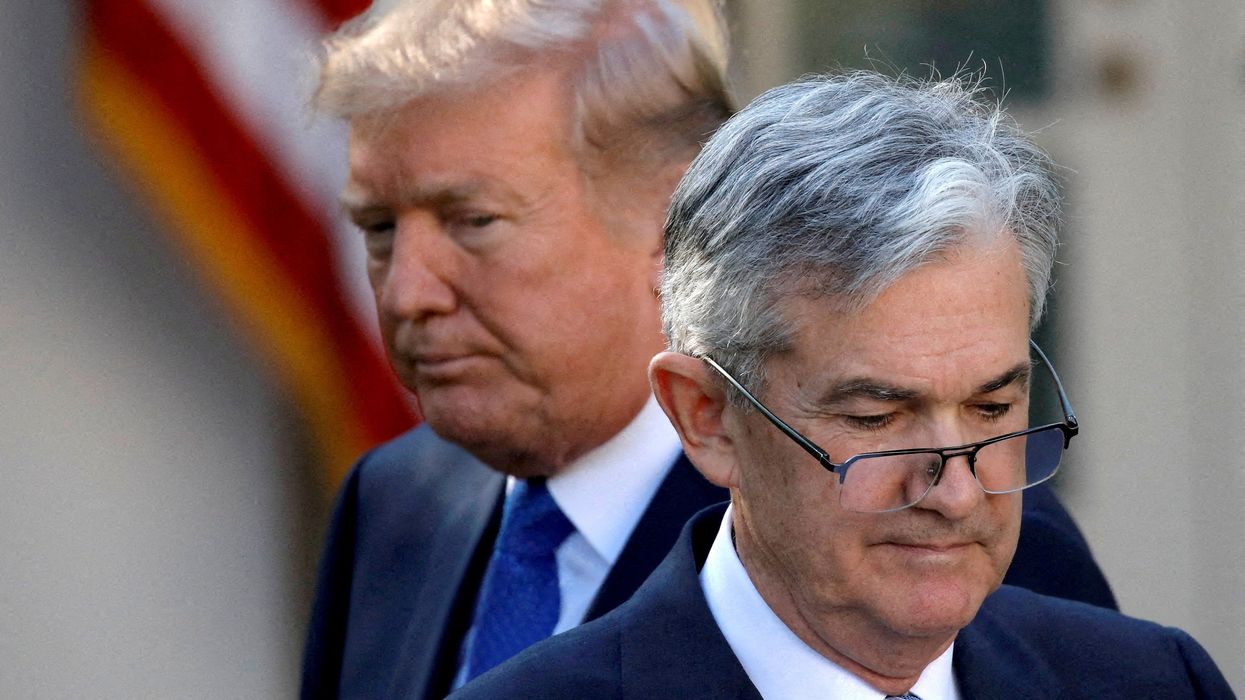
The Wall Street Journal on Tuesday issued a scathing rebuke of Donald Trump's new criminal investigation into Federal Reserve Chair Jerome Powell, calling the move a "self-defeating fiasco" and advising the president to "do himself and the country a big favor by firing those responsible for this fiasco."
On Sunday, reports emerged that the Department of Justice had launched a criminal investigation into Powell, purportedly over allegations that he misled Congress about the scale of a renovation project at the Fed's D.C. headquarters. In a rare public statement, Powell himself confirmed that the DOJ had issued subpoenas to the Fed, and alleged that the administration was targeting him for not lowering interest rates enough, seeking to create a dynamic whereby U.S. monetary policy is "directed by political pressure or intimidation."
On Tuesday, the Wall Street Journal editorial board pulled no punches in its assessment of the probe, expressing doubt that the president even directed the investigation at all, as many suspect, and suggesting that it "smacks of loyal underlings trying to curry favor with the President by doing what they think he would want." The board brought up a historical anecdote for comparison.
"This brings to mind the medieval episode of England’s King Henry II idly importuning some knights to rid him of Archbishop Thomas Becket, only to be surprised when they actually did it," the editorial explained. "That historical episode proved self-defeating for the king (Becket became a saint and Henry lost his fight for supremacy over the church), and this one may not work out better for Mr. Trump."
The board also echoed the sentiments of other observers, warning that the investigation "may backfire on Mr. Trump’s plans for the Fed." In seeking to remove Powell from the central bank early with this probe, it could potentially lead him to stick around longer. While Powell's term as Fed chair will end in the spring, he can remain on the board of governors until 2028. Without Trump's meddling, he might have opted to retire altogether in a few months, but the perception that the Fed's independence is under assault might lead him to stay.
"Mr. Powell isn’t required to leave the Fed when his chairmanship ends, and Mr. Powell may now feel he needs to stay to avoid the appearance that the White House can bully Fed officials," the board explained. "That would deny Mr. Trump a second appointment to the Fed board."
The board concluded: "Americans elected Mr. Trump to reduce inflation, and he and Republicans have 10 months until the elections to show progress. Picking a fight with the Fed — and the bond market — over an issue that voters will find confusing and irrelevant is lawfare for dummies."