
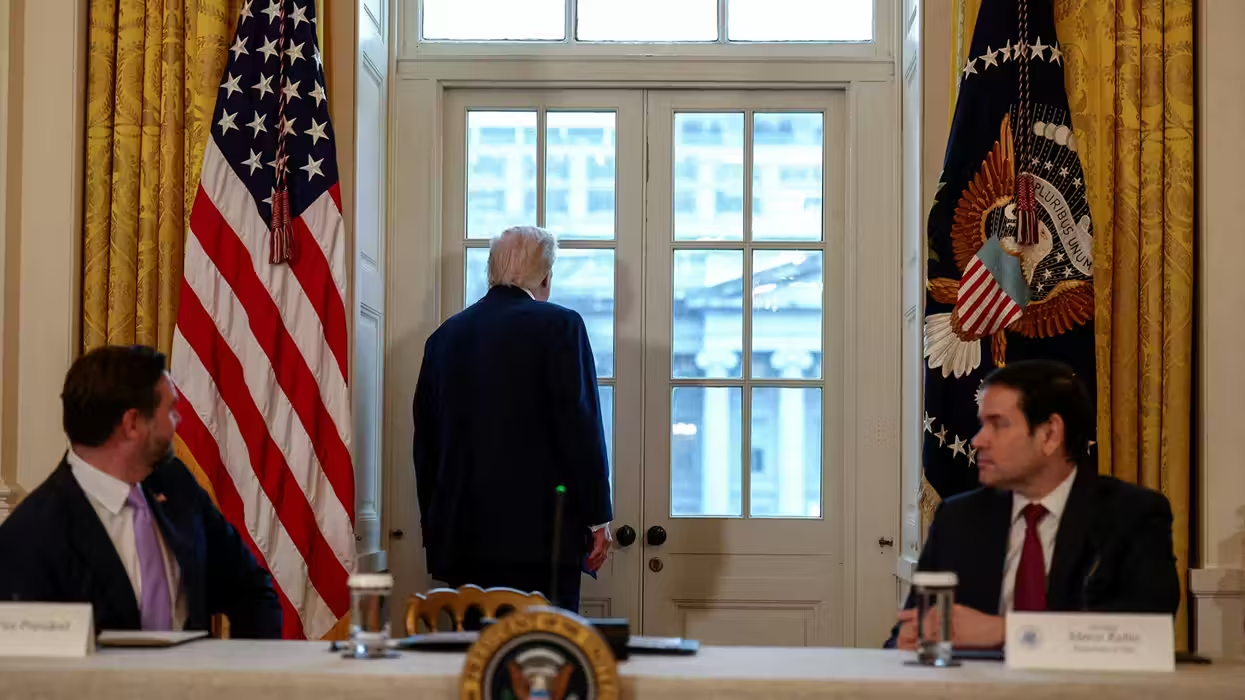


Since launching his war against Iran three weeks ago, few topics have gripped the national conversation like the fast-rising price of gas. Between the closure of the Strait of Hormuz and the attacks on oil facilities across the region, oil supplies have been disrupted, which consumers then pay for at the pump.
Through it all, President Donald Trump has remained fixated on one oil market metric in particular: the price of West Texas Intermediate (WTI) crude oil, which is essentially the price of crude oil before processing. But while Trump has focused on keeping that cost below $100 a barrel, according to industry expert Javier Blas, the president is looking at the “wrong” oil price, which is misleading on how the war is actually impacting American pocketbooks.
For most Americans, says Blas, the economy is driven not by the price of the WTI, but by the cost of refined petroleum products like gasoline. And while Texas crude has shot up by 60 percent since January, the fuels people actually use have skyrocketed by as much as 120 percent.
For every three barrels of WTI crude oil, a refinery can typically produce two barrels of gasoline and one of a distillate fuel like diesel. That extra processing requires special refining products — the supply of which has been disrupted by the war — as well as functioning refineries, which have also been disrupted. Because of these additional layers of disruption, the prices for refined fuels take on added cost pressures, and are now “approaching 2022’s all-time high.”
As a result, the price hikes of everyday fuels like gas, jet fuel, and diesel have far outpaced that of crude. That means paying more at the pump, more for airline tickets, and more for operating heavy machinery. Blas is particularly concerned about the price of diesel, which fuels vital economic sectors like construction, transport, and farming.
Blas says that from a PR standpoint, Trump’s use of the WTI price makes sense. On the surface, it ignores the added refinement costs, making the negative economic impacts of the war seem less severe. At the same time, Wall Street tends to focus on WTI as a market indicator and ignore real-world gas prices. If the price of oil is all you’re watching, things might not appear so bad.
Trump and equity traders, however, aren’t looking at things like the price of jet fuel or reformulated blendstock for oxygenate blending, the former of which determines air transport costs while the latter is used to make gasoline.
“But those products, the mainstay output of US refineries,” says Blas, “are precisely what will make or break the country’s consumers and businesses.”
Report typos and corrections to: feedback@alternet.org.

#story_page_sidebar
MOST POPULAR
{{ post.roar_specific_data.api_data.analytics }}
MOST POPULAR
ContactAdvertise with AlterNetPrivacy PolicyWriter GuidelinesPress InformationAbout AlterNetMeet the AlterNet StaffDebug Logs
@2026 - AlterNet Media Inc. All Rights Reserved. - "Poynter" fonts provided by fontsempire.com.