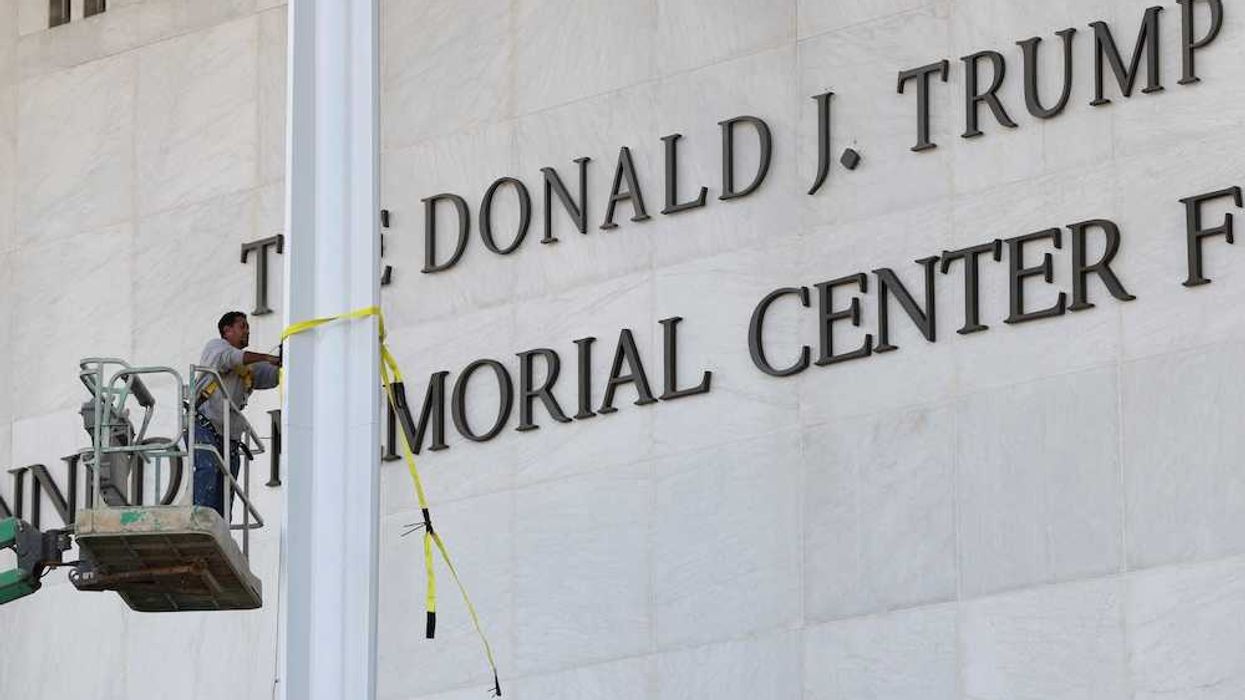
Donald Trump appears to have rewritten the rules at the Kennedy Center to silence Democrats and anyone not appointed by him ahead of his attempt to rebrand the famed institution, according to a new report from the Washington Post.
Trump has been mounting a takeover of the Kennedy Center for most of his first year back in the White House. Back in February, he fired the presidentially-appointed board of trustee members and installed a new round of trustees who promptly voted to elect him as chairman of the center. Earlier this month, the trustees voted to add Trump's name to the Kennedy Center, a move which cannot be done without Congressional authorization, despite the swift moves to add his name to the center's website and physical building. The takeover has prompted a wave of artists to cancel events at the Kennedy Center, and seen its ticket sales and ratings plummet.
The board claimed that this vote was unanimous, but in the aftermath, one of the remaining Democrats on the board, Rep. Joyce Beatty of Ohio, claimed that she had been muted during the process and prevented from voicing her dissent. Beatty is one of the 23 "ex officio" members of the Kennedy Center board, a designation for trustees appointed by Congress.
On Wednesday, the Post reported that the Kennedy Center's bylaws were seemingly changed amid Trump's takeover to bar ex officio members from voting, leaving only Trump's own appointees with the authority to weigh in on changes. In a statement to the outlet, Roma Daravi, the center’s vice president of public relations, claimed that these members had never had voting authorities and the bylaw changes were only bringing them in line with "longstanding precedent."
A deeper investigation by the Post disputed this claim. The Kennedy Center's original charter lists ex officio members as part of the board of trustees and makes no differentiation between voting and non-voting members. Furthermore, recent tax filings by the center list it as having 59 "voting members," "a total that includes both general and ex officio members," the Post explained.
Whether or not these ex officio members had voting authorities in the past "seems to be in dispute," one person with knowledge of the situation told the Post. Sources the outlet spoke to appeared to be split on the matter.
“Theoretically they could vote, but our practice was not to have them vote or count toward quorum,” another anonymous source said.
Sen. Sheldon Whitehouse, a Rhode Island Democrat and ex officio board member, said that there was "no distinction between ex officio and presidentially appointed Trustees when it comes to members’ rights and responsibilities on the board, including voting," and further accused Trump and his loyalists of conspiring to "illegally change the bylaws to silence dissent."