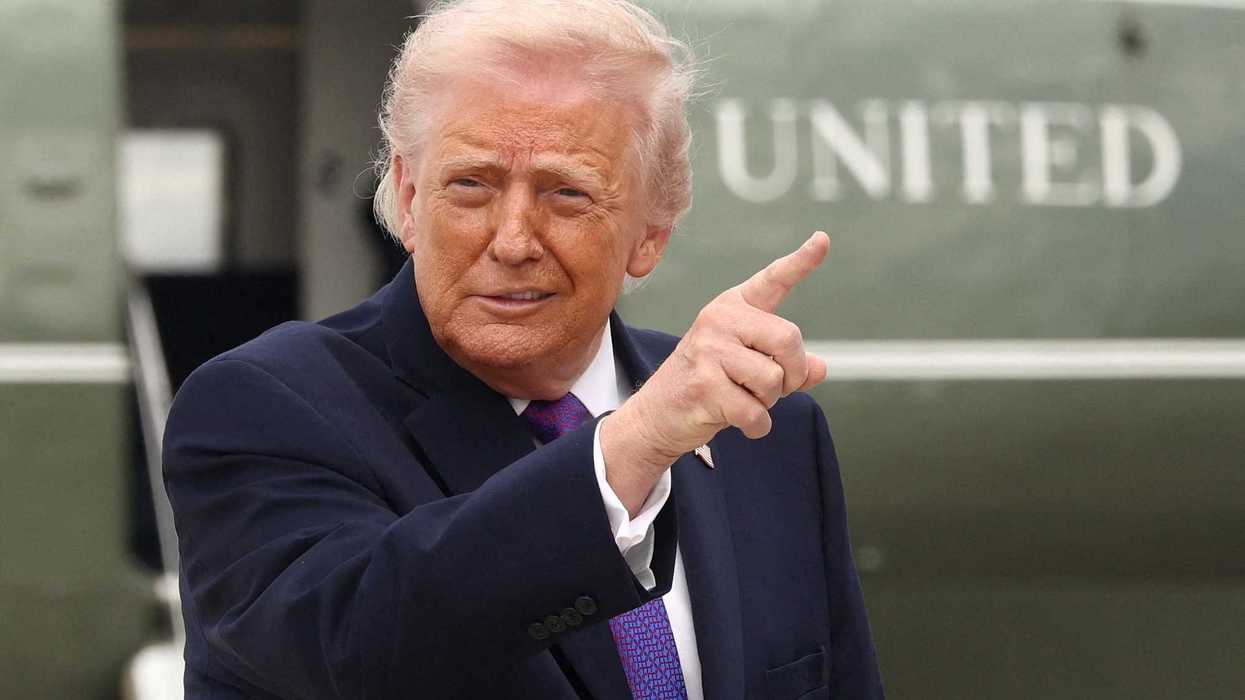
President Donald Trump took the world’s biggest military — bigger than the militaries of the next nine nations – and used it to litter Iran with fire and destruction.
Roughly one month later Trump surrendered — while claiming he’d won. Iran surrendered no enriched uranium, accepted no new U.S. military bases and made no promises to permanently reopen the pivotal Strait of Hormuz.
That’s … quite the win, said New York Times Columnist David French on Bulwark’s Wednesday podcast.
“The incredible reporting from my colleagues in the newsroom indicates that basically, everyone in the room was telling him, ‘Netanyahu is feeding you false hope’ that our strikes will not, in fact, result in immediate regime change in Iran,” said French. “They warned that they will not immediately topple the regime, that Iran will lash out at its enemies. Iran will lash out in the Gulf. It will do something to the Strait of Hormuz. It will not be easy to reopen if Iran does it. And [Trump] just YOLOs it away in this incredible sense of confidence that he's just going to get it right, obviously riding very high on his own supply after the remarkable success of the [Nicolás] Maduro raid … and he launches a reckless war of choice that went sideways.”
“What Trump did yesterday is not a TACO [Trump Always Chickens Out] really. It's a functional surrender,” said Bulwark podcaster Tim Miller, quoting columnist Kill Kristol. “… basically, because Trump couldn't take the pain anymore, the economic pain on the Strait of Hormuz.”
“If you look now at the 10-point list, the Iranian proposed contours of the deal … among the things on there is that Iran has control over the Strait of Hormuz and they get to recover all of the sanctions against them, that we're going to get rid of all of the sanctions that have been put in place since the Bush administration. And also, not on that list is getting rid of the nuclear material, which was at one time, the stated goal of the effort,” added Miller.
“[W]e don't actually know what that deal is,” said French, an Iraq War veteran who remains hawkish on Iran because he remembers friends who were killed by Iranian weapons. “All we know is we have somewhat of a shaky ceasefire. Ten points from the Iranians. We have 15 points from the Trump administration. The difference between those two blueprints is … between the Milky Way and the Andromeda galaxy. Like we're talking thousands of light years of difference. But one thing we absolutely know, this was not unconditional surrender. This was not America dictating terms to Iran by any means.”
“This is where we are now,” said Miller. “ … Israel is still attacking Lebanon this morning. Iran's still attacking the UAE this morning. Trump's new business partner in the Strait of Hormuz is attacking his old business partner in the cryptocurrency business.”
“Well, when you put it that way, it sounds kind of bad, Tim,” French chided.