
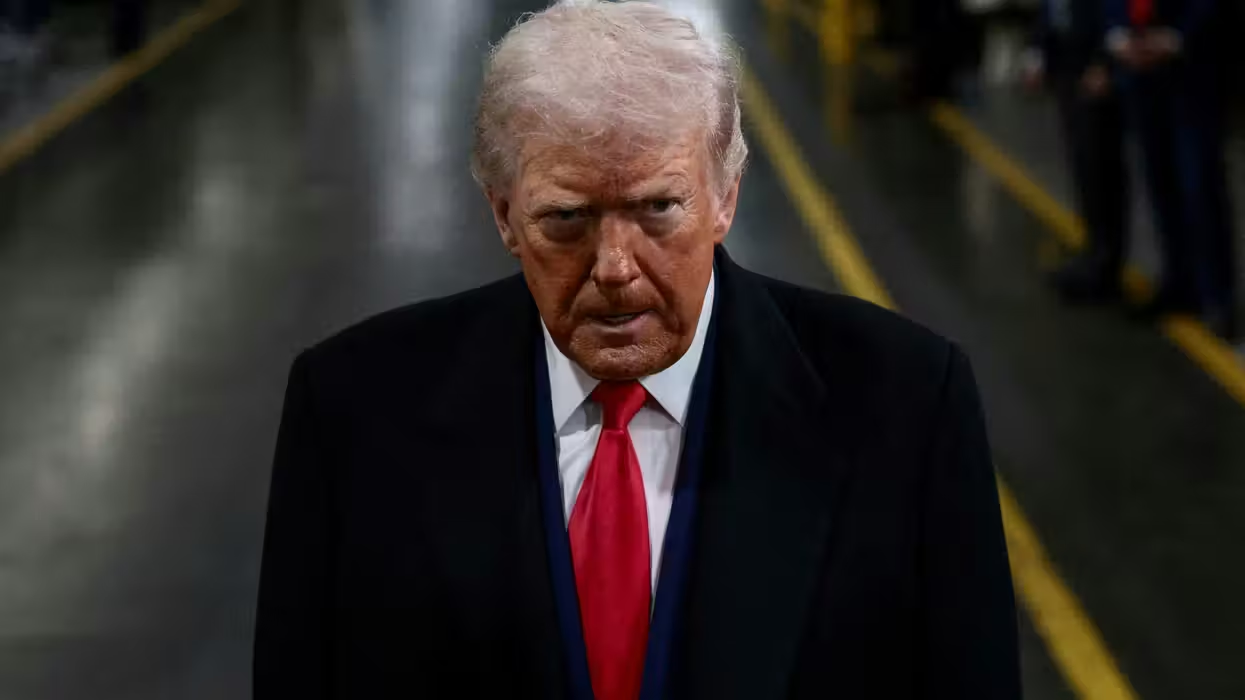


President Donald Trump has made a habit of belittling the deaths of his perceived enemies, reaching a new low after the passing of Robert Mueller, and according to a new analysis published by the New York Times, this ugly habit formed because he "needs desperately to feel superior," while also helping drive his overall war against "decency."
Writing for the Times on Monday, veteran reporter and columnist Frank Bruni highlighted Trump's reaction over the years to the deaths of Mueller, Sen. John McCain and former Secretary of State Colin Powell. In these particular reactions, beyond their opposition to Trump in life, he argued that a key throughline exists in each man's history of military service, for which they each received Purple Hearts for their injuries. This service and sacrifice, Bruni explained, is something that Trump is both unable to truly understand and desperate to "feel superior" against.
"Is Trump shamed by their examples? He’s surely baffled by their choices," Bruni wrote. "Trump wouldn’t risk a paper cut unless there were a multimillion-dollar payoff on the far side of the nick. And he has privately referred to Americans killed in wars as 'suckers' for having put their lives on the line, according to reports — which he has called 'fake news' — by several news organizations. It’s as if he needs desperately to feel superior to those soldiers, to cast their strength as weakness, their courage as folly, lest his own cowardice be exposed. And so he disparaged McCain, Powell and Mueller, talking smack about them even (especially?) when they could no longer talk back."
Bruni argued further that Trump's tendency to speak ill of his enemies in death is part of a broader scheme to make the American public "inured to his offenses," which would, in turn, allow him to more effectively avoid consequences for his abhorrent words and actions.
"He wants to degrade us — he wants to degrade everything — because he’s a more fitting ruler with freer rein if his kingdom has been leached of all decency," Bruni suggested.
He further accused Trump of being a "hypocrite," given how intensely his administration and supporters went after "any stray whisper of the uglier parts of [far-right activist] Charlie Kirk’s legacy" after his death, while also keeping quiet about the president's own "sadism."
"All of that they recast as boldness. Or they claim that it’s harmless: It’s just Trump being Trump," Bruni concluded. "It’s a presidential perk, like winged swag from Qatar, a tacky ballroom and incompetent underlings. No. It’s more than that, and it’s worse than that. It’s a retreat from empathy, generosity, kindness. And it’s telling. The way we respond to death says everything about who we are. If we can’t extend the dead a bit of grace, it’s because we’re graceless."
Report typos and corrections to: feedback@alternet.org.

#story_page_sidebar
MOST POPULAR
{{ post.roar_specific_data.api_data.analytics }}
MOST POPULAR
ContactAdvertise with AlterNetPrivacy PolicyWriter GuidelinesPress InformationAbout AlterNetMeet the AlterNet StaffDebug Logs
@2026 - AlterNet Media Inc. All Rights Reserved. - "Poynter" fonts provided by fontsempire.com.