
Neuroscientist shatters MAGA’s testosterone claim
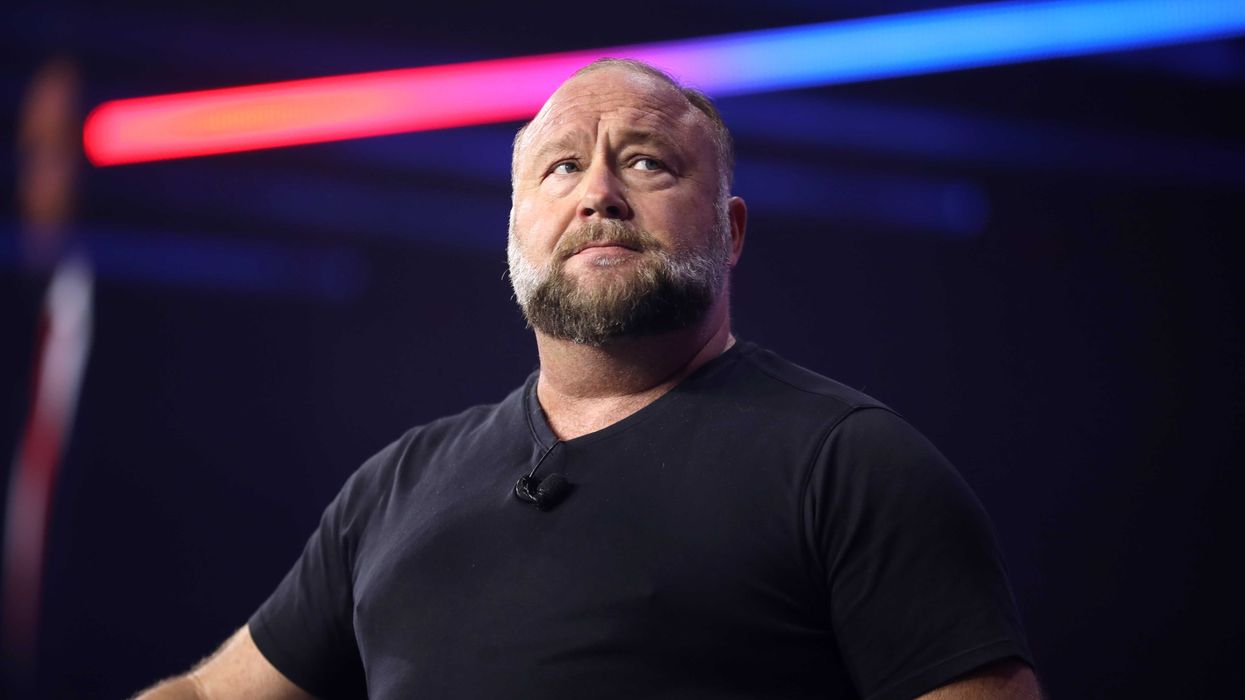
Alex Jones at The People's Convention in Detroit on June 16, 2024 (Gage Skidmore/Flickr)
Alex Jones at The People's Convention in Detroit on June 16, 2024 (Gage Skidmore/Flickr)

Alex Jones at The People's Convention in Detroit on June 16, 2024 (Gage Skidmore/Flickr)
In the Manosphere, a variety of anti-feminist ideologies — from PUAs (pickup artists) to MGTOW (Men Going Their Own Way) to incels — often accuse feminists and progressives of trying to make men less masculine. And a conspiracy theory pushed by Infowars' Alex Jones and others on the far right claims that the left, in its quest for political dominance, is using soy products to decrease men's testosterone and make them weak and passive. "Soy boys," Jones contends, are effeminate progressive males and the result of a leftist war on masculinity.
But neuroscientist Robert Sapolsky, in an article published by the New York Times on New Year's Day 2026, stresses that high levels of testosterone aren't necessarily synonymous with masculine traits.
"In particularly prickly corners of MAGA World," Sapolsky explains, "a low-blow way of dissing the men you despise — often left-leaning guys with a fondness for empathy, equality, even democracy — is to charge them with having low levels of testosterone. Take Elon Musk, who, a while back, reposted a screed about how 'low T' men can't think freely because they 'can’t defend themselves physically.' Or consider the 'soy boy' insult popular a few years ago in the same circles, based on the false idea that chemical compounds in soy feminize men's hormonal makeup."
However, Sapolsky — a biology professor at Stanford University in California — says that extensive scientific research isn't consistent with MAGA's "soy boy" claims.
"Beyond my own research," Sapolsky notes, "decades of data show that testosterone does not ensure dominance, nor does it act as a straightforward trigger of aggression. This may come as a surprise. Males of endless species, including us, tend to have higher testosterone levels and to be more aggressive than females; aggression and testosterone levels rise in males at puberty; and males of species that compete for territories annually show increased aggression and testosterone levels at those times."
Sapolsky adds, "Note, however, that there's some evidence that the causality could run in the other direction: Engaging in aggressive behaviors may trigger a spike in testosterone."
Sapolsky points out that "within normal ranges," testosterone levels "are not strongly predictive of aggression."
"Scientists now believe that testosterone makes people and animals more sensitive to threats to their status — to the point of perceiving threats that are imagined and amplifying the aggressive response to such threats," according to the neuroscientist. "For instance, a male impala with high testosterone may be more sensitized to challenges to his territory, attacking an interloper when it comes within 100 yards of him, instead of the usual 50…. If society is riddled with aggression, don't blame testosterone; blame us for being too prone to dole out status for aggression."
Read Robert Sapolsky's full New York Times article at this link (subscription required).

