
Why these 'faith-based voters' are 'recoiling at Trump’s cruelty'
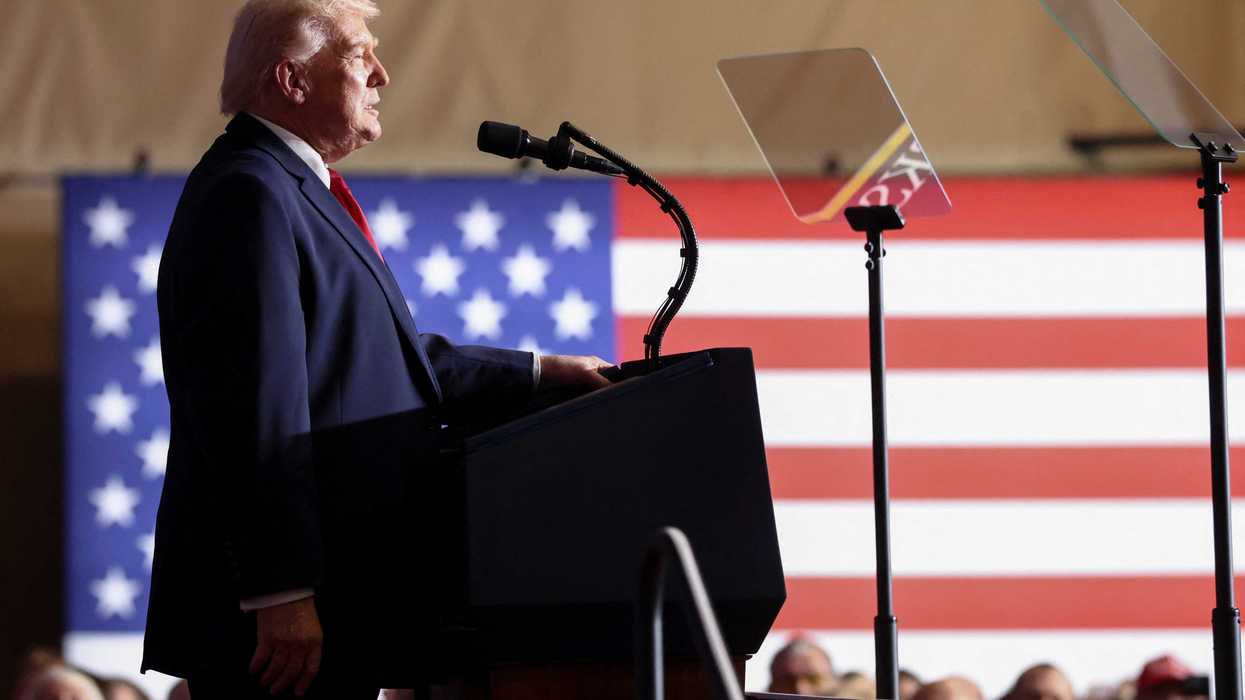
U.S. President Donald Trump in Clive, Iowa, January 27, 2026. REUTERS/Kevin Lamarque
U.S. President Donald Trump in Clive, Iowa, January 27, 2026. REUTERS/Kevin Lamarque

U.S. President Donald Trump in Clive, Iowa, January 27, 2026. REUTERS/Kevin Lamarque
Although President Donald Trump maintains a strong bond with far-right white evangelicals and Christian nationalists, his relations with Catholics, Mainline Protestants, Jews and other non-fundamentalists are much more complicated. Some of Trump's most scathing critics are known for being quite religious, from former House Speaker Nancy Pelosi (D-California) to Sen. Raphael Warnock (a Georgia Democrat and Baptist minister).
In an article published by the conservative website The Bulwark in early February, journalist Lauren Egan reports that Democrats — with the 2026 midterms a little over nine months away — are ramping up their outreach to voters of faith.
"As Democrats scope out the emerging midterm landscape," Egan reports, "party strategists and officials have grown excited about the number of candidates for whom religion is a major part of their biography and identity. The most prominent so far is James Talarico, the middle school teacher turned Texas state representative running for U.S. Senate. The grandson of a Baptist preacher, Talarico is an outspoken Christian and an aspiring Presbyterian minister. But Talarico is far from the only Democratic candidate notable for the role of faith in his life. There is also Sarah Trone Garriott, a Lutheran minister, who has a shot at flipping Iowa's 3rd Congressional District."
Egan continues, "Meanwhile, in the state's 2nd Congressional District, Lindsay James, an ordained Presbyterian pastor, and Clint Twedt-Ball, a United Methodist pastor, are both vying for the party's nomination. Matt Schultz, the head pastor of Anchorage's First Presbyterian Church, is running for Alaska’s sole congressional seat. Chaz Molder, a small-town mayor and Sunday school teacher, is running in Tennessee's fifth district. The list goes on."
Many of the people of faith running in the 2026 midterms, according to Egan, reflect "the public recoiling at the immorality and cruelty of the Trump Administration."
Schultz, a Mainline Protestant, told The Bulwark, "All of these people are coming to me and saying, 'Please, won't you help me? Please, won't somebody do something to stop this onslaught of cruelty? We're crying out in pain.' And as a pastor, it's my duty to stand between the abusers and the abused."
Michael Wear, who oversaw former President Barack Obama's faith-based outreach during the 2012 presidential race, believes that the challenge for Democrats is to excite their religious voters without alienating those who are not religious.
Wear told The Bulwark, "The Democratic Party contains some of the most religious people in America and some of the least religious people in America. It's not just (that) there's a God gap between Democrats and Republicans — there's a God gap within the Democratic Party itself. One of the ways to navigate that is to just take it off the table. But the problem when you take it off the table is you leave a pretty profound lane for someone like Donald Trump to say, 'Well, they don't care about you. They don't hear you, but I do.' And that's a lot of what has happened over the last 12 years."
Lauren Egan's full article for The Bulwark is available at this link.

