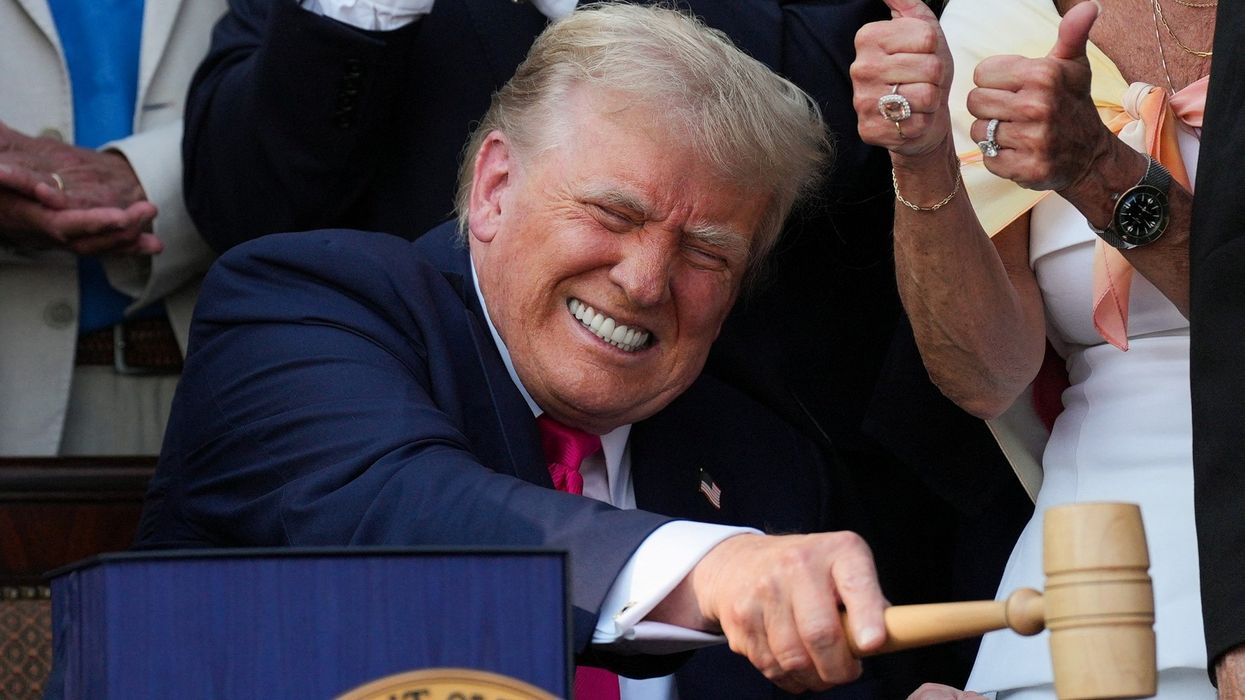
During the first Trump administration, reshaping the federal judiciary was among the president’s central goals, and over the course of four years, he successfully confirmed over 200 judges. This played a dramatic role in pushing the judiciary to the political right, most notably in the Supreme Court, where Trump appointed three justices. While he ended up seating the second-highest number of judges within a single term in US history, during his second term, Trump’s judicial appointments have slowed precipitously, reports CBS.
"Getting good judges on the courts was a very high priority in the first administration,” said Ed Whelan, a senior fellow at the Ethics and Public Policy Center. “I don't think it's as high a priority in this administration for three reasons.”
He went on to explain that one reason could be that they were so successful at it during the first term that the administration is placing more emphasis elsewhere. That brings the second reason, which is that Trump is now prioritizing executive action. And finally, “there just aren't as many seats available.”
According to experts, this lack of open seats may be a consequence of two factors. On one hand, there are simply fewer seats to fill after Trump previously filled so many. But on the other, many judges who are currently sitting may be avoiding retirement as they fear being replaced based on a “loyalty test” to the president rather than a dedication to the rule of law.
“I think it could be,” said Russell Wheeler, judicial confirmation researcher at the Brookings Institute, “they just don't want to give him vacancies to fill."
"No judge is going to be excited about the prospect of a president selecting future nominees based on any conception of loyalty to the occupant of the White House," explained Gregg Nunziata, former chief nominations counsel for Republicans on the Senate Judiciary Committee. "That offends judges across the ideological spectrum, including judges who were appointed by the president and who generally think well of the president and really don't like that mindset or that rhetoric, and I think broadly view it as damaging to the judiciary."
And, Nunziata elaborated, there is good reason for judges to have such concerns.
"He certainly began this administration trying to staff the executive branch with nominees more distinguished by personal loyalty than anything else,” said Nunziata, “and the pattern of those appointments to the executive branch, including people he's tried to place into positions of U.S. attorneys, I think give considerable rise to a concern that he will apply such a loyalty test to the judiciary and particularly if a Supreme Court vacancy should open.”
One thing that could complicate further Trump judicial nominations: a Senate flip due to a major Democratic victory in the midterms. While experts say this isn’t a likely outcome, Trump’s plunging approval ratings suggest that it is increasingly possible.
According to Whelan, "The big question is, do Republicans retain control of the Senate in the elections? If they don't, the [judicial appointment] numbers in Trump's last two years are going to be very, very low if not zero. But even if they do, it just isn't clear that there will be that many seats that become available."