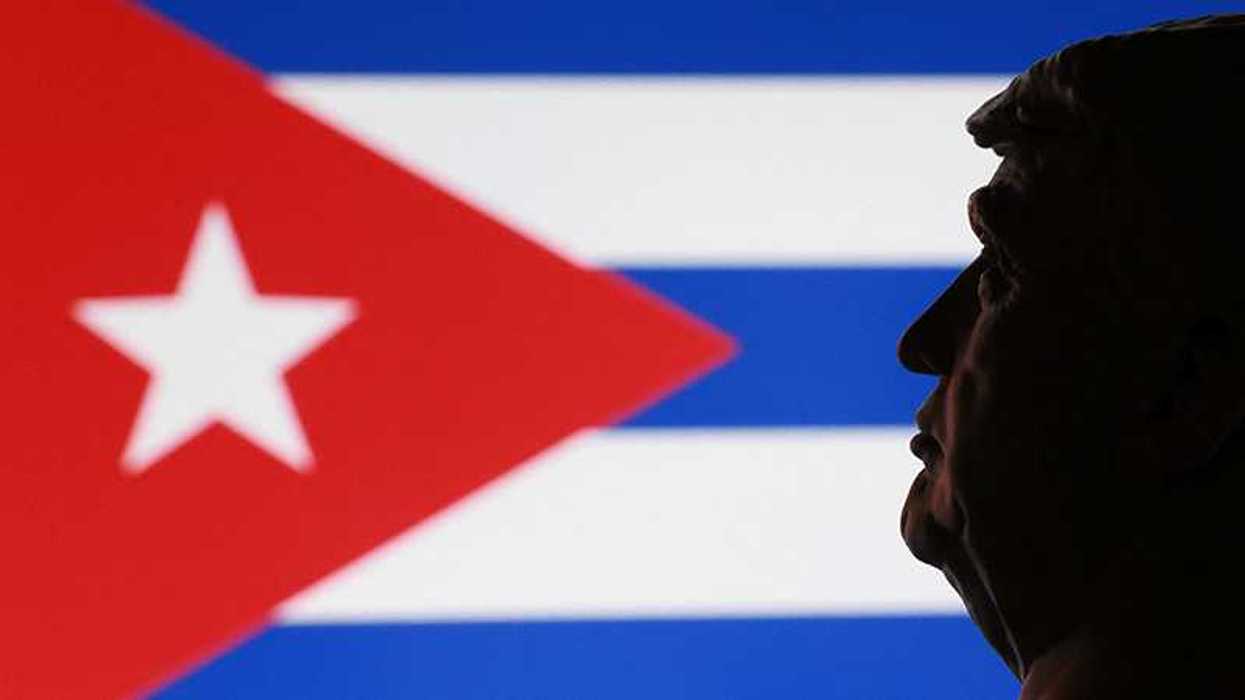
Donald Trump's immigration crackdown has taken a "brutal" new turn, according to a report from The Guardian, with a once "privileged" group now facing threats of deportations.
As the outlet explained in its Friday report, Cuban immigrants "have traditionally enjoyed a privileged position" among the many different Latin American communities in the U.S., thanks in large part "to fast-track routes to residency and citizenship." Since the end of the Cuban Revolution in 1959 and the takeover of the island nation by Fidel Castro, roughly 2.9 million Cubans have immigrated to the U.S., with the largest wave coming in recent years due to a period of economic collapse.
"Nearly all" of the programs that fast-tracked the ability for Cubans to come to the U.S. have now closed under the second Trump administration. Even worse for some, a few Biden-era programs have been outright reversed, stripping legal status from some immigrants and making them targets for deportation.
The Guardian relayed the stories of a few Cubans caught up in Trump's crackdown. Heidy Sánchez, 43, was forcibly deported from her home in Florida in April and opted to leave behind her young daughter, 2, with her American husband, fearful of Cuba's failing healthcare system. Sánchez said that the child, her only one after years of struggling to conceive, was still breastfeeding. Another Cuban immigrant, Rosaly Estévez, 32, opted to self-deport in November, taking her son Dylan, an American citizen, with her.
“It’s been brutal,” Estévez told The Guardian. “Imagine Dylan hugging his phone every night when he sees his dad. I wouldn’t wish this on any mother.”
The Trump administration has recently begun to put pressure on Cuba, including by cutting off shipments of oil to the island. Some officials in the administration have suggested the Cuban government could be the next target for a military raid like the one that deposed Venezuela's Nicolás Maduro last month. Trump has claimed that these efforts are attempting to make the island safer for Cuban Americans to return to.
“A lot of people that live in our country are treated very badly by Cuba,” Trump said. “They all voted for me, and we want them to be treated well. We’d like to be able to have them go back to a home in their country, where they haven’t seen their family, their country for many, many decades.”
Experts, however, argued that many Cuban immigrants and their families are among the immigrants least likely to want to return home.
“Like many of the president’s statements on Cuba, it’s difficult to know exactly what he’s referring to,” Michael Bustamante, chair of Cuban and Cuban-American studies at the University of Miami, explained. “Cuban-Americans who left decades ago are perhaps among the least likely to want to return full-time to a future Cuba, though they could certainly play a role as investors in the future economy.”