
Search results for "affordable care act"

NYT torches Trump for dismantling one of 'great achievements this century'

President Donald Trump and his GOP allies in Congress are determined to "dismantle" one of the "federal government's great achievements this century," with the latest piece from the New York Times Editorial Board tearing into them for the situation as it is primed to get worse.

"One of the federal government’s great achievements this century was making health insurance affordable to millions more Americans," the board explained in the Saturday piece. "In 2010, nearly 18 percent of people under 65 lacked insurance. By 2024, the rate had fallen below 10 percent, thanks to the Affordable Care Act and later legislation that built on it. President Trump and congressional Republicans are working to dismantle that achievement. They have effectively cut subsidies for the Affordable Care Act’s marketplaces, making it harder for people who do not receive insurance through work to afford a plan. This year, the subsidy cuts led three million people to lose their health insurance. In Ohio, nearly a third of previous marketplace enrollees lost their insurance."

The board further accused Trump and the Republican Party of making a "deliberate" move to hide this situation from midterm voters. The cuts to those ACA subsidies were implemented within the "Big Beautiful Bill" spending package, which is also poised to enact "sweeping cuts to Medicaid," but not until next year, helping the GOP avoid paying a political price for those cuts.

Overall, the board noted that these moves from Republicans are primed to wipe out around half of the gains accomplished by the ACA by 2034, meaning that around 14 million people would lose their health insurance. In doing so, the board explained, they are ruining "a positive counterexample of the government working to genuinely improve people’s live."

"Republicans’ attacks on affordable health care have taken two forms: one more passive, the other more direct," the board explained. "In the passive approach, Mr. Trump and congressional Republicans allowed the expiration of enhanced subsidies for the Affordable Care Act’s marketplaces. The Obama administration and congressional Democrats created the marketplaces for people who fell through the cracks. These people did not receive coverage through their jobs, and they were not poor enough to qualify for Medicaid."

It continued later: "In the more direct approach to cutting health care coverage, Republicans targeted Medicaid, the program focused on the poor and disabled. Last year, the federal government enacted what Republicans call a work requirement. In reality, it is a paperwork requirement — one that forces Medicaid enrollees, most of whom are working or have a valid reason for not working, to file repeated documents proving they have a job or a valid exemption. Americans lead busy lives, and many of them may not know of the new requirement. About two in three enrollees who will lose health insurance should, in fact, be eligible for it, the Center on Budget and Policy Priorities estimated."

Trump's plan on killing his own voters after the midterms: Report

From dismantling the Affordable Care Act to supporting Republican lawmakers’ attacks on Medicare and Medicaid, President Donald Trump has made it much more difficult for people to receive health care during his second term. Now a new report reveals how millions of Americans will literally die because of these policies — that is, once their votes for Trump are in the bag.

“When the Republican Congress enacted Trump’s One Big Beautiful Bill in July 2025, it included massive cuts in the Medicaid program, totaling around $1 trillion over 10 years—but made sure to postpone them until 2027, conveniently after the midterm elections,” wrote The New Republic's Norman J. Ornstein on Sunday. “The cuts focused on adding onerous work and paperwork requirements, all designed to force recipients off the rolls, and will remove somewhere between 10 and 15 million people from the program, leaving them without any health coverage. That is in addition to the millions losing coverage or facing huge premium increases with the erasure of subsidies for the Affordable Care Act.”

Ornstein added, “But the impact will go far beyond those directly losing their health insurance. Medicaid money does not go to Medicaid recipients. It goes to the providers. The loss of a major chunk of the money going out to them will have big reverberations.”

After detailing how the cuts will harm hospitals and nursing homes in essential ways, Ornstein characterized the consequences as devastating to American patients. For example, when it comes to the hospital cuts, ERs will be overtaxed while hundreds of necessary workers will be thrown into unemployment. Patients will find it more difficult to receive care, even as health workers struggle to make ends meet.

“As for the nursing homes, some will close; others will cut staff and staff pay,” Ornstein wrote. “The ratio of residents to staff will decline, meaning residents unable to secure help when they need it for such vital tasks as getting medications when they require them, getting help going to the bathroom, getting help in bed to prevent bedsores or worse, having responsive care during a health trauma or emergency. More unqualified staff could mean more abuse of the residents.”

He concluded, “There will be more effects seen throughout the country, for everyone who is a part of our intertwined health care system, from those working in it to those using it. No wonder Republicans made sure none of the Medicaid cuts would happen before voters experienced the impact.”

Referring to America as a “kakistocracy,” or government run by the least competent and most corrupt, Ornstein opined that “it turns out that kakistocracy is not just a funny word, but a reality with horrific consequences.”

Trump just did something 'impeachable': ex-WH ethics attorney

President Donald Trump’s use of taxpayer funds to pay for campaign ads may be outright “impeachable.” This is according to former White House ethics attorney Richard Painter, who took to social media on Sunday to warn that a recent string of advertisements amounted to government-sponsored “propagandha.”

This was in reference to several advertisements aired across multiple networks promoting Trump in the run-up to the midterms. The ads – which focus on Trump’s claims that he’s fighting “communism” and “the deep state,” with one declaring he will “expel the warmongers from our government” even as his war on Iran drags into its seventh month – are tagged with disclaimers that read “Paid for by the U.S. Government.” Under the Federal Election Campaign Act of 1971, public officials cannot use taxpayer dollars for campaigning purposes, and according to Painter – who served under President George W. Bush – these ads are in direct violation of the law.

“This could be an impeachable offense,” posted Painter on Sunday. “@POTUS has no right to use taxpayer money for campaign ads. Congress has expressly prohibited government sponsored political propaganda, which is dangerous for democracy.”

He wasn’t the only one to question the ad campaign’s legality. According to Sen. John Kennedy (R-LA), the use of taxpayer money to fund ads promoting the president was “probably” illegal. As he elaborated, “I don’t think any public official, including President Trump … or John Kennedy, should spend public money … on private ads for themselves.”

The White House has attempted to dismiss such criticism by claiming the clips are not campaign ads because Trump is not on the ballot in November, but the president himself has previously instructed voters to “pretend” he is. According to the Hill, “The Trump administration also highlighted past examples of the federal government airing public service announcements, such as when the George W. Bush and Obama administrations aired spots explaining new Medicare legislation and open enrollment in the Affordable Care Act marketplace, respectively.”

“When prior Administrations utilized the airwaves, it was called ‘public education,’” the White House release reads. “When this Administration promotes pride in our country, many of those same voices call it ‘propaganda.’”

But rather than explaining the finer points of new policy initiatives, Trump’s new ads feature his typical rally rants, like, “We will cast out the communists, Marxists, and fascists. We will throw off the sick political class that hates our country. We will rout the fake news media, and we will liberate America from these villains once and for all.” According to the Washington Post, over $300,000 was spent on the ads, and it is unknown which government agency footed the bill.

The suicide mission against the most powerful force in America

The thing about Donald Trump is that he's bad at being president. I don't mean tyrannical or fascist or criminal or corrupt. Those adjectives obviously apply, but I mean just plain bad.

The basic job of being president is reflecting the will of the majority of the American people as faithfully as possible. When you run afoul of public opinion, you change course quick.

Trump doesn't do that. No one around him does that. I mean, who in their right mind thought it was good idea – in the run up the congressional elections, when GOP voters are starting to believe he doesn't care, when no other president has polled worse, according to G Elliott Morris, not even George W Bush in 2006 – to push 760,000 people off Obamacare?

Sure, fraud. That was their reason for doing it. It's a lie, according to Charles Gaba, but even if it were true, why do it now? And why risk pushing your own people off their health insurance. (According to the Kaiser Family Foundation, more than 75 percent of Obamacare enrollees live in states that the president won in 2024.) What on earth is the White House trying to prove? Not that Trump is a good president. More like proving his enemies right.

This, for instance, from Brian Beutler: "Trump is the imperfect figurehead of a corrupt cabal of plutocrats and ideological fanatics, who have used his political movement to foment something like a revolution, short of igniting civil war: Collapse the democratic order globally, replace it with great power spheres, and subservient, corrupt courtier states. Collapse the democratic order domestically, replace it with a rightwing autocracy."

Trump might avoid this were he good at being president.

He's not. This is the result.

What is Trump good at? Scamming. He told the American people during the last election that he would bring down the cost of living and restore the country's greatest. All they had to do was ignore the fact that he's a cheat and a liar, that he's a criminal and a traitor, that he was convicted on 34 counts of felony fraud, and that he was determined by a judge to be a rapist. In essence, Trump asked a majority of voters to trade democracy and the rule of law for an IOU, and to the shock and horror of the civilized world, a majority of voters accepted.

I think the rage we are seeing now in public polling, especially among those who voted for Donald Trump, is the rage of people who realize they are never going to get what they were promised and, perhaps, that what they have sacrificed is never coming back. It is now mainstream that Trump's IOU isn't worth the paper it was written on. Even his attempted bribe of $5,000 per US adult if his party wins was met with crickets. Voters can respond in two ways: stay home on Election Day or vote Democratic. Either way, historic GOP losses.

Trump could mitigate those losses if he were good at being president, but he isn't. Instead, he takes people's healthcare away. He brutalizes immigrants even more. Above all, he lies about the true cost of war. "It’s a very inexpensive price to pay for what we’ve done,” the president said of the price of gas. His surrogates are worse: "Everybody is obsessing with the price of gas," Sebastian Gorka said today. "This is much bigger than the price of gas. Think about what would happen to the price of gasoline if [Iran's] missiles were nuclear tipped."

In 2024, Donald Trump gave the American people a choice: the Constitution of the United States or greed. A majority chose greed. But two years later, he's acting like there won't be consequences for that decision. No one alive has seen a president choose to walk into the teeth of American selfishness. No one alive has seen a president pretend it won't be deadly.

Ask Me Anything: September 24, 2026

I asked you to ask anything. Here are some question I received. If you want to ask me something for next week's Ask Me Anything, leave a comment below or send a reply.

John Richardson asked:

What are the chances for impeachment and conviction if the Democrats win the House and Senate in November?

My answer:

I think the chances of indictment by the House are extremely high. The chances of conviction by the Senate are not as high, but I think there could be an even chance if the Democrats take the upper chamber with 53 senators. I also think those chances will increase in the weeks and months after a new Congress is seated. During that time, we will see how Donald Trump reacts to the fact that he is a lame duck president. He will want the center of gravity in Washington to remain fixed on him, but everyone will shift their focus to 2028 in due course, meaning that the man who has never been ignored is about to get the shock of his life. There's really no way to know what he will do, except that it will be no good very bad. The degree of badness will probably correlate with the will of Congress to remove him.

But his reaction to being a lame duck isn't the only factor. As I have been saying, no matter what happens in the midterms, Trump is still going to be president, he's still going to be in charge of this war, and the war is still going to drive up the cost of gas and diesel and everything else. I mean this seriously when I say there is no limit to how high prices could go, given that the war is happening while monopolies are already fixing prices with AI. A year from now, if diesel is selling at $9 on average, we might look back with fondness. Remember when it was only $6! The new Congress could revoke his war powers, but would he obey a Congress that he has never obeyed before? What would his incentive be? The crisis could get so damaging to voters that even some Republicans senators might want to remove him.

Then there's the next election to consider. I think it's an open question as to whether Trump wants to help his party or sabotage it. Given everything we know about him, and how completely mono-dimensional his lizard brain is, the smart money might be on sabotage, which would suggest that the Republicans in the Senate might have an incentive to remove him in order to give JD Vance the best possible start to 2028. Then again, JD Vance is pretty unlikeable, even in the GOP. For Republicans, it might be better to gut it out until the end.

All this may be moot if Trump dies by natural causes.

At the rate he's going, no one should be surprised if that happens.

Leona Beauchamp asked:

I am concerned that the Democrats will blow their chance to shut down the grift. What are they realistically able to achieve with just a majority in the House?

My answer:

The House could send an indictment over to the Senate, then hope against hope that he will be removed, but otherwise, the House can't force Trump to stop doing anything, no matter how criminal or disgusting, as the Congress is not the "active" branch of the government.

That said, Trump isn't the only target of impeachment. Robert F Kennedy Jr is insane and responsible for the death and suffering of those who decided to believe his lies about vaccines. Measles, mumps, whooping cough – these preventable diseases are roaring back thanks to him. Plus: No one likes him, not even Senate Republicans who would otherwise defend Trump. Pete Hegseth is also a target. He is not only a failure as the "secretary of war" but he's also an embarrassment. He'd rather speechify on TV about phony "holy wars" than do the hard of prosecuting a real one. He is also deeply disliked, if he is not despised.

Point is that all the focus is on Trump and making him pay for his transgressions, but he's not alone. As I have said before, his administration is a criminal enterprise in all but name. The public does not see it as such. Control of the Congress means Republicans can defend it, deflect attention away from it, and sandbag efforts to expose it. Everything changes once the Democrats are in charge. There is, for instance, no legitimate reason for Trump's stock trading. There is no way to defend it in terms of presidential immunity. If the Democrats did nothing else, they could spend the next two years investigating that crime, releasing drip after drip of scandalous news, discrediting his reputation in the eyes of the public, even more than he himself is doing, while salting the earth for any Republican who wants to succeed him.

To me, that would benefit the common good more than impeaching him.

Trump unleashes $1 billion in retribution

The Trump administration announced on July 21, 2026, that it’s withholding US$867 million in federal healthcare funding for California and $200 million for Minnesota – a total of more than $1 billion.

Federal officials said the two states had failed to provide sufficient evidence that a number of disputed medical claims were legitimate. These include bills for in-home care and other services covered by the two states’ Medicaid programs for low-income residents.

Medicaid administrators say the funds can be recovered if the states supply the requested documentation. But the action is highly unusual: Typically, Medicaid officials partner with states to conduct an audit when they suspect fraud, a careful process that often takes years.

It’s the second time in 2026 that the Trump administration has withheld or deferred federal Medicaid funds for several states, including California and Minnesota, because of alleged fraud and abuse. The Democratic governors of those states have called the decision a politically motivated attack on their constituents.

I’m a historian of social policy who led the first comprehensive historical overview of Medi-Cal, California’s statewide Medicaid system. I’ve found that U.S. leaders have long used the language of fraud and abuse to blur the line between correcting very real failures within Medicaid and – as I believe the Trump administration is currently doing – discrediting and defunding the program itself.

Who pays when Medicaid is cut? It affects children’s health care, nursing home care, disability services and health insurance.

Slashing the safety net

The Medicaid restrictions are part of the Trump administration’s overall efforts to slash federal funding for the safety net.

The large tax-and-spending bill that Trump signed into law in July 2025 as the cornerstone of his second-term agenda pared eligibility for Medicaid by introducing work requirements for some adults. It is cutting close to $1 trillion in federal spending on the program over the next decade.

Researchers estimate that almost 12 million people, on top of the estimated 28 million without health insurance in 2025, could become uninsured by 2034 due to these changes. By mid-2026, more than 3 million people had already lost their insurance coverage due to Republican changes to the Affordable Care Act.

‘Padlocking’ the ‘cookie jar’

In February 2026, Vice President JD Vance, Health Secretary Robert F. Kennedy Jr. and Dr. Mehmet Oz, the administrator of the Centers for Medicare & Medicaid Services, or CMS, announced a new anti-fraud initiative called Comprehensive Regulations to Uncover Suspicious Healthcare.

Also known by its rather unsubtle acronym, CRUSH, this initiative is taking unprecedented steps to withhold and defer funds in response to suspected fraud. “CMS is done trying to catch fraudsters with their hands in the cookie jar,” Oz said in announcing CRUSH’s formation. “Instead, we’re padlocking the jar and letting them starve.”

To be sure, Medicaid fraud, waste and abuse – such as providers billing Medicaid for services that are unnecessary or never rendered – are very real problems that cost taxpayers billions of dollars annually. They do divert funds from the low-income and disabled Americans enrolled in the program.

But the Trump administration’s latest moves are part of a much broader history of weaponizing Medicaid fraud and abuse – both real and imagined. I see them as a politicized attempt to prove that Medicaid itself is wasteful, that state governments cannot be trusted to administer federal money, and that public benefits inevitably invite dishonesty.

Robert F. Kennedy Jr. points to a chart pertaining to Medicaid fraud. Secretary of Health and Human Services Robert F. Kennedy Jr. speaks about alleged Medicaid fraud and charges in Minneapolis in May 2026. Christopher Juhn/Anadolu via Getty Images

Providing little oversight at the start

Medicaid was established, along with Medicare for older adults, in 1965 as part of President Lyndon B. Johnson’s “Great Society” reforms. Despite providing millions of Americans with health insurance coverage for the first time, these programs had few centralized mechanisms for the kind of federal oversight that could prevent and catch fraud and abuse.

And the sheer scale and complexity of the Medicaid system – joint federal-state funding, varying eligibility requirements, millions of enrollees and thousands of providers – created opportunities for questionable billing practices among providers.

The 1970s saw a number of highly publicized Medicaid scandals involving nursing homes, laboratories, pharmacies and so-called “Medicaid mills” – healthcare providers that sought to bill the government for large numbers of Medicaid patients for shoddy and often fraudulent care.

A series of high-profile congressional investigations spurred demand for stronger Medicaid oversight and enforcement. That led to the Medicare-Medicaid Anti-Fraud and Abuse Amendments of 1977, which established the national Medicaid Fraud Control Units program.

The state-run Medicaid Fraud Control Units received generous federal matching funds to investigate and prosecute fraud.

The most serious Medicaid fraud was generally committed by healthcare providers and contractors, not patients. Medicaid Fraud Control Units were principally responsible for investigating providers, while also prosecuting the abuse and neglect of patients whose care was billed to Medicaid.

At the same time, however, Medicaid was becoming entangled in a broader political debate over social spending, whether many Americans were becoming too dependent on government benefits, and the alleged use of benefits by people who should not have received them. In the 1980s and 1990s, widely circulated stories about Medicaid exposed fraud and malfeasance by providers.

But disproportionately, they also highlighted the comparatively few instances of fraud by people enrolled in the program, such as cases where they submitted false receipts for covered medically related travel or sold drugs they obtained through Medicaid for free or at low cost.

Using Medicare fraud to justify spending cuts

The distinction between Medicaid and cash assistance programs, such as the Aid to Families with Dependent Children “welfare” program, frequently disappeared in political rhetoric. False or exaggerated stories that portrayed African American single mothers living extravagantly while fraudulently claiming welfare benefits became potent symbols of supposed government failure.

While campaigning as a presidential candidate, Ronald Reagan seized on this trope of the “welfare queen” in his attacks on social spending.
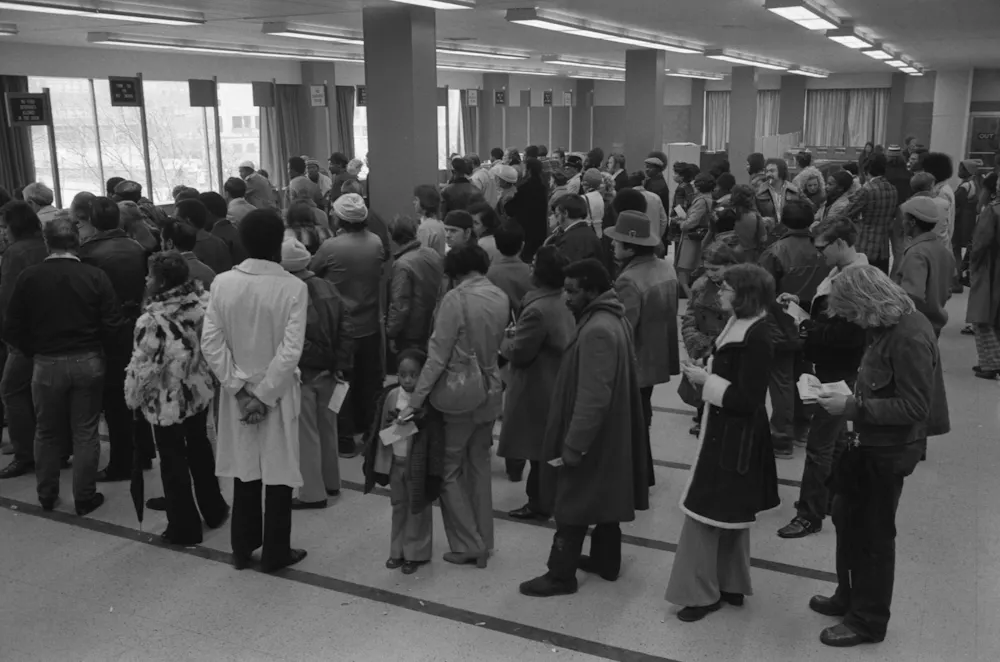
A large crowd of people wait on lines in a black and white photo from the 1970s. People line up at the Baltimore City Welfare Office in 1975, years before concerns about social spending led to big cuts to safety net programs. O'Halloran/Library of Congress via Getty Images

By the mid-1990s, opposition to welfare programs had become increasingly bipartisan. Politicians in both parties often used tales of Medicaid fraud on the part of providers and recipients to justify tighter eligibility rules and spending cuts.

Federal oversight expanded further with the Deficit Reduction Act of 2005, which created the Medicaid Integrity Program and strengthened federal oversight of state programs. The Affordable Care Act, the landmark healthcare legislation Congress passed in 2010, added new measures to screen providers and verify billing.

Concerns about Medicaid’s “integrity” became highly politicized in the debates surrounding the ACA. Critics of Medicaid expansion argued that increasing the number of people who could get health insurance through the program would increase fraud and improper enrollment. Supporters of expanding Medicaid to help more Americans gain health insurance maintained that anti-fraud rhetoric often disguised ideological opposition to the program’s expansion.

Blurring distinctions then and now

For the six decades that this program has helped millions of low-income Americans get healthcare, politicians have blurred the distinction between protecting Medicaid from abuse and using abuse to discredit Medicaid itself.

In my view, the Trump administration’s campaigns against California and Minnesota continue that pattern. It is using real weaknesses within Medicaid to advance much broader political arguments: that Democratic states cannot be trusted, that public benefits naturally invite abuse, and that withholding funds is itself a form of reform.

The result will no doubt be that fewer low-income Americans will be able to get the healthcare they need.The Conversation

Ben Zdencanovic, Assistant Professor of U.S. History, University of Cambridge

This article is republished from The Conversation under a Creative Commons license. Read the original article.

'Are you tone deaf?' Republican cornered in panel battle over Trump economy

A battle broke out on CNN Wednesday morning as a Democratic pundit fact-checked the GOP panelist about the work he claims the White House is doing to help on the affordability crisis.

The debate began with reporting that the midterm "convention" event in Texas would be charging nearly $89,000 to snag a photo with President Donald Trump. A roundtable with Trump will cost $250,000. This pairs with the $25,000 that each elected official is being charged to attend the event.

When CNN's Manu Raju asked congressional officials whether they plan to attend, those he spoke to made it clear that they need to be in their districts, focusing on their own elections.

"Trump is sitting on more than $400 million. He has money to burn. So why is there a convention?" asked CNN host Audie Cornish to Semafor economics reporter Eleanor Mueller.

"I think the bigger problem than the charging for the photo and the invitation, which is honestly pretty on par with what they've been charging for the last two years, is the cost to House Republicans to travel and attend the convention," said Mueller. "So much of this is about them keeping their majority, and the fact that, as we saw, so many have decided to not go is, I think, is going to really hamper these fundraising efforts that they are so clearly determined to ramp up here."

Cornish was confused, saying that the whole point of the convention appears to be an effort to tout Trump's record.

"My record is good. All of you are chumps. No one likes you, right? That's the sort of Trump argument against congressional Republicans. And the best thing I can do for you is be more visible to make it a referendum on me," Cornish said.

New York Times reporter Maggie Haberman told the Legal AF podcast this week that she hasn't spoken to a single Republican who is happy about this. They feel put upon by this. It stays off of the trail to have to go do this. It's very confusing what the purpose is beyond just celebrating Donald Trump. And as you say, they have — it's very hard for a lot of these folks to run on ... aspects of Trump's record right now."

Democratic strategist Antjuan Seawright mocked Trump's response to the affordability crisis, saying that even a photo with Trump costs over $88,000.

"Look, the reality is this is how out of touch Donald Trump and Republicans are as they continue to pimp the presidency and the office. Americans in the states Donald Trump won are suffering from the high cost of living. 18.2 million, my good friend Terry, in places that Donald Trump won, are seeing their premiums, co-pays, and deductibles rise as much as $1,000 per month. People are dying, literally because of these decisions that this White House and this president has made."

Republican Terry Schilling called BS on that, saying that no one is dying.

The Leonard Davis Institute of Health Economics at the University of Pennsylvania and the Yale School of Public Health conducted an impact study examining how the "One, Big, Beautiful Bill" would affect Americans and found that it would lead to over 50,000 preventable deaths per year, largely due to healthcare cuts. Slashing subsidies to the Affordable Care Act is calculated to cost an estimated 20,000 deaths, while there will be 13,000 annual deaths that come from rolling back mandatory safe-staffing requirements at nursing homes. About 18,200 deaths will come from "the loss of Medicaid coverage among 1.38 million low-income Medicare beneficiaries, causing loss of access to low-income prescription drug subsidies."

Schilling disagreed that this was accurate, as Seawright maintained that the GOP's bill was the "largest transfer of wealth in American history."

"No, no. That's that is a garbage line. It's been debunked left and right. It is not. President Trump. >> Is holding this convention. >> The American people and working families had their tax cuts made permanent, which Democrats will repeal and raise their taxes on day one, as soon as they get into office," claimed Schilling.

Schilling explained that the convention is necessary to promote all of the things that Trump has done in his first two years in office. The GOP convention will remind voters of this, he said.

"He has $400 million!" emphasized Cornish.

"Let's deal with the real issue at hand: You're telling me that the do-nothing Congress and do-nothing President's agenda is selling to the American people selling to the American people? Are you tone deaf to what every single — why are you tone deaf?" Seawright said as Schilling kept trying to talk over him. "Let me — let me finish. Let me finish. Have you seen the polling data for Democrats, Republicans, and everyday Americans and what they feel about this president's agenda? The president and the Congress are underwater on every single major issue they campaigned on, and voters are going to pull the plug in November as a result of their failure."

Schilling said that Democrats aren't doing much better, but Seawright made it clear Republicans are in charge of every branch of government. There are no Democrats to blame.

"One thing," Seawright continued. "Name one thing this White House has done to lower costs for the American people they promised on day one."

Schilling said everything they've done was in an effort to lower prices.

"Point to it. Point to it. Point to one thing that's lower cost for the American people," Seawright asked, but Schilling couldn't. "I love you, you cannot point to one thing that's lower cost for everyday Americans in this country."


- YouTube www.youtube.com

Who’s to blame if Ken Paxton goes down in flames: former Fox News analyst

How do you solve a problem like Ken Paxton? It's a question that The Hill's politics editor, Chris Stirewalt, can't help but mock as entirely of the GOP's own making.

For the first time in decades, a Texas U.S. Senate seat could go blue because the candidate is so uniquely flawed that even Sen. John Cornyn (R-Texas) warned his party it wasn't a smart move.

Stirewalt quoted the adage that success has many fathers, while failure is an orphan.

"If Paxton really does manage to lose his Senate race against Democratic state Rep. James Talarico, naming the father of what would be an epochal defeat for Texas Republicans will be a Maury Povich-level meltdown," he said.

Stirewalt described the baggage Paxton drags with him as enough "to fill the cargo hold of the Titanic."

The Texas Republican Party just dropped $54 million in an effort to save Paxton's faltering campaign, campaign finance records show. It's the largest independent expenditure in the 2026 campaign cycle thus far.

It doesn't only come from the GOP's desperation; it comes as a direct result of what Cornyn called a "lazy" candidate.

“Paxton’s a poor campaigner,” Cornyn told the Texas Tribune. “He’s lazy and doesn’t raise money. And he basically is not offering a very compelling case for his election. He’s making this harder than it needs to be. But so be it — we are where we are.”

In fact, Paxton spent a key campaigning time, July Fourth weekend, in Iceland and London with his mistress-turned-girlfriend.

So, it isn't surprising that Stirewalt places the blame at Paxton's feet if he loses. After all, he said, Paxton "brings the verve and energy of a coroner’s inquest to the campaign trail."

Still, Stirewalt said that Cornyn is to blame as he enjoys "his I-told-you-so moment." Stirewalt thinks that if the two men came together in a joint effort after the bloody primary, Cornyn could be out there saving Paxton's skin.

Both Paxton and President Donald Trump made that fairly difficult by turning Cornyn into an enemy, however. Still, Stirewalt includes Cornyn in those who will bear the blame for focusing on Senate races other than Paxton's.

Stirewalt assumes that Paxton's pride got in the way of even asking Cornyn for his endorsement and his help.

The other person to blame, he said, is the president, who picked Paxton over Cornyn in the primary.

Now that he's in the general election, Paxton's close association with the president will only make things worse, even in ruby red Texas. Trump continues to lose ground with independent voters, but now it appears he's dropping with Republicans too, who believed him when he promised "no more wars."

Currently, that war is driving up costs for groceries and gas. The only solution came during his 2026 convention, which Stirewalt called an outright "infomercial for Paxton": Trump's pledge to deliver $5,000 checks to Americans if they ensured Republicans kept the House and Senate.

Trump made the same promise for the DOGE cuts, which were supposed to hit bank accounts in February. It never happened. Trump's $2,000 tariff rebate is another that didn't appear. Trump even promised a $500 rebate check, saying that the Affordable Care Act Americans were overcharged and he'd make it right. Thus far, none of those checks have arrived, adding to Trump's total of $12,500 he hasn't paid Americans but promised.

Even his pledge of support for Paxton was lackluster. It was akin to a roast where he blasted Paxton as dressing poorly and not knowing how to speak in public.

"He got a massive cash infusion and a new persona from Trump as a kind of pitiful figure, which is an improvement over his conventional image as calculating and aloof," wrote Stirewalt.

Still, if Paxton loses, "he will mostly have himself to blame."

The billion-dollar federal contracts tied to Trump allies and family members

Democratic candidates should be talking about ONLY two things in these last five weeks before the midterms, and show how they’re connected: higher prices and Trump-Republican corruption.

Consider:

1. The Trump-Republican war on Iran has been a huge windfall for Big Tech supplying the military — such as Palantir, a core artificial intelligence and data-integration partner for the U.S. Department of Defense, founded by Trump and JD Vance buddy Peter Thiel. But it’s costing Americans dearly.

At the same time, investment companies backed by Donald Trump Jr. and Eric Trump have accumulated at least $3.2 billion to $6.3 billion in direct Pentagon contracts, current funding, and future contract options since January 2025.

But Trump’s Iran war is causing Americans to spend some $1.50 a gallon more on gas (gas was $2.98 per gallon before the war; it’s now $4.42 to $4.47 per gallon). Since the war began, Americans have spent $65 billion more on gas.

The price of diesel fuel has soared to an average of $7.00 a gallon — and because trucks that transport everything to retail stores now pay so much more to get it there, this price increase is also being passed on to consumers.

2. Trump has given out tariff waivers and carve-outs to industries and companies making kickbacks to him, while the tariffs have jacked up prices overall.

For example, when polyethylene terephthalate, the thermoplastic used to make plastic bottles, got a tariff exemption, it was a win for Reyes Holdings, a Coca-Cola bottler that ranks among the largest privately held companies in the U.S. and is owned by a pair of brothers who have donated millions of dollars to Republican causes.

Just after Tim Cook, Apple’s CEO, dumped $1 million into Trump’s inauguration, Apple got tariff exemptions for its products.

After Elon Musk sank a quarter of a billion dollars into Trump’s 2024 campaign, Tesla got a tariff exemption for electronics.

And so on.

But the worldwide tariffs that made these corrupt exemptions possible have increased annual household costs by an estimated $1,100, according to The Budget Lab at Yale.

3. Trump’s support for artificial intelligence is another form of corruption that’s pushing up prices.

The AI industry’s war chest for the 2026 midterms is projected to exceed $200 million, with almost all of it going to Republican candidates and Trump’s own super PAC.

But AI is already harming average Americans by increasing borrowing costs. Together with the costs of Trump’s war in Iran, Big Tech’s huge borrowing — over $500 billion so far this year — is crowding out other borrowers, thereby contributing to sky-high interest rates on mortgages, auto loans, and credit-card overdrafts.

In addition, Trump’s encouragement of AI data centers is raising electricity prices in areas where data centers are sucking up energy.

4. Trump’s tariffs and support for AI are increasing the costs of housing.

Housing affordability is among voters’ top concerns this election cycle, yet:

— The average 30-year fixed mortgage rate is now 7.33 percent — higher than at any point since late 2023 — due in part to Trump’s war and his encouragement of AI borrowing.

— The prices of lumber and building materials have soared because of Trump’s tariffs. The National Association of Home Builders estimates that tariffs on lumber and building materials have added $10,900 to the cost of constructing a new U.S. single-family home.

— The price of copper, a key material for electrical wiring in residential and commercial construction, has soared 40 percent in the past year due to Trump’s tariffs and data center demands — adding even more costs to building a typical home, which requires hundreds of pounds of copper.

5. Trump’s tax cuts for America’s wealthiest corporations and individuals have come at the expense of healthcare and health insurance for average Americans.

To pay for the tax cuts for America’s wealthiest families and corporations — including their largest donors — congressional Republicans slashed Medicaid and failed to renew healthcare tax credits, forcing millions of Americans to spend more for coverage or forgo it altogether.

Trump and congressional Republicans passed the biggest Medicaid cut in history, which will result in 10 million people becoming uninsured and make healthcare providers that serve low-income populations vulnerable to private equity takeovers.

Millions of Americans will spend an average of $2,136 in annual Affordable Care Act (ACA) premiums this year — 58 percent more than last year (in some states they’re paying up to 220 percent more). Nearly 5 million Americans will lose healthcare coverage this year because congressional Republicans failed to renew the Premium Tax Credit. Additionally, at least 115 hospitals and clinics across 32 states have closed or reduced services as a result of the Republican healthcare cuts.

The corruption runs even deeper. When Trump rolled out TrumpRx earlier this year, he claimed Americans would get access to more affordable prescription drugs. But the platform fails to disclose information about less expensive generic alternatives and in some instances charges consumers more for products that are available for less elsewhere.

As the Groundwork Collaborative has shown, the biggest winners from TrumpRx are the Trump family and Big Pharma. Donald Trump Jr. is on the board of drug platform BlinkRx, which benefits from the regime’s promotion of direct-to-patient medicine sales. BlinkRx donated $50,000 to the Trump inaugural committee. When patients use TrumpRx instead of insurance, they have to cover the drug cost themselves — saving money for insurance companies as they continue to rake in premiums.

And despite Trump exempting 17 of the largest pharmaceutical companies from his threatened pharmaceutical tariffs, these firms have continued to raise prices on nearly 900 different drugs. At least three of these firms — Gilead, Merck, and Pfizer — each donated $1 million to the Trump-Vance inaugural committee, alongside the Pharmaceutical Research and Manufacturers of America, which lobbies on behalf of Big Pharma.

These connections between the higher prices Americans are paying and the corruption of the Trump regime and its Republican enablers need to be widely understood. The richest Americans and biggest corporations have made out like bandits — and average working Americans are paying dearly for what the bandits have stolen.

Less than five weeks until the November 3 midterm elections, Democrats must show Americans not only that they’re paying more for just about everything, but that the reason they’re paying more is the rot at the heart of Trump-Republican deal.

Robert Reich is a professor of public policy at Berkeley and former secretary of labor. His writings can be found at https://robertreich.substack.com/.

Trump embraces a textbook communist idea without anyone noticing

f Trump wants Republicans to win this fall, all he has to do is endorse Medicare For All and call it a Republican policy.

After all, conservatives across Europe are generally quite happy with their national healthcare systems and definitely don’t want them going away or to be replaced by for-profit insurance companies.

When I did did my show from Denmark’s Danish Radio’s studios, I interviewed multiple conservative politicians and to a person their response to my question, “Do you want to get rid of your healthcare system?” was, “Are you nuts?”

This may not even be all that radical by today’s Republican standards: after all, Trump’s embraced the purely communist idea of the federal government taking control of the means of production and distribution — the textbook definition of communism — by having our government take stock in over 30 companies over the past 18 months.

Odds are high, though, that he won’t go anywhere near MFA, mainly because the trillion-dollar healthcare industry gives hundreds of millions of dollars every year to mostly Republican politicians (thanks to five corrupt Republicans on the Supreme Court).

But the times are changing and, as we’re seeing with progressive primary victories by Medicare For All advocates across the country, people who didn’t just support it, but ran on it. American voters may now be ready for Democrats to again throw their weight behind the plan like Harry Truman and Jack Kennedy did.

There are two reasons for this.

I’ve written at length about the cycles of history, both in my books and the Hartmann Report: Strauss and Howe documented 80-year cycles that have repeated themselves since the founding of our republic.

There’s a financial crisis, followed by a war, followed by a revolution within America that leads to a Great Leap Forward (to borrow from Mao) in progressive policy.

— In 1771, for example, there was a worldwide depression that provoked the East India Company to get the then-biggest tax cut in history from Britain’s government; it led straight to the Boston Tea Party and the American Revolution.

— Eighty years later, the Panic of 1856 helped set the stage for the Civil War which, when resolved, led to the end of chattel slavery (other than for convicted criminals).

— Eighty years after that, the Republican Great Depression led straight to World War II, followed by the fulfillment of FDR’s New Deal and the creation of the American middle class.

— And today we’re eighty-one years out from the end of WWII, which is causing a lot of observers to note that we’re ripe for another “revolution” after being battered by 45 years of the Reagan Revolution.

Along a similar vein, Peter Turchin writes about a cycle he identifies with his “Cliodynamics” system, where roughly every 40 years control of the country transfers back-and-forth between conservatives and progressives, all the way back to 1776.

But setting aside the calendar part of this (which is fascinating in its own right), I believe there’s a bigger factor we can see in these sometimes-revolutionary changes to the American political landscape: crises.

— The 1773 Tea Act and Boston Ports Act (among others) inflicted a crisis on the early colonists; creating the United States was their reaction to it.

— The attack on America by a few hundred Confederate oligarch families and the army they’d raised created a crisis for Abraham Lincoln and our government; ending slavery and writing the 13th, 14th, and 15th Amendments into our Constitution expanding the rights of all Americans was the result.

— And the Republican Great Depression that started in 1929 was arguably the biggest economic crisis the American republic had ever faced, leading straight to World War II and FDR’s New Deal that legalized unions, created Social Security and the minimum wage, and built the world’s first more-than-50%-of-the-population middle class.

But outside of those 80-year cycles, President Lyndon Johnson’s Great Society programs — civil rights, voting rights, Medicare, Medicaid, food stamps, housing support, Pell grants, etc. — were passed in the wake of the crisis created by the assassination of JFK. Johnson relied heavily on the memory of President Kennedy to push through those bills, saying that they’d complete the memory and legacy of his predecessor.

Today, America is facing another crisis that I believe is every bit as dangerous and threatening to our republic as were the Tea Act, the Civil War, the Republican Great Depression, and the death of President Kennedy. Trump’s presidency threatens to literally end democracy in America, the exact goal of the Confederate oligarchs 165 years ago.

He’s not only grifted billions for himself and his corrupt family, and handed other billions to the morbidly rich who surround and support him, but has now identified people who don’t agree with his idea of “traditional American values” as terrorists, throwing one man in prison for 40 years for simply moving a box of progressive literature from one home to another.

He’s openly plotting to rig this fall’s election and installing election deniers in key positions around the country to insure that the 2028 presidential election will be neither fair nor free.

He’s started a foreign war that’s exploded inflation and destabilized the entire Middle East.

And since JD Vance said recently that his proudest accomplishment was blocking US military aid to Ukraine, his and Trump’s fealty to Putin have further destabilized Europe.

Thus, we’re now again at an economic and political crisis point that’s not that different from those that provoked the America Revolution, Reconstruction, the New Deal, and the Great Society.

That’s why any Democratic candidate who runs primarily on putting into place Medicare For All will probably win in 2028 and will be positioned to be this generation’s Jefferson, Lincoln, FDR, or LBJ. And it represents a strong opportunity for candidates running in this year’s midterms.

Every other democracy in the world has Medicare For All or its equivalent, as do most other countries that aren’t yet democracies or where democracy has backslid as you can see from this map that’s all over the internet right now.

The guy who brought Medicare to Canada, Saskatchewan Premier Tommy Douglas known as the Father of Canadian Medicare, was voted “The Greatest Canadian” in a nationwide CBC poll nearly two decades after his death.

Giving everybody affordable healthcare is popular everywhere in the world, and this time the scare-mongering by the billionaires, the health insurance industry, and their bought-and-paid-for Republican shills won’t work.

While President Harry Truman was the first to specifically call for healthcare for all Americans (it was implied in FDR’s Second Bill of Rights), President Kennedy also campaigned for it:

Polling also backs up this idea that Medicare For All is possible now. KFF (formerly Kaiser Family Foundation) found that 77% of Democrats today support “a national Medicare-for-all health plan”; overall public support is 56%.

An NBC News/Wall Street Journal poll found 67% of Democrats supported Medicare for All. And a 2026 Reuters/Ipsos poll found that 71% of Democrats said universal health care is “an essential Democratic policy position.”

FDR’s new Deal and LBJ’s Great Society both came about as the result of national crisis pushing down opposition to their plans while encouraging an embrace of reform and new progressive programs.

This is one of those unique moments in history. We’re right on top of both Strauss and Howe’s 80 year cycles, Turchin’s 40 year cycle, and an American crisis right up there with the severity of the JFK assassination.

Thus, we’re at one of those moments again, with the Trump presidency having created a series of national crises, that the first Democratic candidate for president who actually runs on Medicare for All (and those calling for it now in races for the House and Senate) will have the best chances of winning and bringing America fully into the 21st century.

DC insider: Dem may have betrayed America in secret Kushner meeting

House Speaker Hakeem Jeffries has alternated between being respected by his fellow liberals, such as by standing up for the Affordable Care Act, and being blasted by them, such as by insufficiently emphasizing President Donald Trump’s in-office profiteering.

Now a former Republican political strategist is accusing Jeffries of potentially selling out Democrats through his once-secret meeting with Trump’s son-in-law and unofficial adviser, Jared Kushner.

“In the meeting, apparently, Jared Kushner made the point that it would be a good idea to open up a relationship between Hakeem Jeffries, who may soon be the Speaker of the House, and Susie Wiles, the White House Chief of Staff — because, according to The New York Times, which keyed us in on Jared's thinking, the most stable and reasonable people in the White House and in Congress are Susie Wiles and Hakeem Jeffries,” Steve Schmidt, who previously was a top adviser to President George W. Bush, said on his podcast on Monday.

Schmidt then elaborated on why this is a problem.

“Here's the thing: Susie Wiles is a staffer, an employee of Donald Trump's. Hakeem Jeffries would be a constitutional officer,” Schmidt argued. “His peer is not the White House Chief of Staff — it's the President of the United States.”

He added, “Finally, what the Democratic Party must be for in this election — though the means of achieving it may well run through the keyhole of ‘Donald Trump has made everything more expensive’ — is the restoration of the American Constitution. Jared Kushner is under congressional investigation, and the incoming chair of the Judiciary Committee has made clear that Jared Kushner's financial entanglements, stretching from one end of the earth to the other while he functions as shadow Secretary of State, raking in billions from Arab potentates, are going to be scrutinized.”

Schmidt then speculated that Jeffries would likely not have asked Kushner about his business deals with Saudi Arabia, Albania and the UAE, even as he helps shape American foreign policy from Israel to Ukraine.

“Jared Kushner, it seems, has not and will not appear before Congress, but the Democratic leader thinks it's okay to hole up with him in Manhattan for some 80 minutes,” Schmidt continued. “It is a first-order betrayal, a staggering lack of judgment, and quite possibly a fundamental disqualification for Hakeem Jeffries.”

Schmidt even mentioned Jeffries’ seeming double-standard in terms of how he treats Trump versus how he treats a member of his own party, New York City Mayor Zohran Mamdani.

“He is a man who would not meet with the Democratic nominee for mayor of New York City but has no problem holing up for a few hours with Jared,” Schmidt said. “Again — Jared does not work in the White House. Jared is not a member of Congress. Jared has no official role.”

He concluded, “Hakeem Jeffries' lack of judgment in holding this meeting truly is shocking. And whatever else may be required of him, explaining it clearly, directly, and unequivocally — making clear what did and did not happen in that meeting — is his highest priority. Because what he just did is light the bonds of trust that he hopes to have, and needs to have, with the American people — including this one — on fire.”

The civil war inside the Democratic party just turned ugly

The Third Way has functionally declared their intention to purge the Democratic Party of progressives. They will not, in my opinion, get us the things progressive are working for and most Americans and the large majority of Democrats want:

— A national healthcare program that covers everybody
— Free or affordable college
— A clean environment and relief from climate wilding
— Reasonable taxation for billionaires and corporations
— Affordable housing and groceries
— Widespread unionization and an increased minimum wage
— An end to the brutality of ICE and the frantic construction of concentration camps.

These corporate Democrats just formally declared war on those candidates who eschew corporate money, and that has the potential to destroy our chances this fall. But to understand how this tear in the Democratic Party came about and why, a bit of history is vital:

In 1961, President Kennedy and Vice President Johnson had been pushing hard for expansion of the New Deal, with their centerpiece being a new program to provide healthcare for seniors that could eventually serve all Americans.

The program’s author, Robert Ball, was emphatic that his new “Medicare” program was designed so it could easily become a national healthcare system simply by reducing the eligibility age by a decade every year or two until everybody was covered.

This alarmed Republicans and the insurance industry that backed them so much that actor Ronald Reagan — then working for General Electric doing a weekly GE Theater program beamed into millions of American homes nationwide — recorded a 33 RPM LP album called “A Time for Choosing” that argued that Medicare would cement the communist/socialist takeover of America.

My dad, a Republican activist, got a copy in the mail and I listened to it several times that year. I can still remember Reagan intoning with his so-smooth and authoritative radio announcer’s voice:

“One of the traditional methods of imposing statism or socialism on a people has been by way of medicine. …
“Behind it will come other federal programs that will invade every area of freedom as we have known it in this country until one day, as Norman Thomas said, we will awake to find that we have socialism.”

It was an all-out call-to-arms for Republicans to flood Congress with letters and calls opposing this new “socialist” program that the young Democratic president was advocating.

Reagan traveled over 250,000 miles across America that year, speaking to business groups from coast to coast, and his message was consistent with one of the last statements he made on that record:

“If you don’t do this and if I don’t do it, one of these days you and I are going to spend our sunset years telling our children, and our children’s children, what it once was like in America when men were free.”

Kennedy was assassinated before he could get the legislation passed, and, in the wake of that as the nation mourned, LBJ got both Medicare and Medicaid through Congress and into law.

Now convinced that America was on an irreversible path to tyranny, Republicans began looking for ways to finally, once and for all, destroy the Democratic Party that had so heartily embraced “socialism/communism.” Their target would be the single largest source of funding for Democratic candidates: labor unions, which had been legalized in 1935 by FDR.

That effort became real in 1981 when a newly elected President Reagan kneecapped PATCO, the air traffic controllers union, destroying it in a single week as he kicked off the Republican War on Labor™ that continues to this day.

Their explicit goal was to turn America into a single-party state with Democrats never again holding power in a meaningful way; this, the Brahmins of the Republican Party argued, would prevent the “creeping socialism” of FDR’s New Deal and LBJ’s Great Society from ever expanding any farther.

By 1985, Reagan’s Republican War on Labor™ had reduced union membership in the private sector from a high of 34.8% to a mere 14.6% of American workers. Democratic politicians were panicking, so a group of them got together and basically decided that there was merit to be found in the old cliché, “If you can’t beat ‘em, join ‘em.”

That year they created the Democratic Leadership Council (DLC), with its leadership made up of Al From (the principal founder), Bill Clinton, Sam Nunn, Chuck Robb, and Joe Lieberman.

They called the DLC strategy a “third way” to do politics; its program included:

— welfare “reform” to push people back to work
— free trade (NAFTA)
— deficit reduction by cutting social programs
— financial deregulation for banks and real estate
— support for globalization and shipping factories overseas
— partnership with corporate America

That last part — the partnership with corporate America — became the cornerstone to Clinton’s 1992 presidential campaign; by that time the unions had been so badly gutted that corporate money authorized by the Supreme Court’s 5-4 Bellotti decision became the key to funding his successful effort to become president. In the UK, Tony Blair was traveling down the same path.

Democratic politicians started choosing which industries to get into bed with. White collar industries were most favored, particularly banking, insurance, and pharma. The middle class was slipping away, but with the unions still largely dead there wasn’t a viable fundraising alternative to corporate support until the internet matured in the early 2000s.

Which came along during George W. Bush’s presidency, as social media grew and politicians took to the worldwide web in huge numbers.

Facing the possibility that Democrats might be able to fundraise directly from the public with this new internet thing, in 2005 a group of people including Jonathan Cowan, Matt Bennett, Jim Kessler, and Nancy Hale founded a new group associated with the Democratic Party called the Third Way.

Describing themselves as committed to “democratic capitalism,” they explicitly recommend Democratic politicians maintain relationships with wealthy donors, use capitalism as the framework for Democratic governance, create “partnerships” with business, and push “market-oriented solutions.”

And now they’re going to war with those Democrats who want to take the Party back to its FDR/LBJ New Deal/Great Society roots.

In an article titled “Moderate Democrats Prepare for ‘War’ Against an Ascendant Left,” The New York Times reports:

“‘We are preparing for the next war that is coming,’ said Jonathan Cowan, the president of Third Way, a leading centrist Democratic group, revealing to The New York Times a new $15 million effort between now and 2028 to discredit democratic socialism.”

Third Way founder Cowen added, referencing Abdul El-Sayed’s victory in Michigan:

“It is deeply troubling to see radical, far-left candidates winning in places that are potentially presidential swing states.”

The simple reality that Third Way understands is that on-the-take Republicans on the Supreme Court have — in 5-4 all-Republican-appointee decisions — legalized a corrupt oligarchic system where massive corporations, foreign governments, and morbidly rich individuals can essentially buy elections for their favored candidates.

What they miss is that most Americans — and a majority of Democrats (as we can see by recent progressive wins) — are absolutely sick of and disgusted by this system.

Instead of joining progressives in working to tear it down, they’re choosing to work to keep the corporate-owned Democrats in power and keep those unwilling to take PAC money out.

The majority (56%) of Americans and 77% of Democrats would like, for example, for the “socialist” Medicare program that Reagan warned us about to be available to all Americans.

But a recent Third Way memo, titled “Read This Before Supporting Medicare for All,” argues that Medicare for All has repeatedly failed politically, cites unsuccessful state-level efforts in Vermont, Colorado, California, and Oregon, and concludes that instead we should build on the corporate-run status quo:

“The Affordable Care Act is popular and provides a strong foundation on which to build.”

Democratic candidates have enough of a struggle against the hundreds of billionaire families who’ve thrown in with the GOP without their corporate-funded “allies” stirring up more controversy and dissension.

I’ve written before about how Greens and the Working Families Party have helped Republicans win elections; in this critical year when the future of American democracy is hanging by a thread, Democrats shouldn’t also have to be looking over their shoulders from Clinton’s Third Way wing of the party.

@2026 - AlterNet Media Inc. All Rights Reserved. - "Poynter" fonts provided by fontsempire.com.