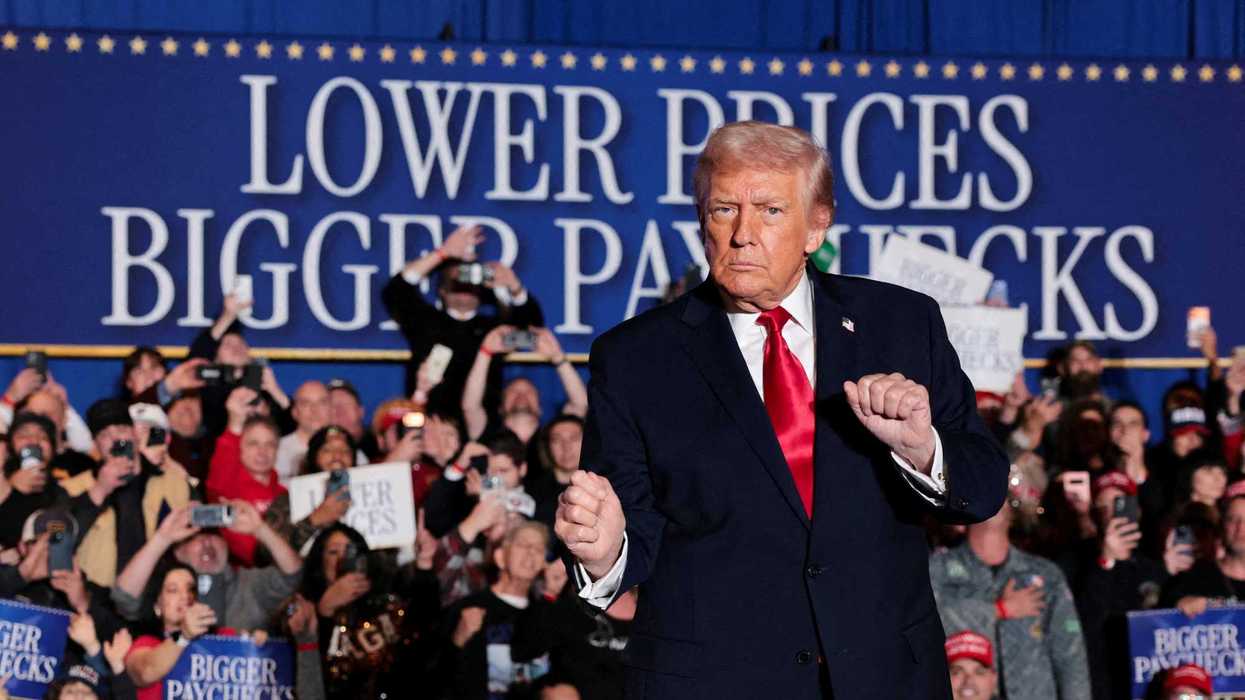
President Donald Trump will return to his affordability tour in the new year, sharing with Americans his claims that he is “bringing our economy back from the brink of ruin,” prices have “rapidly” fallen, and there is “no inflation” — claims that are not supported by available data.
But also in the new year, as many as five million Americans who have defaulted on their student loans could start to see a portion of their wages garnished.
“It will be the first time a portion of borrowers’ paychecks has been at risk since the start of the Covid pandemic, when collection activity was halted,” CNBC reported. “Starting the week of Jan. 7, the Education Department expects around 1,000 defaulted student loan borrowers to receive notices of administrative wage garnishment, the spokesperson said. After that, the number of notified borrowers will continue to increase.”
The Department of Education expects that while there currently are five million borrowers in default, that number could rise to ten million by the end of next year.
“Student loan holders have been under pressure from a weakening labor market, a barrage of changes to the lending system and recent trouble accessing relief programs,” CNBC noted.
The potential wage garnishment also coincides also with a dramatic rise for some Americans in their health insurance premiums. For many using the Affordable Care Act marketplaces to access health insurance, some are reporting premiums starting in January that are doubling or more.
“Student debt has been barely mentioned as a source of the affordability crisis, despite millions being pushed into higher payments and defaults,” David Dayen, executive editor of The American Prospect, noted last week.
“Seizing wages from student loan borrowers who can’t afford to pay their bills seems like an awfully stupid and cruel thing for the Trump administration to start doing,” remarked Democratic strategist Mike Nellis. “As if people aren’t struggling enough in this economy.”