
An evangelical pastor known for very extreme views is gaining prominence with MAGA
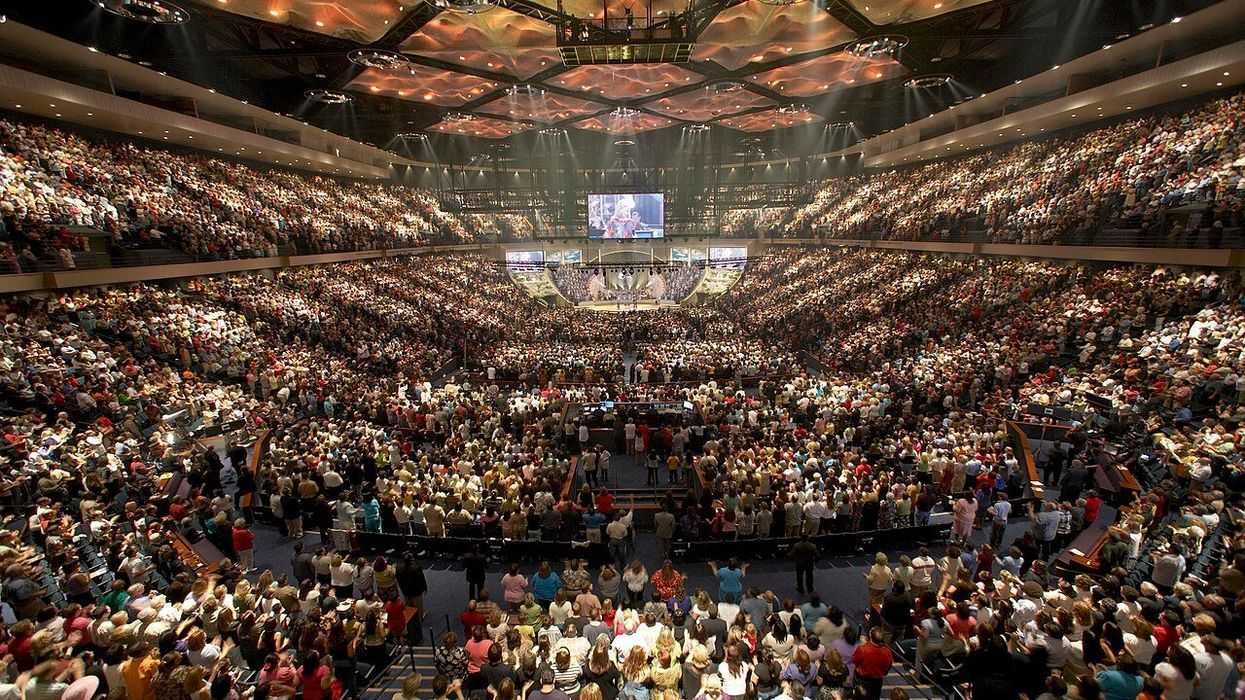
A megachurch in 2013 (Wikimedia Creative Commons)
A megachurch in 2013 (Wikimedia Creative Commons)

A megachurch in 2013 (Wikimedia Creative Commons)
For most of his life, Doug Wilson — the 72-year-old pastor of Christ Church in Moscow, Idaho — was a fringe figure even on the Religious Right. Wilson's Christian nationalist views were so extreme that he gained a reputation for being to the right of familiar evangelical fundamentalists like Liberty University's Rev. Jerry Falwell Sr., the Christian Broadcasting Network's Rev. Pat Robertson, and Pentecostal televangelist Jimmy Swaggart.
But during Donald Trump's second presidency, Wilson has become increasingly visible. Trump's allies, including Defense Secretary Pete Hegseth, openly embrace Christ Church.
Religion News Service (RNS) reporter Tracy Simmons examines Wilson's growing prominence in the MAGA movement in an article published on December 12.
"Critics say that Christ Church's renown has less to do with the Almighty than with Wilson's dedication to Christian nationalism and his ties to like-minded officials in the Trump Administration and among its allies," Simmons explains. "Secretary of Defense Pete Hegseth has attended a Christ Church-affiliated congregation in Tennessee and has amplified Wilson's most controversial views, including his argument that women should not be allowed to vote. In the space of a month in April 2024, Wilson was interviewed by Tucker Carlson and Charlie Kirk on their respective podcasts."
Wilson, who believes that Christ Church is now "punching about our weight," started out as a Baptist but later moved to a severe form of Calvinism.
"Wilson came to national attention in 2003, when he organized a conference at the University of Idaho at Moscow about revolutions throughout U.S. history," Simmons explains. "Some in the community picked up on a booklet titled 'Southern Slavery, As It Was' that Wilson had co-authored some years earlier arguing that slavery, besides being allowed for in the Bible, was not as harsh in the antebellum South as is commonly portrayed. Soon, the campus and Downtown Moscow were plastered with flyers referring to Wilson’s university event as a 'slavery conference'…. To maximize his footprint in Washington, Wilson planted a church there this year, introducing what Wilson critic Kevin DeYoung called 'the Moscow mood' — cultural engagement 'with a spirit of … having fun while you’re doing it.'"
Read Tracy Simmons' full Religion News Service (RNS) article at this link.

