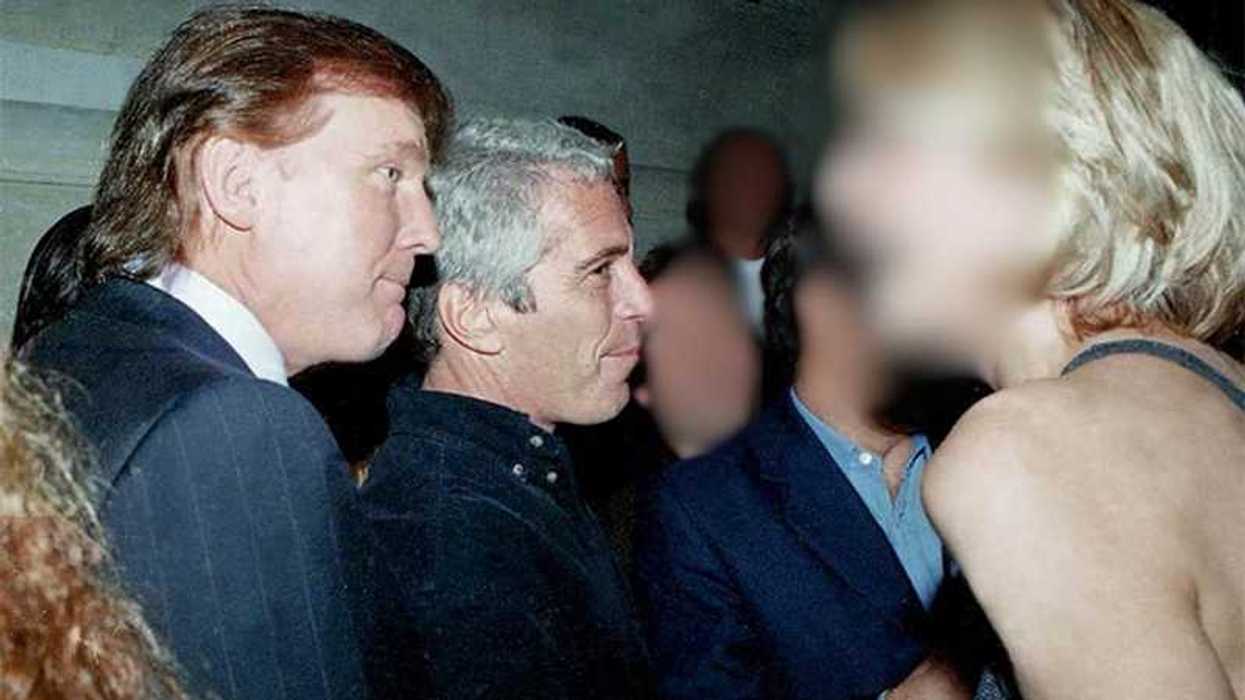
The world has been shocked by the crimes of Jeffrey Epstein and his connections to powerful elites, but while it can be tempting to think of him as an "isolated aberration," the truth is that he represents a type of figure who is troublingly common in high society: that of the "dark connector," according to New York Times Opinion columnist Jacob Weisberg.
According to Weisberg, the dark connector is "a kind of predator" who "cultivates an aura of special access" to win the favor of elites by providing services and contacts "outside ordinary morality." This is someone who "offers solutions that do not officially exist," and has the ability to "make it easier for people of standing to move between their public obligations and their private desires without too much friction."
There are many examples across history, but Weisberg points to two in particular.
During the Cold War, Roy Cohn became feared for his role as chief counsel for the Red Scare trials, wielding backroom gossip to destroy the lives of his enemies through accusations of communist sympathies. Cohn cultivated such gossip through his many high-profile connections, from journalist Barbara Walters to industrialist S.I. Newhouse to mobster Anthony “Fat Tony” Salerno. Later in the 1970s, incidentally, Cohn became mentor to future President Donald Trump.
Further back in history, Grigori Rasputin played a similar role in the Russian court of the Romanovs. While Rasputin held no official role in the Russian empire, he found favor with the Romanovs thanks to his purported healing abilities, and he became a vastly powerful figure operating in the shadows of the court. His influence on the Romanovs helped to ruin their credibility, and played no small part in driving the dissatisfaction that ultimately brought down the government.
As Weisberg points out, if Cohn spoke to a set of elites obsessed with communism, and Rasputin found favor with those drawn to his spiritual extremism, “Epstein had a similar kind of appeal for an elite culture preoccupied with money and sex.” He excelled as an “enabler for the men in his orbit, a master of the informal workaround who could help reconcile their private desires with public appearances.”
Professionally speaking, he served as a “financial guru” who “purported to know tricks unavailable to ordinary professionals.” At the same time, he was notoriously known as a “wingman and sex scout,” a “roguish pickup artist living in a transactional world where everything was for sale.” Epstein’s sexual escapades were not a secret among the elites, but part of the attraction. As Trump said of Epstein, “It is even said that he likes beautiful women as much as I do, and many of them are on the younger side.”
From there, Epstein forged his connections by playing the role of the “all-purpose benefactor.” He was the kind of person who could introduce you to anyone, get you a job, or help secure donations for your philanthropy. Or maybe he “invited you to his Caribbean island” or “gave you a ride on his plane.”
Ultimately, dark connectors like Epstein achieve their positions because they speak to powerful people’s desire for “hedonism without concern for respectability.” As Bill Gates once wrote suggestively of Epstein, “His lifestyle is very different and kind of intriguing, although it would not work for me.”