
The 'Democratic margin of victory' keeps growing worse for Republicans in US college towns: report
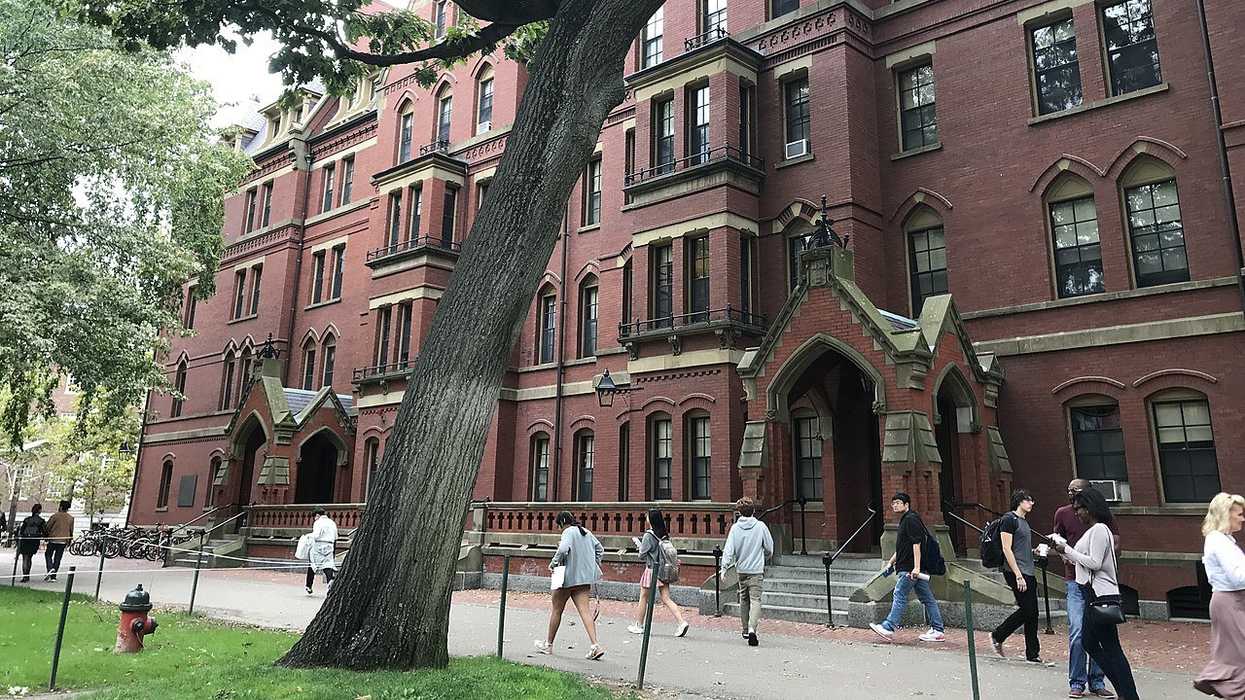

It's no secret that major U.S. cities known for having a lot of colleges and universities lean heavily Democratic, including Boston, Philadelphia and Chicago. Berkeley in the San Francisco Bay Area was a Democratic stronghold back when California on the whole was still a red state.
But in an article published by Politico on July 27, Charlie Mahtesian and Madi Alexander report that in college towns on the whole, the "Democratic margin of victory" is growing even larger than it was in the past.
"In state after state," according to the Politico reporters, "fast-growing, traditionally liberal college counties like Dane (County, Wisconsin) are flexing their muscles, generating higher turnout and ever greater Democratic margins. They've already played a pivotal role in turning several red states blue, and they could play an equally decisive role in key swing states next year."
READ MORE: Republicans have declared all-out war on younger voters: voting rights organizer
Mahtesian and Alexander cite data from the American Communities Project (ACP) to illustrate their point, noting that ACP defines "171 independent cities and counties" as "college towns."
"Of those 171 places," the journalists note, "38 have flipped from red to blue since the 2000 presidential election. Just seven flipped the other way, from blue to red, and typically by smaller margins. Democrats grew their percentage point margins in 117 counties, while 54 counties grew redder."
Mahtesian and Alexander add, "By raw votes, the difference was just as stark: The counties that grew bluer increased their margins by an average of 16,253, while Republicans increased their margins by an average of 4063. Back in 2000, the places identified as college towns by ACP voted 48 percent to 47 percent in favor of Al Gore. In the last presidential election, the 25 million who live in those places voted for Joe Biden, 54 percent to 44 percent."
The factors driving this trend, according to Mahtesian and Alexander, include an "influx of left-leaning, highly educated newcomers" and "rising levels of student engagement."
ACP Director Dante Chinni told Politico, "The data sure seem to suggest younger voters are leaning much more Democratic in recent years and, perhaps more concerning for the Republicans, the GOP seems to be struggling more broadly with college-educated voters. In the longer term, that may mean these voters may stay Democratic — or at least stay Democratic longer than they might otherwise."
In an op-ed published by the Washington Post on July 20, Democratic strategist Celinda Lake and documentarian Mac Heller stress that an important factor will set 2024's presidential election apart from 2020: more members of Generation Z will be old enough to vote.
"Every year," Lake and Heller note, "about 4 million Americans turn 18 and gain the right to vote. In the eight years between the 2016 and 2024 elections, that's 32 million new eligible voters. Also every year, 2½ million older Americans die. So, in the same eight years, that's as many as 20 million fewer older voters. Which means that between Trump's election in 2016 and the 2024 election, the number of Gen Z — born in the late 1990s and early 2010s — voters will have advanced by a net 52 million against older people."
They continue, "That's about 20 percent of the total 2020 eligible electorate of 258 million Americans. And unlike previous generations, Gen-Z votes."
Read Politico's full report at this link and find the Washington Post op-ed here (subscription required).

