

Trump says it doesn't matter if Putin is helping Iran kill Americans
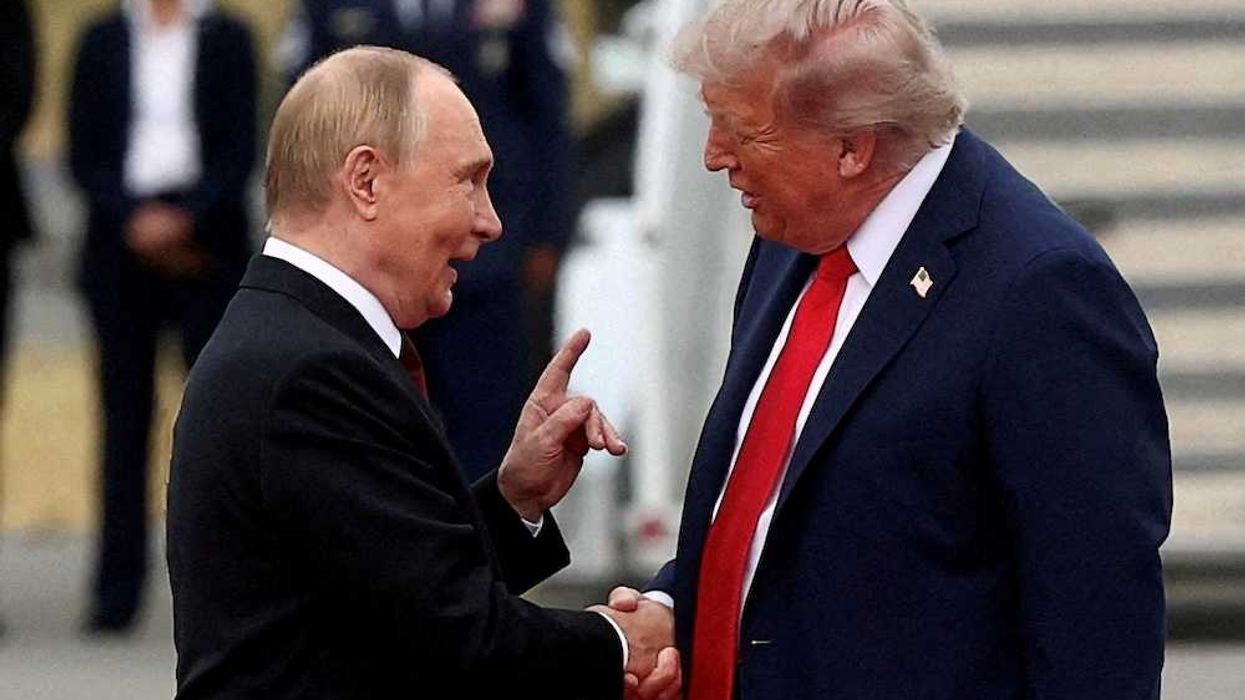
U.S. President Donald Trump shakes hand with Russian President Vladimir Putin, as they meet to negotiate for an end to the war in Ukraine, at Joint Base Elmendorf-Richardson in Anchorage, Alaska, U.S., August 15, 2025. REUTERS/Kevin Lamarque/File Photo
Let me see if I have this right.
The Russians are helping Iran in its war against the United States, first by providing “targeting information,” according to the Post, and second by providing “drone tactics,” according to CNN.
So the Russians are not only helping the Iranians kill American military personnel (seven have died and 140 have been injured since the start of the war). They are also helping Iran choke off the global supply of oil at the Persian Gulf’s Strait of Hormuz.
With aid from the Kremlin, the Iranians attacked three tankers Wednesday. They attacked three more today. They attacked a port in Oman. They forced ports in Iraq to close. Around a quarter of the world’s oil passes through the strait. Iran’s new supreme leader vowed to keep it shut. Oil prices are soaring.
With prices soaring, the Russians have taken in $7 billion in oil revenues in the last week alone and stand to take in more. Donald Trump is under immense pressure to increase supply. He could send in ground forces, but that would be hard. It’s easier to ease sanctions on Russian oil. The Treasury lifted them for 30 days. Expect more easing while the Strait of Hormuz is shut.
So, again, let me see if I have this right.
The Russians are not only helping Iran kill Americans, but they are also helping reduce the supply of oil, which raises the price of oil, which pressures Trump to ease oil sanctions, which enriches the Russians, which rewards them for helping Iran kill Americans.
Right?
I think USA Today’s Chris Brennan is right. On hearing credible reports of an enemy helping an enemy, “a conventional US presidential administration would respond in one of two ways.” Either “deny the reports” or “demand an end to that assistance.”
But, as Brennan suggests, the president can’t be bothered. Instead, he said Russian aid to Iran is irrelevant. “We don’t know [if it’s true],” he said, “but it’s not doing well. If they are, it’s not helping much if you take a look at what’s happening in Iran in the last week. If they’re getting information, it’s not helping them much.”
(To be clear, it’s true.)
The president also said Putin was “very impressed with what he saw,” an odd thing to say about the friend of your enemy. But the gaslightingest thing he said was that Putin “wants to be helpful.”
He wants to help himself to Ukraine and more. By helping Iran bog down Trump in another forever war, Putin is not only filling his war chest. He’s creating conditions in which Trump can’t be seen as a trusted negotiator. After all, if he can’t broker peace with Iran, he can’t broker peace between Russia and Ukraine. And if the president objects, Putin can bog him down some more.
Aside from the geopolitical considerations, however, there’s the relatively unexplored question of leadership. What does it look like to American military personnel for the commander-in-chief to act like this? Russia is helping Iran kill Americans, yet he beams with pride when recalling how “very impressed” Putin was by Trump’s war with Iran, “because no one has seen anything like it.”
Half a dozen service members were killed last Monday by an Iranian drone strike in Kuwait. That same day, the Iranians attacked US military personnel stationed in Saudi Arabia. A seventh American died Sunday from the injuries he sustained.
When Trump talked to Putin Monday, did he ask if intel or drones given by Russia to Iran led to any of those seven deaths? How much responsibility does Russia carry? Did the president tell Putin there would be consequences in the future? Did he, you know, stand up to the man who’s helping kill his own people?
Another commander-in-chief would. With Trump, however, there’s a sense he’s not responsible. When troops die, he seems unmoved by their sacrifice. A reporter asked this week how many casualties he would accept in wartime. He said, in effect, that if death doesn’t bother families, why should it bother me? “I met the parents [of the war dead] and they were unbelievable people,” he said. “They said, 'finish the job, sir.' I'll leave you at that.”
The same indifference was evident at Sunday’s dignified transfer. Trump wore a white cap emblazoned with “USA” and “45-47” in gold available for purchase from the Trump Organization for $55. The image of the president as a walking advertisement during an event memorializing the honored dead was so insulting that Fox aired an old video to prevent Trump supporters from seeing it.
Over ten years, we have seen this draft-dodger use the military as a backdrop. At the same time, he’s called volunteers for service “suckers” and “losers.” He thinks soldiers maimed in combat are embarrassing. He said prisoners of war are unworthy. He insulted recipients of the Congressional Medal of Honor. And through that, we wondered: Why is he so deferential to Vladimir Putin?
In the absence of war, however, the insults were theoretical. His chumminess with the leader of “one of America’s chief nuclear-armed competitors with exquisite intelligence capabilities,” as the Post said, didn’t mean much in real life. After all, it wasn’t like agreeing with Putin got anyone killed.
Until now.

