

Trump knows exactly what he's doing
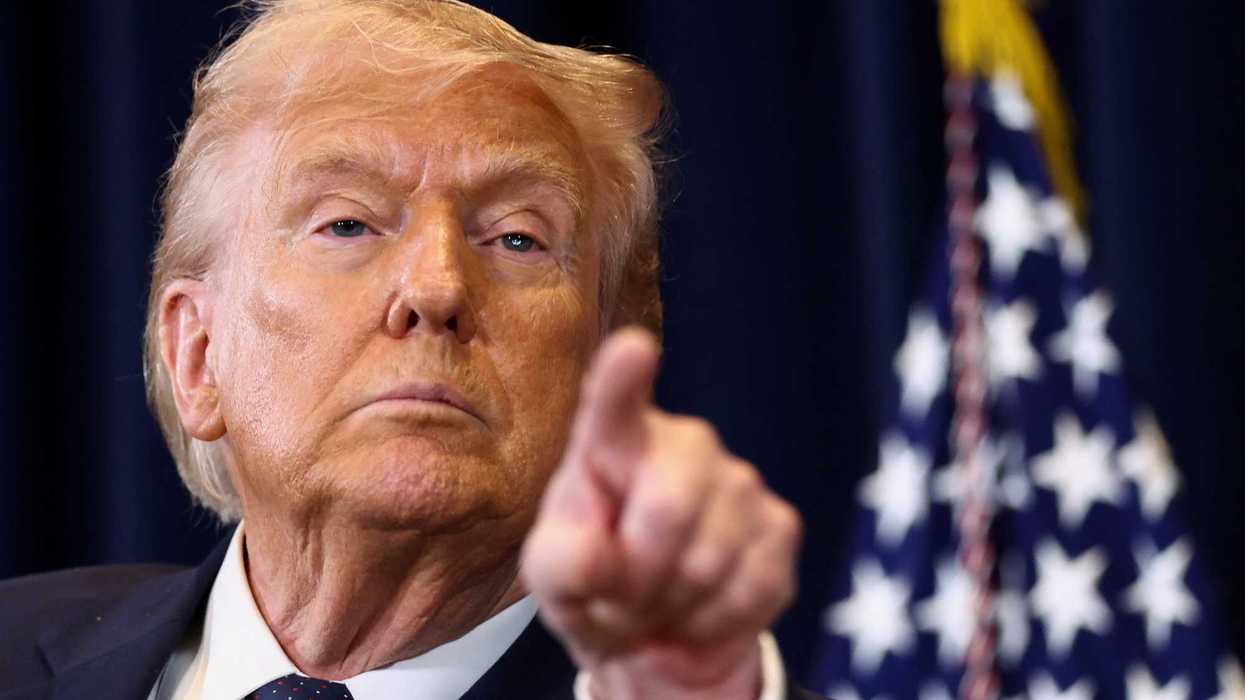
U.S. President Donald Trump takes a question as he speaks during a press conference at Trump National Doral Miami in Miami, Florida, U.S., March 9, 2026. REUTERS/Kevin Lamarque
After WWII showcased the horrors of unchecked aggression, “War Departments” around the civilized world became “Departments of Defense.” Following the deaths of 60 million people, leaders of democratic-led nations embraced a shift from offensive victory to integrated deterrence and unified defense.
The pivot in both strategy and messaging was adopted to stop future Hitlers. The U.S. led the way as free nations embraced the United Nation Charter with international laws of war, mutual security, and human rights. In 1947 the U.S. War Department became the National Military Establishment, then all branches of the U.S. military were consolidated into the Department of Defense two years later.
Dismissing the lessons of that era as if human nature had somehow fundamentally changed in eighty years, Trump renamed the DOD the Department of War last September. The shift in messaging was not subtle: Trump considers warlike aggression a brandable asset. Consistent with his rebrand, Trump now uses the most vitriolic war-mongering language ever used by a sitting president.
Trash talking the enemy
There’s a reason world leaders practice restraint in war messaging. To garner respect and military alliances, raw military power must project sobriety, caution, and respect for international laws of combat. Excessive bellicosity and the rejection of restraining norms suggests a lack of maturity or worse—that the leader has gone rogue. No peaceable nation wants to align with a nakedly destructive force; no citizen takes comfort in knowing unhinged toddlers have access to nuclear weapons.
Trump, nevertheless, mocks moderation. A little more than a week ago, Trump announced that he would hit Iran “twenty times harder” and make it “virtually impossible for Iran to ever be built back as a Nation” after “death, fire and fury (rains) upon them.” Last week he suggested he might bomb Iran’s Kharg Island oil export hub “just for fun.”
Trump spews low-intellect bellicosity like a WWE fighter with too many blows to the head. But query who—and what— this kind of talk incites. Debasing foreign nations, threatening their citizens with non-existence, sows deep-seated hatred and long memories. It may make Trump feel powerful today, but U.S. citizens will eventually pay the price.
Inciting terrorism
Trump’s base loves his war-like rhetoric because they are oblivious to consequences. Studies show direct links between hateful speech, terrorism, and mass atrocities; aggressive rhetoric makes it more acceptable to dehumanize other groups of people. This effect is not limited to domestic actors; the internet carries Trump’s nonstop social media posts of hateful aggression around the world and lands them on terrorists’ hand-held devices.
While tracing direct causation can be difficult, research shows that the cumulative effect of anger rhetoric from a world leader is the creation of an international climate that both legitimizes and increases the likelihood of terrorism. Trump’s use of such rhetoric has already triggered more anti-American sentiment, decreased tourism, and raised safety concerns for American travelers abroad.
The administration knows the way Trump talks could attract another 9-11, which has led some analysts to conclude it’s intentional. The theory, whether paranoia or pattern recognition, is that Trump will parlay any terrorist attack into expanded presidential authority to keep himself in power.
“Corrupt and Highly Unpatriotic” news organizations
To drive it home, the administration is trying to force main stream media to adopt Trump’s preferred narrative on Iran, or what FCC Chair Brendan Carr calls “pro-America” content. Trump rails against “truly sick and demented people” in the media who report unflattering accounts of the war. Last Sunday, he attacked a reporter as “a very obnoxious person” for asking, very simply, why we’re sending 5,000 US troops to the Middle East.
Carr, meanwhile, is ratcheting up public threats to revoke broadcast licenses from television networks deviating from the preferred narrative. When CNN detailed how Trump underestimated Iran’s ability to close the Strait of Hormuz, then confirmed that the U.S.—not Iran— deployed the Tomahawk that killed 175 children, Hegseth hissed, “the sooner David Ellison takes over (CNN), the better.”
It’s obvious to anyone paying attention that Trump started a war in Iran without considering the consequences. It’s also obvious, thanks to Hegseth’s admission and the right wing capture of CBS, that Carr is trying to outlaw criticism. As Senator Chris Murphy (D-CT) put it, “This is the federal government telling news stations to provide favorable coverage of the war... We are not on the verge of a totalitarian takeover. We are in the middle of it.”
A war that focuses on… messaging?
Trump and Hegseth spent last week attacking the news media over polls that show low public support for the war. As Trump tries to thwart Iran’s efforts to block the oil route amid skyrocketing global oil prices, his messaging gets harder.
Trump/Hegseth/Carr’s focus on media coverage suggests that the problem in Iran isn’t the ill-conceived war, the destruction, the economic fallout, or the humanitarian disaster Trump single-handedly created. The problem, to them, is narrative control.
It tracks. Trump became president by selling fantastic claims to a gullible public; he’s just continuing the strategy. After Carr establishes state-run media, modeled after Hungary and Russia, Americans will stop hearing bad news about Iran altogether. When the next 9/11 strikes, we will hear only praise for Trump, who attacked a nation that did not attack us first.
Sabrina Haake is a columnist and 25+ year federal trial attorney specializing in 1st and 14th A defense. She writes the free Substack, The Haake Take.

