
Manafort's lawyer makes a bizarrely specific denial about collusion with Russia

On Thursday evening, Judge T. S. Ellis decided to completely ignore federal sentencing guidelines and give President Donald Trump's former campaign chairman Paul Manafort, who was convicted of bank fraud and tax evasion in his work for international oligarchs, a 47-month sentence.
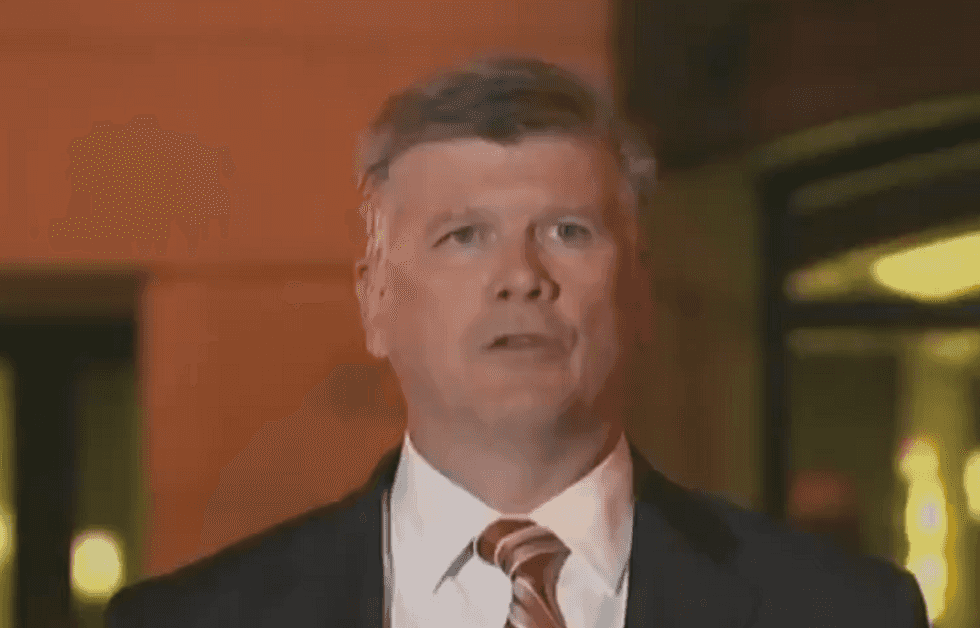
Shortly after, Manafort's attorney Kevin Downing reiterated to reporters a denial of collusion with Russia — but in doing so, qualified his statement in a bizarre way that was hard to miss:
Here's Manafort's attorney, Kevin Downing, claiming "there is absolutely no evidence that Paul Manafort was involved in any collusion *with any government official* from Russia."
Downing's claim doesn't rule out that Manafort colluded with unofficial Kremlin agents, however. pic.twitter.com/TXWs5AEAsW
— Aaron Rupar (@atrupar) March 8, 2019
The thing is, Russia does not just rely on "government officials" to conduct espionage and other overseas operations. As Russian social media operations demonstrate, they often rely on unwitting "assets" rather than actual spies and government officials to direct intelligence offensives. So that denial leaves Manafort a lot of room to have colluded with Russia.
To name one example, Manafort is known to have had a relationship with, and even shared 2016 campaign data with, Konstantin Kilimnik, a Ukrainian operative who served as a translator in the Soviet military and may have ongoing ties to Russian intelligence. Manafort may have even held secret talks with WikiLeaks founder Julian Assange at the Ecuadorian embassy in London, according to one report— and while there is no evidence Assange is working directly for Vladimir Putin, there is substantial evidence that the stolen Democratic emails WikiLeaks used to disrupt the election were passed to them by Russian military intelligence.
It is entirely possible that Downing is telling the truth that Manafort never colluded "with any government official" in Russia. But it is hard to argue he had no links of any sort to Russia, or that the activity he conducted didn't put him close to the Kremlin's influence. Downing's denial could be true in the most literal sense — but in practical terms, much less so.

