taxes

'Huge political issue': Workers outraged as 'fine print' excludes them from Trump tax cut

President Donald Trump's new massive tax and spending law is under fire after workers who put in significant overtime hours are discovering bureaucratic barriers locking them out of a provision meant for them.

The Wall Street Journal reported Thursday that "fine print" in the "no tax on overtime" section of Trump's law (which he ran on in 2024) excludes workers in many sectors that require lots of overtime work, like railroad workers. Because the Fair Labor Standards Act (FLSA) requires employers pay time-and-a-half for all hours over 40 per week, the new law makes that "half" tax-free. But because rail industry workers aren't covered under the FLSA, they won't qualify (rail workers' overtime hours are under the jurisdiction of the Railway Labor Act).

"It’s a legislative blunder and a political blunder," Transport Workers Union (TWU) international president John Samuelsen told the Journal. "This will become a huge political issue, particularly for the Republicans, if it’s not fixed."

READ MORE: 'This is a good one right?' Epstein victim recalled being introduced to Trump at age 14

Massachusetts-based TWU member Chris Comeau piled on, telling the Journal that he supported Trump specifically because of his "no tax on overtime" proposal. Comeau — who works between 20 and 30 hours of overtime each week cleaning commuter trains — said he hoped to save thousands of dollars in taxes each year, and was disappointed that he wouldn't qualify for the benefit.

"You don’t get more middle class than guys that are fixing trains and riding on trains and cleaners," Comeau said.

According to the Journal, Sen. Roger Marshall (R-Kan.) had submitted an earlier proposal for "no tax on overtime" to have a broader definition in order to include more workers from other sectors. However, the Senate ultimately decided to limit it to workers covered by the FLSA as it was a "known federal standard that could be implemented" and would lessen "revenue consequences." The American Association of Railroads is reportedly pushing Congress to amend the law to include rail workers.

The "no tax on overtime" provision is retroactive to the beginning of 2025, and is capped at $12,500 for individuals and $25,000 for couples filing jointly. The break is scaled back for single filers who earn more than $150,000 and married filers who earn more than $300,000. The Treasury Department aims to issue guidance to employers and workers on how to claim the deduction, though attorney Thomas Cryan told the Journal that he predicted "lots of gray areas" given the "constant litigation" over which workers will qualify for the tax break.

READ MORE: 'All the fake gold': Outrage follows new plan to 'turn the White House into a Trump resort'

Click here to read the Journal's report in its entirety (subscription required).

'Fiscal nonsense': Conservative economist reveals 6 reasons Trump’s policies don’t work

President Donald Trump was elected in large part due to his promises to bring economic prosperity to every corner of the country. But one conservative economist says that as of right now, Trump's second term is only bringing more economic pain.

In a recent essay for Politico, Jessica Riedl — who is a senior fellow at the arch-conservative Manhattan Institute — pointed out six ways Trump's policies are self-contradictory and doomed to fail. And she warned that both American households and businesses will suffer under his management of the economy unless he makes fundamental changes.

First, Riedl argued that Trump can't simultaneously argue tariffs are a temporary negotiating tool while also a way to create permanent jobs. She observed that businesses won't decide to make significant capital investments if there's an air of uncertainty in the economy, adding Trump has contributed to that uncertainty with his sudden imposition and sudden withdrawal of sweeping new import taxes.

READ MORE: 'I just want to reach out and smack him': Lindsey Graham struggles to explain Trump flip-flopping

Riedl's second point was that tariffs can't both create trillions of dollars in new revenue while also protecting American industries. She noted that as tariff revenue goes up, import demand goes down, thus also slowing down economic growth as a whole. She said that more likely, tariff revenue would be minimal and would not make up for the economic chaos they create.

Thirdly, the Manhattan Institute researcher warned that Trump would not be able to follow through on his promise of both reducing the federal deficit while also protecting safety net programs like Medicaid, Medicare, veterans' benefits and Social Security — which Tesla and SpaceX CEO Elon Musk and his Department of Government Efficiency (DOGE) has openly sought to cut. She pointed out that roughly 75% of the budget pie is made up of mandatory spending programs, and that if he aims to shrink the federal budget by 27% (the figure necessary to eliminate the approximate $1.87 trillion federal deficit) he would have to make cuts to some of those politically popular programs.

The fourth complaint on Riedl's list was that Trump cannot simultaneously eliminate the budget deficit while also extending his tax cut package from 2017. She called his promise to cut taxes "mathematically nonsensical" when put side by side with his pledge to eliminate the deficit, given the steep drop in tax revenue that would result from a tax cut extension.

Her fifth and sixth points also pertained to the deficit and the debt, respectively. Riedl argued that DOGE's work is likely to increase the federal deficit rather than shrink it due to its layoffs of IRS employees who help the government collect tax revenue. And she concluded by saying Trump can't claim that the national debt matters while also championing policies that increase the national debt. She also referred to a Republican "gimmick" to disregard the cost of extending Trump's tax cuts (which would cost roughly $4.6 trillion over 10 years) as "fiscal nonsense."

READ MORE: (Opinion) Only one thing is going to stand in Trump's way — and he knows it

Click here to read Riedl's essay in full.

'Republicans openly disagree': Trump allies fear 'infighting' could sink key legislative goal

President-elect Donald Trump has been calling for his GOP allies to pass "one powerful bill" that will tackle a variety of his legislative goals after he returns to the White House, from tax cuts to immigration and the U.S./Mexico border.

But some GOP senators, according to Politico, aren't as enthusiastic about the possibility of one big megabill as Republicans in the U.S. House of Representatives. And Bloomberg News reports that some Trump allies believe there is too much "infighting" among Republicans in Congress for the president-elect to get everything he wants on taxes in 2025.

In an article published on Wednesday, January 8, Bloomberg reporters Nancy Cook, Steven T. Dennis, and Billy House explain, "Republicans broadly agree that there's little room for error on what is a rare opportunity for the GOP to update the tax code without having to make any concessions to Democrats. There’s also time pressure: households and privately-held businesses will see their Internal Revenue Service bills rise if Congress doesn’t act by the end of the year. But Republicans openly disagree on how to meet that deadline."

READ MORE: 'I just don’t really recognize the Republican Party': Ousted TX GOPer goes down swinging

The journalists add, "Hashing out those differences is likely to be a key topic of conversation later Wednesday when Trump meets with Senate Republicans on Capitol Hill."

Cook, Dennis, and House note that Stephen Miller, Trump's pick for deputy White House chief of staff, has "pushed lawmakers to first pursue a border security bill" — and Senate Majority Leader John Thune (R-S.D.) agrees.

"That pits them against House Republicans, many of whom want to cram all the party’s legislative goals — immigration, energy production and taxes — into a singular bill," according to the Bloomberg News journalists. "That's an approach that yields to the reality that the tiny House GOP majority — a fractious group of lawmakers willing to torch members of their own party during heated disputes — will have a hard time passing even one bill, let alone two."

Cook, Dennis and House point out that near the end of the 2024 presidential race, Trump, "promised to extend the personal tax cuts from 2017 and expand the state and local tax deduction, while also creating new tax breaks like no taxes on tips, overtime pay or Social Security checks."

READ MORE: $40 million Amazon documentary deal for Melania Trump slammed as corporate 'pandering'

"Trump has vowed to Wall Street executives that he would reduce the corporate tax rate to as low as 15 percent," the Bloomberg reporters observe. "That laundry list of promises surprised even some of his closest economic advisers, who privately said Trump was unlikely to turn all of this rhetoric into reality."

READ MORE: Trump does not rule out using military force to take control of Panama Canal and Greenland

Read Bloomberg News' full article at this link (subscription required).


GOP rep complains it’s 'ridiculous' for Harris to ask billionaires to 'pay their fair share'

One pillar of Vice President Kamala Harris' economic platform is to increase taxes on the wealthiest Americans, calling on billionaires to "pay their fair share" of federal taxes. Now, the chairman of the House of Representatives committee overseeing taxes is crying foul.

On Wednesday, Rep. Jason Smith (R-Missouri), who chairs the powerful House Ways and Means Committee, complained about Harris' plan to Fox Business host Maria Bartiromo. In the clip journalist Aaron Rupar posted to X (formerly Twitter), Smith defended the historically low tax rates of the richest Americans and called the vice president "ridiculous" for suggesting they should be increased.

"What's so ridiculous is for her statement to say that the rich should pay their fair share," Smith said. "It's just a talking point that she throws out there... Her policies are absolutely atrocious."

READ MORE: 'Absurd!' US billionaires pay lower tax rate than working class for first time

However, Harris' argument that U.S. billionaires aren't paying historically low tax rates is backed up by hard data. Earlier this year, French economist Gabriel Zucman wrote in the New York Times that the wealthiest Americans paid just 23% of their income in taxes in 2018. Previously, the top 1% of Americans paid more than 56% of their income in taxes in 1960, and taxes still took up 52.7% of their incomes in 1970.

After Ronald Reagan's inauguration in 1981, the richest saw their tax rates drop precipitously, paying just over 35% of their incomes by the time Reagan left office in 1989. This trend continued after George W. Bush signed new tax cuts benefiting the rich into law in the early 2000s. Barack Obama extended those tax cuts in 2010, and Donald Trump signed even larger tax cuts into law in 2017. By 2018, the bottom half of U.S. income earners paid approximately 24% of their income in taxes, while billionaires paid an even lower rate. Zucman explained that the primary reason for this is that in the United States, work is taxed at a higher rate than assets.

"[W]hile most of us live off our salaries, tycoons like Jeff Bezos live off their wealth," Zucman wrote. "In 2019, when Mr. Bezos was still Amazon’s chief executive, he took home an annual salary of just $81,840. But he owns roughly 10 percent of the company, which made a profit of $30 billion in 2023."

"If Amazon gave its profits back to shareholders as dividends, which are subject to income tax, Mr. [Jeff] Bezos would face a hefty tax bill. But Amazon does not pay dividends to its shareholders... Instead, the companies keep their profits and reinvest them, making their shareholders even wealthier," he continued. "Unless Mr. Bezos, Warren Buffett or Elon Musk sell their stock, their taxable income is relatively minuscule. But they can still make eye-popping purchases by borrowing against their assets. Mr. Musk, for example, used his shares in Tesla as collateral to rustle up around $13 billion in tax-free loans to put toward his acquisition of Twitter."

READ MORE: (Opinion) Behind the GOP's new plan to enrich the super-rich — again

This is where the tax plans of the two major parties' presidential nominees come into focus. While Harris is aiming for generating more revenue from assets held by the richest in her call for higher taxes on unrealized capital gains over $100 million, Trump is campaigning on renewing his tax cuts from 2017, which overwhelmingly benefited the rich.

If Trump were to succeed in renewing the tax cuts — which are due to sunset next year — it would amount to a cost of roughly $10 trillion over the next decade. CNN reports that Harris' plan to tax unrealized capital gains on the roughly 10,660 Americans who have net worths of nine figures or more "could be used to pay for social spending programs, like helping families pay for child care or down-payment help for first-time homebuyers."

Watch the clip of Smith's remarks below, or by clicking this link.

READ MORE: GOP confirms 2025 tax plan if Trump wins

'No idea what he’s talking about': Trump’s latest tax plans slammed as 'desperate ploys'

With voters heading to the polls in less than 50 days, one columnist is arguing that former President Donald Trump is now resorting to throwing policy ideas at the wall and seeing what sticks.

In his latest op-ed, MSNBC producer Steve Benen wrote that Trump's latest tax policy proposals amount to little more than "desperate grunts" in his effort to halt Vice President Kamala Harris' surging momentum. He compared the ex-president's 2024 policy pitches to his unsuccessful efforts to sway the 2018 midterms in Republicans' favor by making vague promises to cut taxes — which caught GOP lawmakers unaware of any such plans off guard at the time.

"[T]he then-president seemed to be working from the assumption that voters would hear the words 'tax cuts,' swoon reflexively and immediately reward GOP candidates with support," Benen wrote. "If that meant touting a plan that existed only in Trump’s imagination and lying brazenly to the nation, so be it."

READ MORE: Trump's newest policy proposal would be 'huge tax increase' for the middle class: analysis

Since Harris emerged as the Democrats' surprise presidential nominee, Trump has promised to introduce numerous changes to the tax code beneficial for everyday Americans. This includes eliminating taxes on tips, cutting taxes on overtime pay and eliminating the cap on the state and local tax deduction (also known as SALT).

However, the elimination of taxes on tips would almost certainly be offset by higher prices resulting from Trump's proposed new tariffs on imported goods. Meanwhile, Project 2025 would effectively do away with overtime pay by allowing employers to structure hours in a way that deprives people working overtime of overtime pay. And eliminating the SALT cap would undermine his own previous tax cut bill.

The exact specifics of these proposals and their implementation have not yet been made public. And Benen noted that "Trump never elaborates or gets specific about policy details because he has no idea what he’s talking about and has spent his brief electoral career championing post-policy politics."

"How would these policies work? Trump doesn’t know. How much would these tax policies cost? Trump doesn’t know. Who’d benefit from the measures? Trump doesn’t know. Why didn’t he pursue any of this during his four-year term in the White House? Trump doesn’t know," he wrote. "The former president doesn’t have answers to any of these questions because — and this is the important part — they’re not actual tax policies."

READ MORE: '$1800 tax increase': Why Trump's new proposal will hit tipped workers especially hard

"The Republican nominee is just throwing random tax-cut ideas at a wall, hoping they’ll make him more popular," he continued. "What voters are witnessing are the desperate ploys of a candidate who (a) has no strategy to repair his campaign; (b) assumes voters will hear the phrase “tax cut” and respond in some kind of Pavlovian way; and (c) can’t even pretend to know or care about governing."

In addition to the aforementioned proposals, the former president is seeking to extend his 2017 tax cut bill — which primarily benefited the richest Americans — in 2025. The Congressional Budget Office estimated this would cost more than $4 trillion in lost revenue over the course of a decade. His proposals to cut taxes on overtime pay and on Social Security benefits would also hit the U.S. Treasury by hundreds of billions of dollars more.

If all of those policy proposals came to pass, it would result in either catastrophic budget cuts to public services, or to a massive ballooning of the federal deficit. Benen wryly observed: "Trump is simultaneously assuring voters that he’ll be able to shrink the budget deficit because, sure, why not."

Click here to read Benen's column in its entirety.

READ MORE: Trump vows to repeal part of his own tax cut in bid to win over New Yorkers

From Your Site Articles
Related Articles Around the Web

'$1800 tax increase': Why Trump’s new proposal will hit tipped workers especially hard

During his acceptance speech at the 2024 Republican National Convention, presidential nominee Donald Trump voiced his support for the "no taxes on tips" movement—which Sen. Ted Cruz (R-Texas) has also been promoting.

Cruz is the author of a bill that has been dubbed the No Taxes on Tips Act of 2024.

But critics of the movement are arguing that MAGA economic proposals offer more tax relief to the rich than to the type of workers who rely on tips.

READ MORE: Economist Paul Krugman: Here’s the main thing Trump and Vance have 'in common'

In a June 19 post on X, formerly Twitter, Bloomberg columnist Matthew Yglesias posted, "Ted Cruz transformed Trump's 'no tax on tips' idea into formal legislation and surprise surprise it does nothing for most low-income workers while opening up a huge loophole for highly paid professional service providers to transmute fees into tips."

In response, Brendan Duke of the Center for American Progress argued that Trump's tariff proposals will hit low-income workers especially hard.

Duke tweeted, "This doesn't even include the effects of Trump's tariff. Some quick math: I think many tipped workers would face a ~$1,800 tax increase from Trump's taxes on imports. So the zero or minimal tax cut from Cruz bill is more than offset by paying more for food and groceries."

READ MORE: 'Moment of shame': Teamsters president ripped for GOP convention speech

'Absurd!': US billionaires pay lower tax rate than working class for first time

An analysis published Friday by the renowned economist Gabriel Zucman shows that in 2018, U.S. billionaires paid a lower effective tax rate than working-class Americans for the first time in the nation's history, a data point that sparked a new flurry of calls for bold levies on the ultra-rich.

Published in The New York Times with the headline "It's Time to Tax the Billionaires," Zucman's analysis notes that billionaires pay so little in taxes relative to their vast fortunes because they "live off their wealth"—mostly in the form of stock holdings—rather than wages and salaries.

Stock gains aren't currently taxed in the U.S. until the underlying asset is sold, leaving billionaires like Amazon founder Jeff Bezos and Tesla CEO Elon Musk—a pair frequently competing to be the single richest man on the planet—with very little taxable income.

"But they can still make eye-popping purchases by borrowing against their assets," Zucman noted. "Mr. Musk, for example, used his shares in Tesla as collateral to rustle up around $13 billion in tax-free loans to put toward his acquisition of Twitter."

To begin reversing the decades-long trend of surging inequality that has weakened democratic institutions and undermined critical programs such as Social Security, Zucman made the case for a minimum tax on billionaires in the U.S. and around the world.

"The idea that billionaires should pay a minimum amount of income tax is not a radical idea," Zucman wrote Friday. "What is radical is continuing to allow the wealthiest people in the world to pay a smaller percentage in income tax than nearly everybody else. In liberal democracies, a wave of political sentiment is building, focused on rooting out the inequality that corrodes societies. A coordinated minimum tax on the super-rich will not fix capitalism. But it is a necessary first step."

Responding to those who claim a minimum tax would be impractical because "wealth is difficult to value," Zucman wrote that "this fear is overblown."

"According to my research, about 60% of U.S. billionaires' wealth is in stocks of publicly traded companies," the economist observed. "The rest is mostly ownership stakes in private businesses, which can be assigned a monetary value by looking at how the market values similar firms."

Since 2018, the final year examined in Zucman's analysis, the wealth of global billionaires has continued to explode while worker pay has been largely stagnant. As of last month, there were a record 2,781 billionaires worldwide with combined assets of $14.2 trillion.

The U.S. has more billionaires than any other country, with 813 individuals worth a combined $5.7 trillion.

"The ultra-wealthy are paying less in taxes than the bottom half of income earners. That's absurd!" Rakeen Mabud, chief economist at the Groundwork Collaborative, wrote in response to Zucman's analysis. "We've got to raise taxes on the wealthy and large corporations. Enough with the wealth hoarding. It's past time for us to take back what's ours."

U.S. Sen. Sheldon Whitehouse (D-R.I.), chair of the Senate Budget Committee, called the figures assembled by Zucman "disgraceful" and said that "not only can we fix this, we can make Social Security and Medicare safe and sound as far as the eye can see."

'This is our focus': IRS identifies which filers will be targeted by 'new wave of audits'

The Internal Revenue Service (IRS) got an appropriation of much-needed funds to address its backlog and ramp up enforcement. And this week, the agency made it clear who it intended to target with its new resources.

CBS reported Thursday that the IRS is rolling out plans for a "new wave of audits" focused on three specific groups of federal tax filers. Thanks to the Inflation Reduction Act's $80 billion in additional IRS funding over the next 10 years, agents will now have the ability to zero in on large corporations and the super-rich. The agency is emphasizing that filers who make less than $400,000 per year — the vast bulk of ordinary Americans — will not see any increased enforcement action.

"It sets an important tone and message for complex filers, high-wealth filers, that this is our focus area," IRS commissioner Danny Werfel said.

READ MORE: Exposed: 35 corporations that pay their execs more than they pay in taxes

Werfel identified three primary categories of federal tax filers who will be subjected to increased enforcement activity in the coming years: Large corporations with assets greater than $250 million, large partnerships with assets in excess of $10 million and wealthy individuals who have more than $10 million in total positive income per year.

Audit rates for large corporations, for example, will nearly from 8.8% of returns audited in 2019 to almost 23% by 2026. Over that same time period, Werfel said IRS audits will increase on wealthy partnerships from 0.1% to 1% — a tenfold increase. Its audit rate of super-rich individual tax filers is due to see a 50% increase, from 11% five years ago to 16.5% in the next two tax years.

"There is no new wave of audits coming from middle- and low-income [individuals], coming from mom and pops," Werfel emphasized. "That's not in our plans."

The IRS commissioner also insisted that fears over a supposed armed force of 87,000 new IRS agents over the next decade were overblown and mischaracterized. Werfel told CBS that "any lingering myths about a supersized IRS" were untrue, as the new hires were meant to account for attrition. In recent years, the agency has been experiencing an exodus of agents due to retirement, and has not hd the funding to replace them until recently. He added that even with the new agents joining the IRS, its staff numbers were still far lower than they were in the 1980s and 1990s.

READ MORE: Happy Tax Day — and the coming fight over extending Trump's tax cut

Earlier this year, funding woes within the IRS were highlighted in a Washington Post report about the agency being unable to catch up with wealthy individuals who had gone for several years without filing any tax returns. According to the Post, there were roughly 25,000 taxpayers who made more than $1 million in income who hadn't filed a federal tax return in at least one year between 2017 and 2022. An estimated 100,000 other filers making at least $400,000 also didn't file a return over that five-year window.

In those instances, the IRS sends a notice of a missed return, prompting a taxpayer to either file one voluntarily or have the agency file one on their behalf. In the latter instance, the agency has the ability to assess a federal tax payment and levy the payment directly from an individual's bank account if they still refuse to send a payment.

"When people don’t file their taxes, they need to know there’s a consequence," Werfel said.

READ MORE: GOP confirms 2025 tax plan if Trump wins

Read CBS' full report by clicking here.

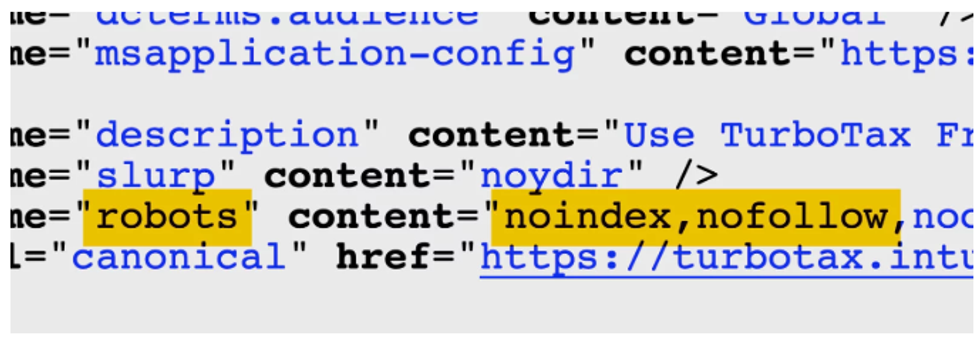
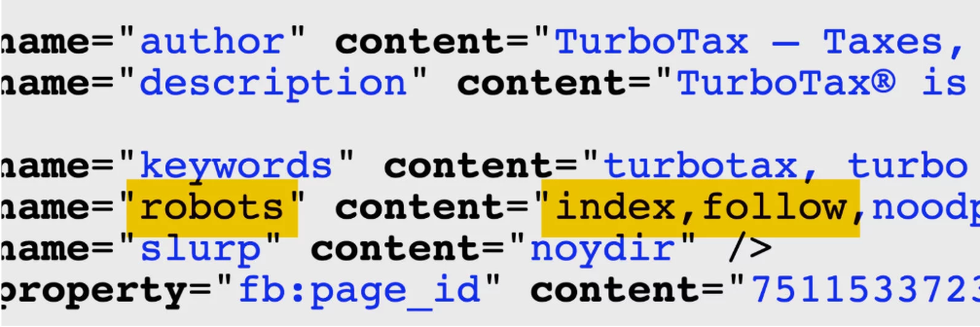
How TurboTax manipulates Google to trick low-income people out of their money

This week, we reported on how TurboTax uses deceptive design and misleading advertising to trick lower-income Americans into paying to file their taxes, even though they are eligible to do it for free.

Keep reading...Show less

David Cay Johnston: Trump has one chance to keep the public from seeing his taxes — and it involves breaking the law

On Monday President Donald Trump made it clear that he will do everything in his power to keep his tax returns from the public, writes Trump biographer David Cay Johnston, and he may be down to his last defense that may not pass legal muster.

Keep reading...Show less

Trump’s transparent efforts to obscure Mueller report have taken on a new meaning — here’s why

Donald Trump’s desperate efforts to both hide Special Prosecutor Robert S. Mueller’s findings, as well as his tax returns, take on new meaning in light of documents a federal judge unsealed at my request.

Keep reading...Show less
@2026 - AlterNet Media Inc. All Rights Reserved. - "Poynter" fonts provided by fontsempire.com.