On August 2, Washington Post journalists Carol Leonnig and Aaron C. David reported that Egyptian President Abdel Fatah El-Sisi "sought to give" Donald Trump "$10 million to boost his 2016 presidential campaign." The journalists also noted that in January 2017 — five days before Trump was sworn in as president — almost $10 million was withdrawn from a bank in Cairo.
A month after that article was published, Leonnig and David report that the top Democrats on the House Oversight Committee — Rep. Jamie Raskin (D-Maryland) and Rep. Robert Garcia (D-California) — have sent a letter asking Trump "if he ever illegally received money from the government of Egypt, and whether money from Cairo played a role in a $10 million infusion into his 2016 run for president."
"As members of the House minority," Leonnig and David explain, "Raskin and Garcia do not have the power to subpoena documents or witnesses, and Trump is under no obligation to respond to their inquiries. But the Democrats said the public deserves answers now that Trump is running for president again."
The House Oversight Committee is chaired by Rep. James Comer (R-Kentucky), a far-right Trump ally. But Raskin and Garcia can speak out even though they don't have Comer's powers.
In a letter, Raskin and Garcia said, "Surely you would agree that the American people deserve to know whether a former president — and a current candidate for president — took an illegal campaign contribution from a brutal foreign dictator. Accordingly, we request that you immediately provide the (House Oversight) Committee with information and documents necessary to assure the Committee and the American public that you never, directly or indirectly, politically or personally, received any fund from the Egyptian president or government."
Leonnig and David note that Raskin and Garcia "emphasized, in the letter, that the General Intelligence Service, Egypt's intelligence agency and a key entity under scrutiny in the Justice Department investigation of Trump, has been implicated by U.S. prosecutors in an effort to corruptly buy influence with another prominent U.S. official: former Sen. Bob Menendez, a Democrat from New Jersey."
"General Intelligence Service leaders helped fund cash bribes to Menendez through an Egyptian-American business. Menendez was convicted in July on charges of accepting bribes and acting as an unregistered foreign agent of Egypt," according to the Post reporters. He resigned from the Senate last month.
Addis Ababa (AFP) - Ethiopia on Saturday accused Donald Trump of inciting "war" over a massive Nile River mega-dam after the US president spoke out against the project and suggested Egypt might destroy it.Foreign Minister Gedu Andargachew summoned US ambassador Michael Raynor to clarify Trump's comments, which mark the US president's latest foray into a delicate, long-running dispute between Ethiopia and downstream neighbours Egypt and Sudan. Gedu told Raynor that "the incitement of war between Ethiopia and Egypt by a sitting US president neither reflects the long-standing partnership and str...
A documentary featuring an American legend tops the new DVD releases for the week of Sept. 29.“John Lewis: Good Trouble”: Rep. John Lewis died in July, leaving a breathtaking legacy. Known for marching across the Edmund Pettus Bridge on 1965’s Bloody Sunday to protest voting discrimination against Black people and risking his life amid deadly police beatings, his more than 40 arrests during the civil rights movement protesting segregation, and decades of work toward legislation in these areas as well as health care and gun reform (just to name a few), Lewis is affectionately profiled in the do...
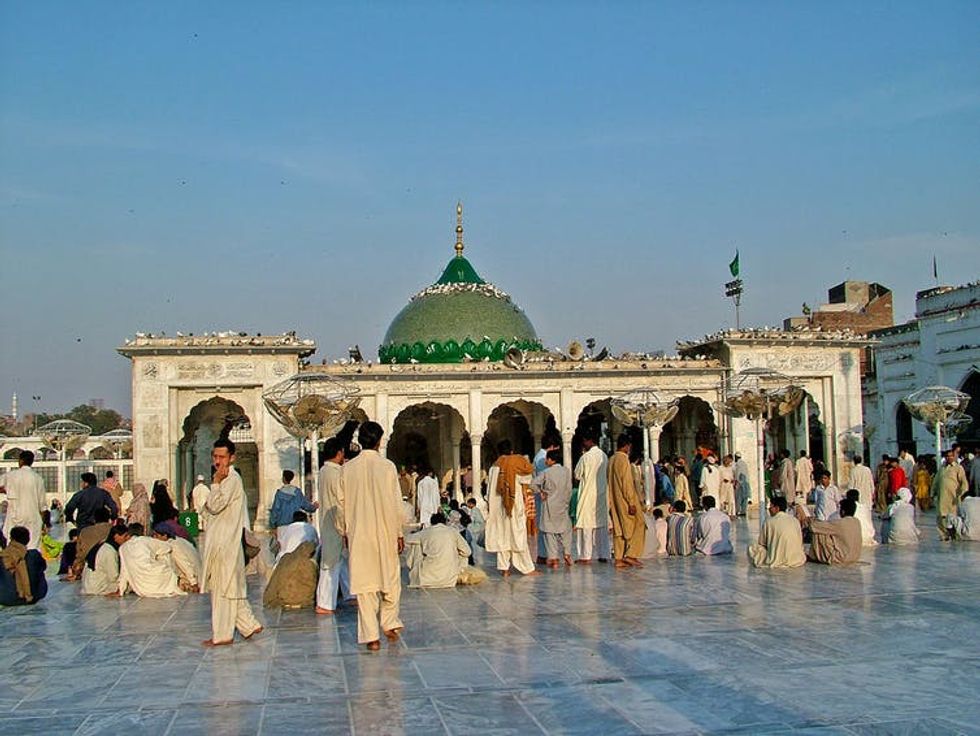
Over 200 people were killed and many more injured in an attack on a Sufi mosque in Egypt’s North Sinai region on Friday. The assault began with a bomb exploding as people were finishing their Friday prayers. As people fled and ambulances arrived, militants opened gunfire on them. It is the deadliest ever attack on civilians in Egypt’s modern history.
In the past, IS has claimed responsibility for some attacks against Sufis and their institutions, although no one so far has claimed responsibility for Friday’s murderous assault.
As a scholar of Muslim and Hindu traditions, I’ve long appreciated the various and influential roles that Sufis and their tombs play in South Asian communities and many communities elsewhere in the world. From my perspective, the repercussions of the deplorable violence in Egypt and elsewhere go far beyond the scores of bodies strewn around the damaged shrine and the devastated families.
Many Muslims and non-Muslims around the globe celebrate Sufi saints and gather together for worship in their shrines. Such practices, however, do not conform to the Islamic ideologies of intolerant revivalist groups such as Islamic State. On the contrary, IS finds these practices threatening. Here’s why.
Who are the Sufis?
The origins of the word “Sufi” come from an Arabic term for wool (suf). It references the unrefined wool clothes long worn by ancient west Asian ascetics and points to a common quality ascribed to Sufis – austerity.
Commonly Muslims viewed this austerity as stemming from a sincere religious devotion that compelled the Sufi into a close, personal relationship with God, modeled on aspects of the Prophet Muhammad’s life. This often involved a more inward, contemplative focus than many other forms of Islamic practice.
In some instances, Sufis challenged contemporary norms in order to shock their Muslim neighbors into more religiously intentional lives. For example, an eighth-century female Sufi saint, known popularly as Rabia al-Adawiyya, is said to have walked through her hometown of Basra, in modern-day Iraq, with a lit torch in one hand and a bucket of water in another. When asked why, she replied that she hoped to burn down heaven and douse hell’s fire so people would – without concern for reward or punishment – love God.
Others used poetry in order to express their devotion. For example, the famous 13th-century Persian poet and Sufi leader Jal�l ad-Dīn Muhammad Rūmī relied upon themes of love and desire to communicate the yearning for a heartfelt relationship with God. Yet others, such as such as Data Ganj Bakhsh, an 11th-century Sufi, wrote dense philosophical tracts that used complicated theological arguments to explain Sufi concepts to Islamic scholars.
Rumi, for example, founded the famous “Mevlevi” order best known as “whirling dervishes” for their signature performance.
This is a ritual in which practitioners deepen their relationship with God through a twirling dance intended to evoke a religious experience.
Some Sufis – men and, sometimes, women – came to gain such a reputation for their insight and miracles that they were seen to be guides and healers for the community. The miracles associated with them may have been performed in life or after death.
When some of these Sufis died, common folk came to view their tombs as places emanating “baraka,” a term connoting “blessing,” “power” and “presence.” Some devotees considered the baraka as boosting their prayers, while others considered it a miraculous energy that could be absorbed from proximity with the shrine.
So, why do some groups like the so-called Islamic State violently oppose them?
I argue, there are two reasons: First, some Sufis – as illustrated by Rabia, the Sufi from Basra – deliberately flout the Islamic conventions of their peers, which causes many in their communities to condemn their unorthodox views and practices.
Second, many Muslims, not just militants, consider shrine devotion as superstitious and idolatrous. The popularity among Muslims and non-Muslims of tomb veneration alarms many conservative Muslims.
In South Asia, special songs of praise – “qawwali” – are sung at these shrines that express Islamic values using the imagery of love and devotion. In other regions, other traditions of devotion have emerged, while zikr (“litany recitation”) is widely popular.
However, despite the divergent ideologies and goals that differentiate them from one another, intolerant Islamist groups such as the Taliban and the so-called Islamic State reject shrine worship as well as dancing and singing as un-Islamic (hence the Pakistani Taliban’s assassination of the world-famous qawwali singer Amjad Sabri). In their view, prayers to Sufis are idolatrous.
Success of Sufi traditions
Sufi customs reflect a vastly underreported quality about Islamic traditions in general. While some revivalist Muslim movements such as the Wahhabis and other Salafis see only one way of being Muslim, there are others who embrace the diversity of Islamic traditions.
Many Muslims proudly defend Sufi customs such as shrine devotions because they are so integral to Muslim and non-Muslim communities, not only in South Asia but in various regions of the world. Today, about 15 percent of Egypt’s population belong to Sufi orders or practice Sufi traditions. They play crucial roles in their locale and region. For many, Sufi sites offer an Islamic expression of what it means to love God.
In fact, historically, in many regions of the world Sufis have been highly successful in adapting Islamic theologies and practices to local customs for non-Muslims. For this reason, Sufi traditions have been credited for the majority of conversions to Islam in South Asia.
It is only with the global expansion of Islamist revivalist groups in the last century that the urge to absolute conformity has become so strong and pervasive. Even so, a majority of Muslims continues to accept a diversity of Islamic practices.
Given the popularity of Sufis, it’s no wonder the so-called Islamic State objects to such models of Islamic pluralism. The ferocity of the recent attack in Egypt and possible involvement of a suicide bomber demonstrate not only the strength of beliefs in this regard, but also how influential IS and other extremists judge both the prominence and the popularity of Sufi traditions.
This is an updated version of a piece first published on Feb. 26, 2017.
The presidential candidates of both major political parties sought to flaunt their foreign policy credentials Monday by holding personal meetings with Egyptian junta leader Abdel Fattah al-Sisi, who has overseen a violent crackdown on political dissent, including large-scale massacres of protesters.
Following their meeting on the sidelines of the United Nations General Assembly, Donald Trump showered effusive praise on the dictator, with a readout from his campaign stating that he “thanked President al-Sisi and the Egyptian people for what they have done in defense of their country and for the betterment of the world over the last few years.”
“Mr. Trump expressed to President al-Sisi his strong support for Egypt’s war on terrorism, and how under a Trump administration, the United States of America will be a loyal friend, not simply an ally, that Egypt can count on in the days and years ahead,” the campaign statement continued.
In one eyebrow-raising paragraph, Trump’s campaign stated, “Mr. Trump emphasized to President al-Sisi his high regard for peace-loving Muslims and understands that every day there are people of goodwill that sacrifice their lives and fortunes to combat the growing threat of radical Islamic terrorism.”
Trump has hinged his candidacy on anti-Muslim policies, including his vow to ban Muslims from the United States and his recent call for police to profile Arab and Muslim men, taking the cue from Israel.
Trump was not the only presidential candidate to endorse al-Sisi’s legitimacy on Monday. According to CNN journalists Stephen Collinson, Dan Merica and Jim Acosta, “While reporters were in the room, Clinton told al-Sisi that she looked forward to talking about the ‘path we are taking in order to build up a new civil society, a new modern country that upholds the rule of law, that respects human rights and liberties.’”
CNN reports that Clinton, “according to an aide in the room, ‘emphasized the importance of respect for rule of law and human rights to Egypt's future progress’ and ‘discussed ways to deepen counterterrorism cooperation, particularly in the fight against ISIS.’” Clinton also reportedly pressed al-Sisi to release U.S. citizen Aya Hijazi, who has been imprisoned in Egypt since May 2014 for operating a nonprofit NGO, the Belady Foundation.
This is not the first time Clinton has held a personal meeting with al-Sisi. In September 2014, she and Bill Clinton met with the Egyptian president during the UNGA meetings.
That meeting came on the heels of her prior support for the authoritarian rule of former Egyptian president Hosni Mubarak. In 2009, Clinton proclaimed, “I really consider President and Mrs. Mubarak to be friends of my family.” In the initial days of the 2011 uprising against Mubarak’s regime, she threw her support behind Mubarak before later shifting course.
The candidates’ meetings came just two days after an Egyptian court agreed to freeze the personal and organizational assets of some of Egypt's premiere human rights organizations, on specious charges that they pose a threat to national security.
That development is just the latest in a string of human rights abuses in which al-Sisi is implicated. While he was defense minister, al-Sisi oversaw and publicly defended the August 2013 massacre of sit-in protesters in Cairo’s Rabaa al-Adawiya Square and other locations, which killed up to 1,000 people.
Al-Sisi rose to the presidency through a military coup in June 2014, and upon taking power, suspended the country’s constitution, appointed officials from the deposed Hosni Mubarak regime and initiated a violent crackdown on dissent. In the first year of his reign, Egyptian authorities "detained, charged, or sentenced at least 41,000 people."
Al-Nadeem Center for the Rehabilitation of Victims of Violence reported in January that, in 2015, Egyptian authorities perpetrated 640 cases of individual torture and 36 cases of mass torture in Egyptian jails. According to their findings, nearly 500 people were killed by Egyptian security forces that year.
In July, Amnesty International reported that “Egypt’s National Security Agency (NSA) is abducting, torturing and forcibly disappearing people in an effort to intimidate opponents and wipe out peaceful dissent.” According to their findings, an average of three to four people are seized every day, unleashing a trend in which "hundreds of students, political activists and protesters, including children as young as 14, vanish without trace at the hands of the state.”
Amid these abuses, al-Sisi has received favorable treatment from the Obama administration, which approved shipments of weapons and fighter jets to al-Sisi's government. In February, Intercept reporter Zaid Jilani revealed that Obama proposed to remove key human rights conditions on U.S. military aid to Egypt.
Much has been made of Politico's fresh revelations that President Barack Obama and first lady Michelle Obama are planning to lease an 8,200-square-foot mansion in the wealthy Kalorama neighborhood of Washington, D.C. after they leave the White House.
The right-wing Daily Caller wasted no time in running a predictably Islamophobic article, in which reporter Eric Owens gleefully noted that the home is also “1,096 feet from the Islamic Center of Washington — one of the largest mosques in the Western Hemisphere." Other outlets marveled at the glamour of the post-presidential mansion, which is worth roughly $6 million and will place the Obamas in one of the most upscale zip codes in the country.
Lesser noticed, however, is that the deal was struck with Joe Lockhart, who is a longtime Democratic Party insider and the founder of a lobby firm hired by the repressive Egyptian government. Joe Lockhart owns the mansion along with his wife, Giovanna Gray Lockhart.
Until at least earlier this year, Joe Lockhart was managing director and founder at the the Glover Park Group, a Washington, D.C.-based public relations firm. Numerous media outlets are reporting that Lockhart recently accepted a position as executive vice president for communications for the National Football League in Manhattan, but his LinkedIn page still associates him with the Glover Park Group.
As Alex Kane previously reported for AlterNet, the Glover Park Group has worked for the Egyptian government since 2013, for the purpose of improving its image to media outlets and helping it forge ties with U.S. elected representatives. It has received at least $5 million dollars from Egypt in exchange for its services.
Headed by President Abdel Fattah al-Sisi, the Egyptian government rose to power through a military coup and has orchestrated a large-scale, violent crackdown on political dissent, “detaining, charging or sentencing” at least 41,000 people between July 2013 and May 2014 alone, according to the count of Human Rights Watch. Al-Sisi oversaw the 2013 massacre in Cairo’s Rabaa al-Adawiya Square, where up to 1,000 people were slaughtered in a single day.
Amid these abuses, al-Sisi has received favorable treatment from the Obama administration, which last year approved shipments of weapons and fighter jets to his government. In February, Intercept reporter Zaid Jilani revealed that Obama proposed to remove key human rights conditions on U.S. military aid to Egypt.
In addition to his professional link to al-Sisi's government, Lockhart has numerous ties to Bill and Hillary Clinton, serving as press secretary and advisor under the former’s administration. He also worked as a strategist for John Kerry’s 2004 presidential campaign. Giovanna Gray Lockhart is an editor at Glamour magazine.
The Lockharts have declined to answer questions from the press, instead referring queries to the White House, and Joe Lockhart did not immediately respond to a request for comment from AlterNet. At this point, it is unclear whether the deal between the Lockharts and the Obamas was arranged directly or through a third party, or whether the transaction was made while Joe Lockhart was still on the payroll of the lobby team working for Egypt. But at the very least, the handover of the mansion offers a potent illustration of how two insider families have profited handsomely from their time in Washington.
Earlier this month, the International Labour Organisation (ILO) released its important World Employment Social Outlook report for 2016. There was little press coverage. The title is bureaucratic and boring. How does one make news from this drabness? One of the most significant findings is that poverty rates have now declined. The ILO finds that this is because of the immense gains in China and in parts of Latin America—notably Brazil. In parts of Africa and in other regions of Asia—including India—“poverty remains stubbornly high.” Meanwhile, those who have skipped above the poverty line “continue to live on just a few dollars per day, often with limited access to essential services and social protection.” Despite the optimism from the data, the ILO remains cautious. Matters are no-where near celebration. Economic slowdown in China and the coup in Brazil are indicators that the slide backwards is possible.
Three barriers prevent—according to the ILO—any significant motion against poverty. First, most countries in the Global South continue to rely upon the export of raw materials, whose extraction and transportation increases growth rates but does little for the population as a whole. In these countries, the ILO notes, “economic growth actually seems to have exacerbated poverty.” A fitting example is Nigeria. Second, the bugbear of income inequality “has tended to dampen growth and its impact on poverty reduction.” As the rich devour the gains of production, and as they remain on tax strike, there are fewer resources to put towards poverty alleviation. The Central African Republic has one of the highest rates of inequality and is virtually at the bottom of the human development tables. Finally, widespread corruption and “limited worker rights” prevents the implementation of policies to reduce poverty. Democracy withers in the face of corruption and a disorganized population.
Data from the ILO and the World Bank shows that insecurity defines the life of the world’s peoples. Billions of people live on less than $3.01 per day—the standard used to define the poverty line. Those billions who live just above that number are also desperate and vulnerable. No salvation seems evident from government. The promises of social welfare are now made with caution—politicians know that there is simply not enough money in the coffers that they could move from military spending to social spending. They would be called treasonous if they made such a shift in the priorities of their countries. Precious resources are used to buy arms. During his trip to Vietnam, for instance, President Obama allowed that poor country to fall into its own arms race, the last thing it needs. But this was hailed as progress.
All politicians say that job creation is a better solution to poverty than welfare spending. But these are empty words. Jobs are simply not being created. Although few politicians say so directly, capitalism displaces jobs by making each worker more productive and integrating workers to machines. Why hire a teller in a bank, when an ATM can do the job? It is depressing in grocery stores to see the clerks encourage customers to use the self-checkout option. They are putting themselves out of a job.
Strong Leader
No wonder that from Egypt to India to Turkey arrives a new phenomenon to take charge of the crisis. Egypt’s Abdel-Fateh al-Sisi, India’s Narendra Modi and Turkey’s Recep Tayyip ErdoÄŸan are powerful examples of free market, authoritarian populism. These men are said to be able to solve all problems—to take a stagnant economy and make it purr, to take joblessness by the throat and make it cough out jobs. In Cairo’s Tahrir Square, an old lady from the countryside sells me a facsimile of Sisi’s identity card. Under profession it says, “Savior of Egypt.” These men have no time for arguments. Democracy is given lip service. It is an impediment to their ambitions. They value action. They have nations to save.
Older ideas of austerity take root. It is not for economic growth alone. That would be too narrow, too closely identified with the blue suits of the bankers. The austerity of the free market, authoritarian populists is for the Nation. The people must suffer so that their Nation can thrive. Patriotism is the incentive for economic activity, not merely the animal spirits of capitalism. But this patriotism is not to be shared. Its benefits will be channeled to the large business houses, which are linked to the political parties of the strong leaders. Impediments to progress must be cast aside at any cost. The long arm of the law, short of outright military dictatorship, can smash workers’ protests, political protests and arrest critical journalists for sedition. Violence against democracy is justified as the mechanism to create jobs. Justification for military rule has made a comeback. The rhetoric of counter-terrorism and of social instability has allowed the army to leave the barracks from Egypt to Thailand—with liberal elites taking refuge in the Generals. Critics ruin the country’s brand, it is said, and they deter investment. Dissent is blamed for poverty. It must wear that cross.
Human Rights Watch has a new report out on this attack on democracy in India. It is called Stifling Dissent: The Criminalization of Peaceful Expression in India (May 2016). The report covers the most egregious examples of undemocratic action by the State. There is the use of colonial-era sedition laws against student activists and defamation laws against journalists, hate speech laws against artists and information technology laws against professors. The range of legal methods used by the central and state governments to muzzle dissent of any kind of striking. In 1988, the Indian Supreme Court warned that politicians who “scent danger in every hostile point of view” should not use the architecture of state violence to protect themselves. That prescient phrase—scenting danger—has now come to define politics in countries such as Egypt, India and Turkey. No journalist or student is safe from prosecution. Any gesture against the political class is met not with argument but with the gallows. What is new here is not the muzzle but its tightness. The crackdown is deeper, more threatening. It skirts at the edge of fascism.
Turkey’s celebrated author Orhan Pamuk is bewildered by how ordinary satirists, teenagers and journalists have been hustled before the courts on charges of sedition. Since Recep Tayyip ErdoÄŸan became president in 2014, almost two thousand cases have been brought for insulting him. “This has nothing to do with insulting the president,” said Pamuk. “This is only about silencing political opposition. This is about intimidating people and scaring the country so nobody would criticize the government.” Much the same explanation stands for the sensitivity of India’s Narendra Modi and Egypt’s Abdel-Fateh al-Sisi. These are men who traffic on machismo. Their jails are filled with people who criticize them. They personally are the answer to the Nation’s problems; they are therefore immune from criticism.
Human Rights Watch’s report argues that dissent is being stifled in India “because of a combination of overbroad laws, an inefficient criminal justice system and lack of judisprudential consistency.” The report says little about the character of the crackdown: it is against the Left, against the journalists, against anyone who wants to challenge the consensus that the strong leader wishes to establish. In Turkey the State has gone after those who want to raise questions about their government’s war on the Kurds or its involvement in Syria—forbidden topics in a country convulsed by the president’s tantrums. There are politics here, not merely problems in the judiciary and the police.
Such reports as come from Human Rights Watch are silent on the politics of the strong leaders (Modi, ErdoÄŸan, Sisi), who have cultivated a political base for their free market, populist authoritarianism. These leaders have no answer to the economic trials of their countries, where decent jobs are hard to find and where poverty rates creep upwards. They will not go after corruption or sanctify unions—the two mechanisms suggested by the ILO. For them, the answer to economic troubles is their virility. Imprisonment for their rivals is not—to their mind—antithetical to democracy or economy. Their kind of democracy insists upon adulation of the leader, who can do no wrong. Even if the leader cannot solve the pressing economic and social problems, it is this leader’s very existence that is the answer to them.
We are well into the start of the sixth year since uprisings and revolutions rocked parts of the Arab world in January-February 2011, and the balance sheet of achievements is very mixed, and mostly disappointing, beyond Tunisia’s fragile move into the world of constitutional, pluralistic democracies. The two most troubling aspects of what is going on in the other five countries that erupted into major street demonstrations and regime counter-attacks are the lack of any clear national consensus on how to govern the country, and the deep, militaristic interventions by foreign countries, including Arab, Iranian, Turkish, Russian, American and other powers.
Along with the five Arab uprisings countries of Syria, Yemen, Egypt, Libya, and Bahrain, we should also add Lebanon, Palestine, and Iraq to complete the list of eight Arab states that now face serious domestic challenges across every major dimension of life: political policies consensus, constitutional governance, economic growth, peaceful and tolerant pluralism, environmental viability, basic security, and — most importantly — genuine sovereignty that allows the citizens of a country to manage their own affairs without external interference.
The easy and simplistic analysis one encounters across the world, especially in the United States, is that Arab lands are hopelessly caught in their own self-made sectarian wars waged by ethnic, national and religious communities that are unable to live together peacefully. This strikes me as exaggerated, and insufficient to explain the profound problems these countries have faced for decades in every aspect of life, such as education quality, environmental ravages, economic mismanagement, corruption, crony capitalism, rule by security forces, widening disparities and inequalities, and a proclivity to allow foreign powers to manipulate us. These problems ravaged our societies well before any serious sectarian clashes occurred, so we should seek an explanation for our troubled condition much further back in our history.
In almost all Arab countries that suffer serious internal conflicts, political violence, and ideological, ethnic, sectarian or socio-economic stresses that have come to the fore in recent decades primarily, their common basic weakness is that they never credibly found a way to achieve an agreed, organic relationship between the rulers and the ruled. The exercise of power and public authority have always been defined by small groups of men — usually anchored in military establishments — who seized and sat in the seats of power. The exercise of responsible citizenship, in terms of duties performed and services enjoyed, has never been fully clear to the citizens or the rulers. The result has been either harsh authoritarian rule deeply backed by foreign powers or national fragmentation and bouts of chaos, incivility, civil wars, state collapse, and large demographic shifts, like internal displacement, ethnic cleansing, forced exile, or emigration at any cost.
So we see today in Syria, Yemen, Egypt, Libya, Bahrain, Lebanon, and Iraq very unsettled conditions that include active warfare, control by external powers, or political authoritarianism that only exacerbates weak citizen-state links and further erodes the socio-economic foundations of the state. Remarkably, some countries like Iraq, Libya, Lebanon, and Yemen still engage in some sort of formal political process that seeks to create and ultimately validate a national governance system that is acceptable to all the key domestic and foreign parties.
That is by nature a very difficult task when external powers are directly involved in local decision-making, as is the case in Lebanon, Syria, Iraq, Bahrain, and Yemen. The task is made easier if the external parties (like the United States and Russia, or Iran, Turkey, and Saudi Arabia) should agree on the main issues in play, but this rarely happens. This is made all the more difficult today when we see both regional powers and global ones involved in these countries at the same time.
The sad reality for the moment, at least, is that most of these Arab countries have not only lost their relative stability and calm, they have also forfeited most of their sovereignty to external regional and global powers, or to strong internal forces that share and contest power with the government (like Hizbollah, Hamas, the Houthis in Yemen, Muqtada Sadr’s movement in Iraq, and others).
This troubled common condition across most of the Arab world reflects issues that go far beyond neat but simplistic sectarian rivalries. Instead it is anchored in the Arab states’ failures in three critical and continuing realms: their refusal to allow their own citizens to define national policies, values, and priorities and validate statehood itself; their incompetent inability to manage their national human and mineral wealth in a manner that would achieve sustained wealth, social equity, and national viability; and, due to the structural weaknesses generated by the above two factors, their willingness to allow foreign powers to come to their rescue and thus to dilute or effectively eliminate their sovereignty.
Hillary Clinton’s campaign website proclaims that as president, she would “continue her long-standing emphasis” on human rights.
But Clinton’s ties to a lobbying firm working for the government of Egypt, a country with an abusive human rights record, casts doubt on those words.
Under Egyptian leader Abdel Fattah al-Sisi, government security forces have detained, charged or sentenced at least 41,000 people, according to Human Rights Watch. Human rights groups in Egypt say at least 124 people have died while in Egyptian prisons due to torture or negligence since Sisi came to power.
Since 2013, the Egyptian government has employed the Glover Park Group, a Washington firm run by former members of Bill Clinton’s administration, to lobby for it and to forge ties with congressional officials and media outlets, according to Foreign Agent Registration Act documents. One of the heads of Glover Park organized a fundraiser for Clinton in April 2014 that netted thousands of dollars for the candidate. Separately, employees of Glover Park have donated about $16,200 in support of Hillary Clinton’s presidential campaign.
The Egyptian government is well placed to influence a future Hillary Clinton administration because of its ties to the Glover Park Group. Egypt has paid over $5 million to the lobbying firm. The strong links could help Egypt weather future criticism of its human rights violations during a new Clinton tenure in the White House.
Dan Auble, a senior researcher at the Center for Responsive Politics, a group that tracks lobbying in Washington, said that the Glover Park Group “would certainly have a bunch of people in their employ that have a relevant Rolodex” for Egypt during a future Clinton administration. “All those people who work at Glover Park would know who to call and have a bunch of people who would take their call based on their former relationship,” Auble added.
Former Clinton officials Michael Feldman and Joe Lockhart, along with two former employees of Al Gore’s presidential campaign, founded the Glover Park Group in 2001. The firm’s ties to the Clintons go beyond past experience working for Clinton and Gore.
In April 2014, Susan Brophy, a managing director at Glover Park, hosted a Ready for Hillary PAC fundraiser, Politico reported. Brophy, who worked for Bill Clinton, donated $2,700, the maximum amount, to Hillary Clinton’s campaign in May 2015, according to federal election records. Brophy is named as a lobbyist for Egypt on a Foreign Agent Registration Act (FARA) document. Joel Johnson, a managing director at the firm also listed in FARA documents as working on behalf of Egypt, gave $5,000 to the pro-Clinton super PAC Priorities USA in 2011. (There are no limits on contributions to super PACs.) Johnson gave $2,700 to Clinton’s regular PAC in 2015. Feldman gave $5,000 to the super PAC.
In October 2013, the Egyptian government tapped the Glover Park Group to “provide public diplomacy, strategic communications counsel and government relations services,” according to a FARA document. A review of FARA documents reveals that Egypt has paid $5.2 million to Glover Park since 2013. Opponents of the Egyptian regime criticized the amount of money going to the lobbying shop when the contract was disclosed. The Egyptian Foreign Ministry responded by claiming that a third party was picking up the tab, according to O’Dwyers, a publication that covers PR firms. But no FARA documents point to any third-party pay.
Glover Park Group sets up meetings between Egyptian officials and congressional officials who sit on key committees that wield influence on legislation concerning the country. The latest FARA disclosure form reveals an October 2015 email to Adam Yezerski, a staffer for the Senate Appropriations Committee. Another FARA document shows a February 2015 email to Dana Stroul, a staffer at the Senate Foreign Relations Committee, and a March 2015 email to the office of Senator Lindsay Graham, who sits on the Senate Appropriations Panel, which drafts legislation on foreign military aid. FARA documents also reveal extensive contacts with the news media and think tanks.
Jason Brownlee, a professor at the University of Texas and the author of Democracy Prevention: The Politics of the U.S.-Egyptian Alliance, said the Egyptian government wants to ensure the continuity of U.S. military aid, which amounts to $1.3 billion a year. The Obama administration held up portions of military aid after Egyptian forces killed over 800 members of the Muslim Brotherhood in August 2013, but restored the aid in March 2015.
Congress’ number-one requirement for continuing military aid is a strong Egypt-Israel relationship, according to Brownlee.
“Congress doesn't have a problem with Egypt unless Israel has a problem with Egypt. And since Sisi has come to power, Israel is very happy,” said Brownlee. Israel and Egypt signed a peace treaty in 1979, though there are occasional policy differences between the two nations. But Sisi has tightened a blockade on Hamas, the Palestinian Islamist offshoot of the Muslim Brotherhood that is an enemy of both the Egyptian government and Israel. Sisi told the Washington Post that he and Benjamin Netanyahu, the Israeli leader, confer regularly on regional issues, though the relationship has run into trouble in the past.
Brownlee noted that in 2008, Congress temporarily held up $100 million in aid after Israeli and American complaints that Egypt was not doing enough to enforce the blockade of Gaza. “Lobbying keeps the relationship going in case, at some point, Egypt's foreign policy slightly deviates from what the Israeli government and its allies in Congress might want,” he said.
But if there is any Egyptian-Israeli breach under a Clinton presidency, the Glover Park Group would be well positioned to smooth things over. And since the firm has close links to the Clintons, the Sisi government has little reason to worry about Hillary Clinton in the White House.
Over a few decades’ stretch, the name Isis became an increasingly popular name to give a newborn, particularly among parents of baby girls. An Egyptian goddess who appears in texts dating back to the 24th century BCE, Isis is a figure of healing and protection, her name both classic and unique. In other words, for a pretty long time — millennia, actually — Isis has been a pretty good bet as far as namesakes go. That is, until a certain terrorist group (you know the one) came to dominate the news and things started to go a bit sideways.
As ridiculous as it may seem, having the first name Isis has now become a massive burden for lots of people, most of them, though not all, women and girls.
Last year, Nutella reportedly refused to print a personalized jar label for 6-year-old Isis Rebanks, though her siblings Oliver and Zuleika had no problems. A British woman named Isis Lake says she’s had flight reservations repeatedly canceled without reason or explanation. San Francisco’s Isis Anchalee tweeted about Facebook shutting down her account (the company “thinks I’m a terrorist,” she wrote) before multiple passport screenshot submissions finally compelled company officials to unlock it again.
And as if junior high school isn’t hard enough, 14-year-old Isis Brown has the daily hassle of dealing with classmate bullies and potential future GOP presidential contenders calling her a terrorist. She finally got so fed up with the relentless teasing she made a video decrying the abuse. "I have the issue of every day when I walk into school, just wanting to stop right there in the middle of the hallway and just cry," Brown tearfully confesses in the clip.
There are, of course, other names that have also changed in the public consciousness, usually due to an association with a single famous, or infamous figure. That can be annoying but fairly innocuous if your name is Cher, Sade or Drake. Less so if you were born before World War II (or, I suppose, if your parents are assholes) and your given name is the once-popular Adolf. Since 9/11, men named Osama have endured physical and verbalabuseby the misinformed and misguided; the same sort of people who imagine a conspiracy lurking in the middle name of one Barack Hussein Obama.
I emailed Isis L. of California, who says her name came from her mom, who “liked Egyptian mythology and liked the history of Isis the Egyptian goddess.” I asked her about common annoyances, and she rolled off a litany of examples.
“People making jokes, for instance, asking if I’m the head of the terrorist group,” Isis L. wrote. “I get ignorant comments a handful of times a day during the week because I have to wear a nametag at work, so it doesn't help. My name used to be a conversation starter—people would compliment me by saying it was a beautiful name, or [they would guess] what the origin of my name was. Now, I tend to hide my nametag behind my uniform vest in order to avoid any ignorant comments that may irritate or offend me. I only state my name when asked, just because I’m tired of explaining anything about my name in regard to its origin and it being totally irrelevant to the Islamic State of Iraq and Syria. It’s sad, because I shouldn’t have to explain myself.”
Kat Lynn, whose daughter was born in 2002, named her bundle of joy Isis because she “fell in love with the name and the goddess of motherhood and magic behind it.” She recalls that Isis was becoming more commonplace in America at the time. “Isis was 548th on the list of most popular names in the United States,” she wrote me. “It was more popular than Barbara, Paula, Deborah, and Clare.”
“Isis and I frequently get comments about her name, whether it be making a hair appointment for her and the receptionist commenting on how her name is 'unfortunate,' or substitute teachers at school asking her if she scares people when she tells them her name,” Lynn says. “In one instance, I was ridiculed in front of a large crowd by a cashier at [a popular craft store]. I gave him my email address, which contains the name Isis. He asked what Isis was and I politely explained it was the name of my 13-year-old daughter who was named after the Egyptian goddess. The cashier went on to explain to the large line of customers that Isis was actually the name of an evil terrorist group that frequently beheaded people. The area manager apologized later for the incident.”
Because of incidents like these, women named Isis have been pleading with the media to use alternate acronyms when discussing the terror group. A petition calling for news outlets to stop calling the organization ISIS has a whopping 63,000 signatures. The woman behind it also started a Twitter account where she documents and retweets messages about Isises who’ve been mistreated because of their name.
Kat Lynn suggests this whole issue could change overnight if talking heads, broadcasters, news anchors and others would just make one minor modification to their reporting. “The United States State Department uses the terms IS or ISIL,” Lynn writes. “Frequently I see major news organizations broadcast statements from the president or other U.S. officials where they will refer to the terrorist group by the term ISIL, immediately following the newscasters will continue the report using the acronym ISIS instead. Thousands of women named Isis could be spared public disparagement if the media would simply use the same acronym that officials are already using.”
It looks like those calls have been heard in some media quarters, according to a 2014 Atlantic piece:
As National Journal's Matt Berman points out, the Associated Press has moved to "Islamic State group" and the New York Times is going with IS. The U.S. government has increasingly said "ISIL"—the Islamic State of Iraq and the Levant. Egypt's Islamic authority, Dar al-Ifta, proposed “al-Qaeda Separatists in Iraq and Syria,” or QSIS, and France recently announced it would use the Arabic acronym "Daesh." ISIS really hates that word though, and according to the Washington Post, has threatened to cut out the tongue of anyone who uses it.
Lynn suggests that people, whether they know an Isis or not, should contact media whenever they hear ISIS being used and tell them to amend it to ISIL. “It would really only take one letter, and a bit of effort to help the thousands of women in the United States named Isis reclaim their name,” she says.
In the meantime, Isises are weathering the storm, dealing with minor and major daily indignities related to strangers’ reactions to their name. What they aren’t doing, though, for the most part, is changing their name. And why should they? If you like your name, you have every right to keep it. They’ve developed ways to cope.
“My daughter finds that sarcastic replies to those who try to tease her about her name usually makes people be quiet,” Lynn says. “She does not give in to others’ attempts to make her feel bad about herself. Isis wants everyone with her name to be proud of it and to always remember that is not the real name of the terrorist group.”
Isis L. echoes those sentiments. “Young girls and women named Isis must be strong and tough and not let others' ignorant and inconsiderate comments get to them,” she writes. “I know it’s difficult, but they should stand up for themselves and not let anyone bully them. It is just best for all Isis' out in the world to tell those who have something negative to say about the name Isis, that they are not interested in negative insulting remarks about their name and for Isis' to keep their heads up high.”
“I just hope it will blow over,” she adds, “but I feel the damage has been done already.”
An employee at an Apple store in Melbourne told six black teenagers to leave the shop because the staff were worried they “might steal something.” The incident was captured on video and started making the rounds on social media yesterday.
According to Mashable, which spoke to some of the teens by phone, the African-born students are all between 15 and 16 years old. In the cell phone footage of the exchange, an Apple employee speaking to two of the high-schoolers states, "These guys are just a bit worried about your presence in our store...They’re just worried you might steal something.”
“Why would we steal something?” one student asks.
“Guys, end of discussion,” the employee responds. “I need to ask you to leave our store.”
Posting on social media, one of the students suggested that while this kind of behavior might be par for the course in the U.S., it should have no place in Australia.
“Racial profiling has to stop,” Mohamen Semra wrote on Facebook, “happens to[o] often in America we don't need here in Australia too.”
According to Australia’s 9News, the video has now been viewed more than 60,000 times. The students, who have been remarkably gracious about the whole thing in every interview, delivered a measured response to the station.
“Because we were a group of black males—teenagers—and teenagers do a lot of stupid stuff, but you still can’t give black people that stereotype,” Abdulahi Haji Ali told 9News. “Once we heard that we are all pretty shocked… I didn’t believe what I heard.”
Gereng Dere, another student from the group, added, “We have the right to go in and look around like anyone else.”
Apple is reportedly “investigating” the incident, and Mashable reports that it’s unclear whether the employee has been reprimanded or removed. Semra noted on Faceook that Apple issued a private apology to the students, but noted the students deserve a public apology as well. “It was the only time in my life I have felt this way, and I'm shocked."
The students were invited back to the store, accompanied by their white school principal, Nick Scott, on Wednesday. Per Mashable, the employee said “he apologized if his statement was taken out of context.” (As if there is some magical context in which his words might be regarded as anything but racism, but thanks for trying!)


 This is an updated version of a piece first published on Feb. 26, 2017.