Iowa farmers sound alarm as Trump economy leaves them 'on the brink of something bad'
09 April
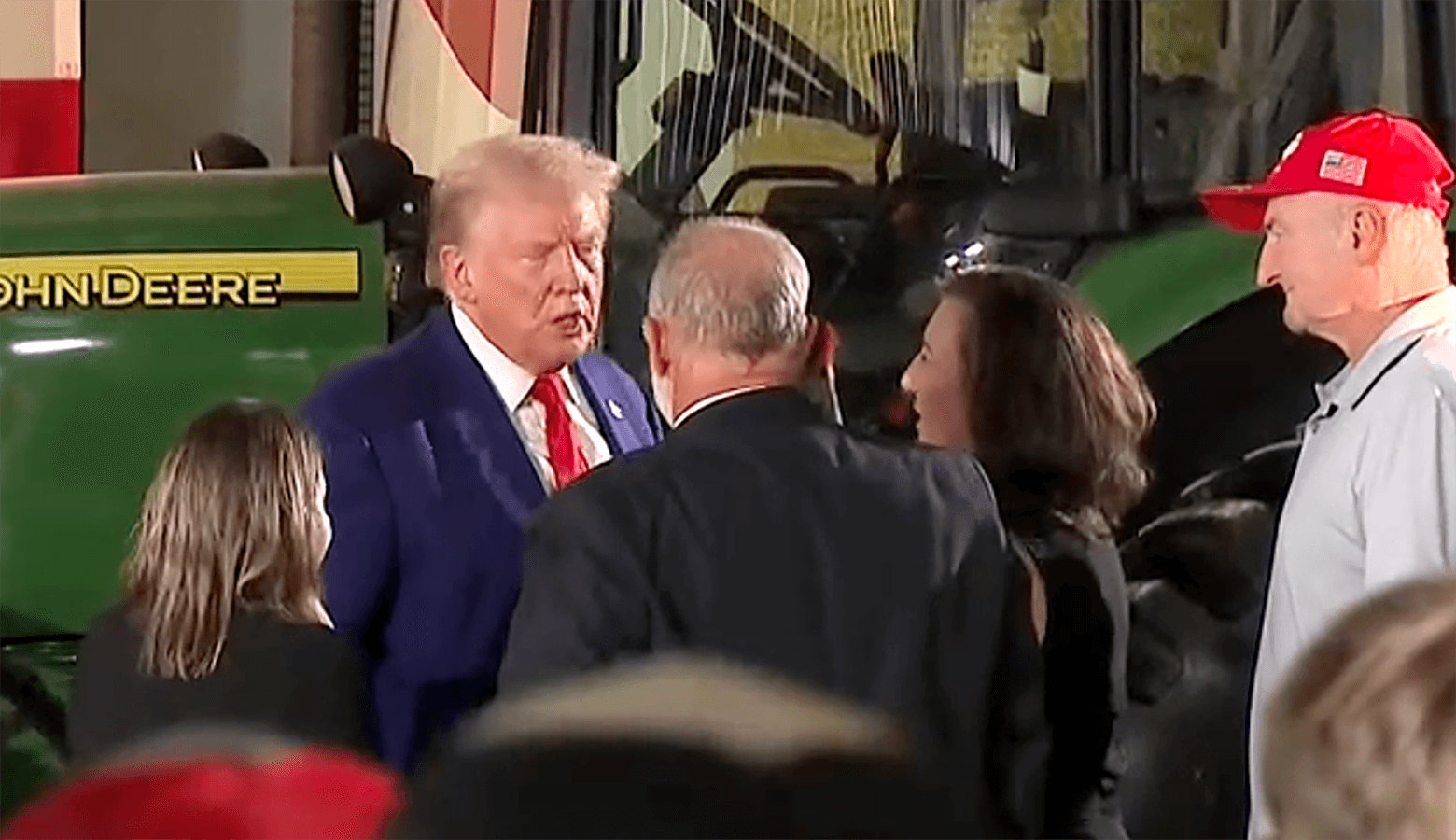
President Donald Trump speaks at a farmers' roundtable event during the 2024 presidential election, Image via C-Span.
President Donald Trump speaks at a farmers' roundtable event during the 2024 presidential election, Image via C-Span.
U.S. farmers are continuing to get slammed by President Donald Trump's administration, as the closure of the Strait of Hormuz has drastically increased costs for the industry.
CNN spoke with farmers for an update as they kick off the spring planting season. "They're at a breaking point," the report began.
"A lot of farmer discouragement out there. Prices of our soybeans, prices of all our commodities started going down, prices of fertilizer and other things we import to plant a crop started going up. So for a year, we've seen some real chaos on all sorts of trade tensions," Aaron Lehman, a fifth-generation farmer, told CNN's Jeff Zelany.
"I see so many farms are reporting that they're on the brink of something bad, that their communities are on the brink of something bad," he added.
The farmer said that there are more uncertainties than in most other years.
Not only does oil come from Iran, but the war is also making fertilizer costs soar. Planting season for large crops such as corn, soybeans, and other major agricultural crops is typically in the spring, between March and June, depending on the area of the country.
At the same time, the weather this year hasn't been kind to both farmers and ranchers. A heavy drought in Texas has resulted in half of the winter wheat being rated poor to very poor, said the USDA’s first Crop Progress report of the season.
That drought is also driving up beef prices. In 2025, the U.S. faced the lowest cattle numbers since 1951.
"Severe drought over the past few years has discouraged cattle being retained for breeding," said CNBC. That drought hasn't changed much over the past 6 months.
"Tariffs and cattle disease have further exacerbated consumer price increases, though imports mainly affect the ground beef supply," the report said.
Farmers and ranchers were already suffering because of Trump's tariffs.
Bill Watts wrote for the Farm Journal that "in its monthly Agricultural Trade Monitor, NDSU found that tariffs imposed by the Trump administration under the International Emergency Economic Powers Act (IEEPA) collected an estimated $958 million in revenue from selected imports of agricultural inputs between February and October of last year. Of that, about: $273 million came from agricultural chemicals, $530 million from farm machinery, $110 million from fertilizers and $44 million from seeds."
Lehman noted that the Iran war is causing high fuel prices for all of the equipment. So, they're filling up 100 gallons of gas "multiple times a week."
Wes Rieth, farm manager of Longview Farms, explained that each farmer gets one chance each year to plant and one chance to harvest.