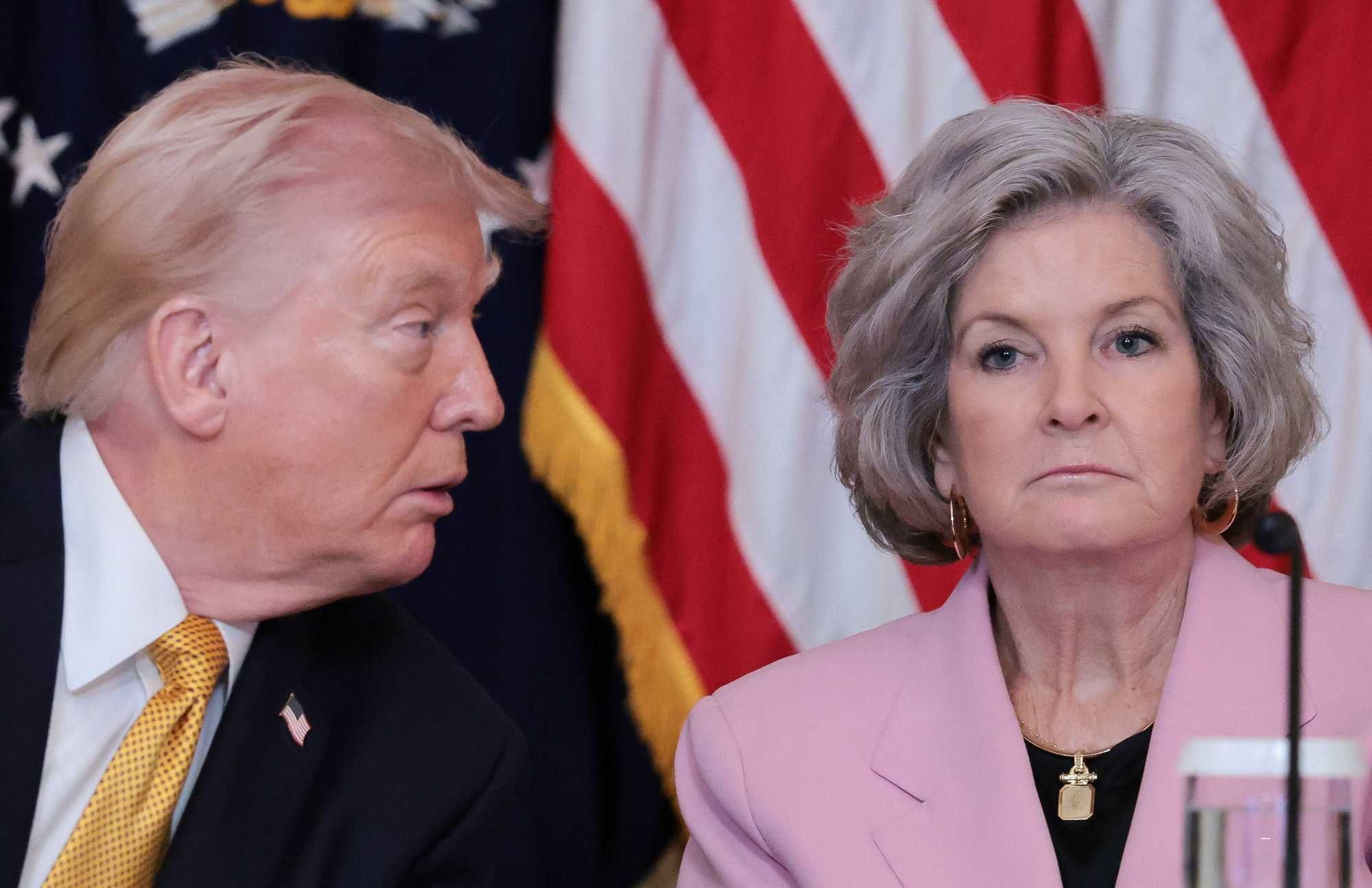
U.S. President Donald Trump with White House Chief of Staff Susie Wiles in Washington, D.C., U.S., March 16, 2026. REUTERS/Jonathan Ernst
President Trump's decision to postpone a voluntary artificial intelligence testing executive order has exposed a deepening divide within his administration over governance philosophy and decision-making authority. The postponement, announced shortly before a scheduled White House signing ceremony, revealed fundamental disagreements between officials and highlighted how Silicon Valley figures continue to wield outsized influence over administration policy.
The delay underscores a pattern of internal friction that has increasingly characterized Trump's second term. The president told reporters he was concerned the order "could have been a blocker" to U.S. innovation and technological superiority over China after conversations with tech industry leaders including David Sacks, Elon Musk, and Mark Zuckerberg. The postponement was also partly due to scheduling difficulties, with major tech CEOs including OpenAI's Sam Altman and Anthropic's Dario Amodei unable to attend on short notice.
The chaos surrounding the delayed signing reflects deeper organizational problems. National Economic Council Director Kevin Hassett had proposed an FDA-like review process for AI models, signaling a more regulatory posture. Yet Chief of Staff Susie Wiles has emphasized that the administration is "not in the business of picking winners and losers," indicating competing visions for how the administration should approach emerging technology governance. The draft order itself attempted to bridge this divide, explicitly disclaiming any intent to create mandatory requirements—yet even this cautious middle ground proved insufficient to move forward at this time.
Policy analysts have characterized the postponement as symptomatic of broader White House dysfunction. Observers noted that Sacks "seems to have the ear of the president on this topic," raising questions about institutional decision-making processes. Dean Ball, associated with the White House AI Action Plan, suggested the postponement signals that governance of AI development will rest substantially with the private sector rather than through coordinated federal frameworks.
The episode illustrates how Trump's administration continues to struggle with unified messaging. Hassett's regulatory inclinations and Wiles's pro-innovation stance represent genuinely competing philosophies that the White House has yet to reconcile. When even a voluntary, industry-friendly measure cannot proceed as scheduled, observers question whether consensus on any governance question is achievable within the administration's current structure.
What emerges is a picture of a White House where major policy decisions can shift rapidly based on last-minute discussions with industry figures. The postponement occurred shortly before the scheduled ceremony, creating significant logistical complications and raising questions about decision-making processes at the highest levels of government.
The episode also raises questions about the role of unelected tech executives in shaping federal policy. Sacks, Musk, and Zuckerberg did not campaign or stand for election, yet their input apparently carries sufficient weight to delay presidential action. This dynamic—where industry figures can influence the timing and scope of stated administration initiatives through direct access—suggests ongoing tensions between different power centers within the administration.
Meanwhile, the administration's inability to finalize a unified AI governance approach has created a policy vacuum. California Governor Gavin Newsom signed an AI-related executive order addressing potential job losses from the technology, proceeding even as the federal government remained unable to establish clear national direction. The administration has expressed desire for federal preemption of state regulations, yet its own internal process challenges have hampered policy development.
The AI order postponement joins a pattern of recent episodes reflecting White House operational challenges: delayed announcements, competing public statements from different officials, and decisions apparently subject to rapid revision based on external input.