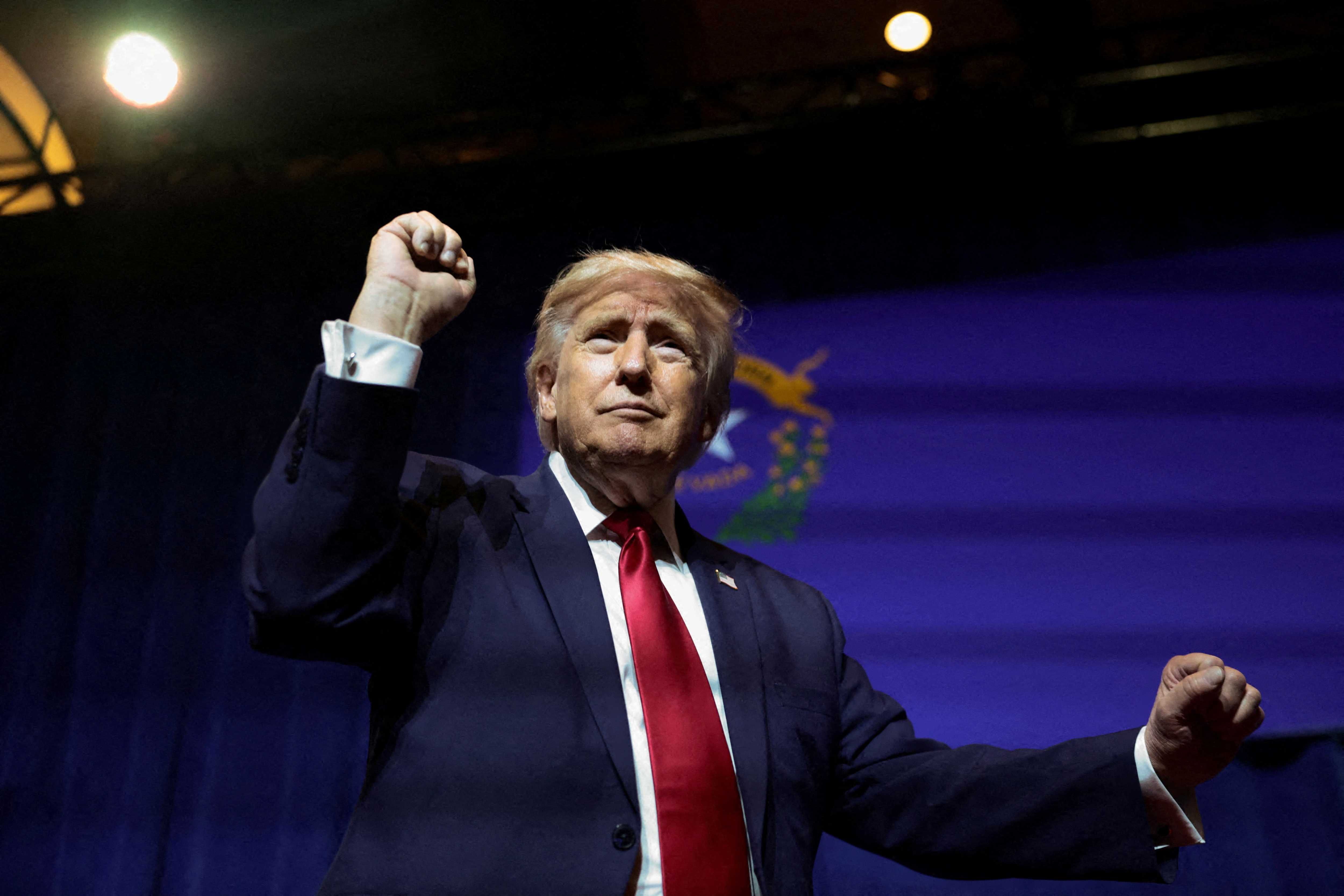
U.S. President Donald Trump in Las Vegas, Nevada, U.S., August 5, 2026. REUTERS/Evelyn Hockstein
In a Thanksgiving-week episode of The Mona Charen Show, host Mona Charen welcomes Maya MacGuineas, president of the nonpartisan Committee for a Responsible Federal Budget (CRFB), to dissect America’s deteriorating fiscal trajectory. Titled "Trump's Fiscal Recklessness is Catching Up With America," the conversation examines how decades of bipartisan budgetary neglect—compounded by current tax, spending, tariff, and immigration policies—are converging into a broader affordability and debt crisis.
The episode opens with a pointed critique from MacGuineas regarding the political fantasies sustaining Washington’s fiscal gridlock. According to MacGuineas, both major parties rely on "free lunch" myths to avoid telling voters hard truths about the national debt.
"The problem is that both sides have their myths or their free lunch proposals, right? Republicans will tell you the tax cuts are going to pay for themselves. No, they won't. And behind closed doors, they'll admit that they're not going to. And Democrats will say taxing millionaires and billionaires. That's fine. There's not enough money there. Not even close, especially when you're talking about dealing with the fiscal situation and these massive expansions—drop in the bucket."
— Maya MacGuineas, The Mona Charen Show
MacGuineas explains that this bipartisan denial prevents serious fiscal reform before an acute market crisis forces Congress to act. While Republicans rely on supply-side assertions that tax reductions generate enough growth to offset lost revenue, independent budget scorekeepers consistently find that sweeping tax cuts add trillions to the federal deficit. Meanwhile, progressive proposals to finance major new entitlement expansions solely through wealth taxes or higher top marginal rates fall far short of closing the structural gap between federal spending and revenue.
Building on that premise, Charen and MacGuineas explore how federal fiscal irresponsibility directly fuels America’s ongoing affordability crisis. Rather than existing as an abstract accounting problem, unsustainable borrowing and policy missteps weigh heavily on everyday household costs. The two discuss the macroeconomic drag created by President Donald Trump’s tax cuts, spending measures, broad tariff policies, and immigration restrictions.
Specifically, tariffs act as a regressive tax on consumers by raising the price of imported goods and domestic supply chains, while restrictive immigration policies tighten labor markets and put upward pressure on service-sector wages and prices. Combined with high federal borrowing that keeps interest rates elevated on mortgages, auto loans, and credit cards, these policies squeeze household budgets from multiple angles.
A central theme of their discussion is intergenerational equity. Charen and MacGuineas highlight the massive, ongoing transfer of wealth from younger Americans to older generations. Because federal spending is heavily tilted toward entitlement programs and debt service rather than forward-looking investments in education, infrastructure, or research, younger workers face the dual burden of higher living costs today and the bill for decades of accumulated federal borrowing tomorrow.
A major flashpoint in the interview—and in MacGuineas’s broader advocacy—is the approaching insolvency of Social Security. According to CRFB projections cited by MacGuineas, Social Security’s retirement trust fund is less than six years away from running dry. Under current law, once the trust fund reserves are depleted, benefits can only be paid out of incoming payroll taxes, which would trigger an automatic, across-the-board benefit cut of roughly 22 percent for tens of millions of retirees.
MacGuineas warns that lawmakers are gravitating toward fiscal gimmicks rather than genuine structural reforms. Tapping general Treasury revenues to cover entitlement shortfalls, for example, would add trillions more to the national debt over the coming decades, risking bond market instability and higher interest rates. In her conversation with Charen, MacGuineas underscores why these compounding pressures—rising interest costs, shrinking trust funds, and political unwillingness to confront hard trade-offs—leave her increasingly worried about a full-blown fiscal crisis.