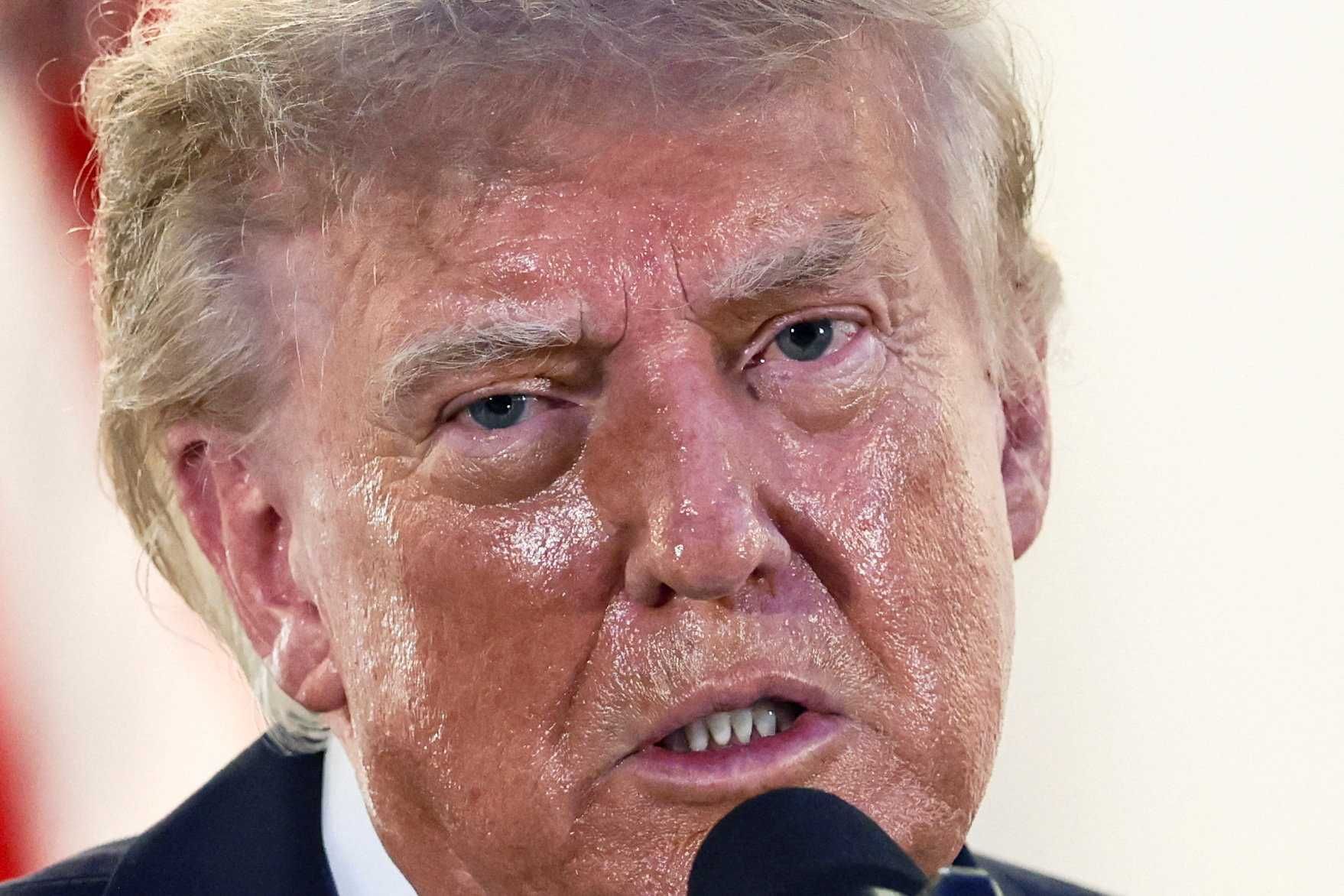
President Donald Trump speaks while hosting a dinner in the Rose Garden at the White House in Washington, D.C., September 2, 2026. REUTERS/Evelyn Hockstein
Obama-era trade advisor and Treasury official Christopher Smart says the U.S. is increasingly exporting confidence and importing crickets from global investors thanks to President Donald Trump’s failed economic policies.
“Though Mr. Trump’s erratic economic decisions have yet to drive away many foreign investors, they are adjusting their long-term plans,” said Smart in the Saturday morning edition of the New York Times. “Uncertainty about the United States has discouraged them from making big long-term bets on the U.S. economy and accelerated the efforts of foreign governments to insulate their financial systems from Washington’s increasingly unpredictable direction.”
Recent polling reveals America’s reputation has fallen, with Pew Research finding that only 37 percent of respondents across 36 countries have a favorable view of the United States. Worse, the sense of America’s reliability as a trade partner has dropped sharply over the last few years among friendly nations such as Canada, Germany, Japan and Singapore.
In fact, Smart said one recent Gallup poll shows that China’s leadership now gets better ratings than America’s.
“Foreign governments are scrambling to limit their economic exposure to America’s unpredictability,” said Smart. “As Washington has rapidly expanded financial sanctions, China and Russia have built international payment systems that avoid using dollars altogether. Europeans have accelerated efforts to reduce reliance on Visa and Mastercard, which currently process nearly half of euro-area card payments.”
He added that foreign governments now also have advanced “digital currencies and blockchain cross-border settlements that avoid the U.S. Treasury’s choke points.”
“Central bankers have reduced their exposure to dollars, with reserves dropping to 57 percent today from 72 percent in 2001,” added Smart. “Some of this is normal diversification, but a fresh survey from the Official Monetary and Financial Institutions Forum, a research group, reveals that central banks plan to continue cutting back dollar holdings amid rising geopolitical risks.”
And worries about the reliability of Trump’s government after his second-term tariffs are also tamping down foreign direct investment, with foreigners preferring to buy “big, long-term stakes in American companies or setting up shop in the United States, as opposed to investing in U.S. stocks and bonds,” warned Smart.
“Last year’s $288 billion was the lowest total since the pandemic and was dominated by reinvested earnings rather than fresh money. Large investment pledges from Japan, South Korea and the Persian Gulf to secure Trump trade deals have yet to materialize in any significant size,” he said.
And traditional trading partners have taken to signing agreements with other countries that help diversify against the risk of Trump’s ever-shifting tariffs, with even Canada expanding a trade agreement with China and talking trade with the European Union. The E.U., meanwhile, just closed trade deals with India and the South American trade bloc Mercosur, warned Smart.
Deals are closing all around us, he said. And he warned that the incoming Democratic administration had best work quickly to clean up Trump’s damage.