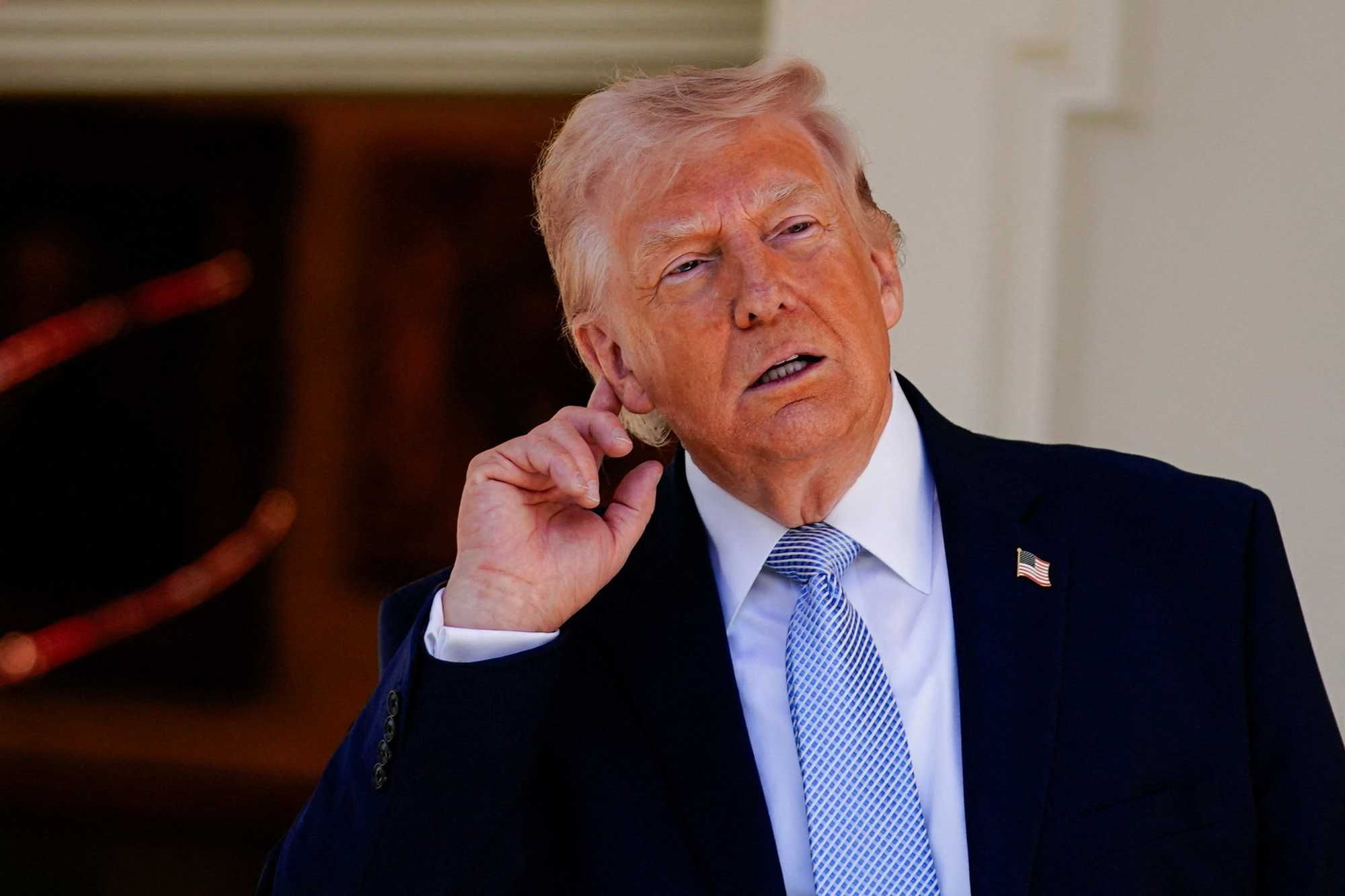
U.S. President Donald Trump gestures, as he heads back to the Oval Office, on the day of the 2026 White House Easter Egg Roll, in Washington, D.C., U.S., April 6, 2026.
In the two years since President Donald Trump launched a barrage of aggressive tariffs on America's trading partners worldwide, fear of a stock market reaction has been the chief brake on his agenda, and the midterms may have just changed that.
Republican Rep. Don Bacon, who is retiring, has been more open to dissent. He was one of six Republicans to join Democrats in voting to repeal Trump's tariffs on Canada in February, a rare rebuke of the president's trade policy. Bacon told CNN he wasn't sure whether the appetite of Republicans to oppose the president's trade agenda had increased as a result of the midterms.
"It should," he said. "Trump's tariffs killed the GOP this election."
Despite a consistent stream of polling data showing Americans' hostility towards Trump's tariffs, Republican lawmakers have largely stayed quiet on the issue, viewing the political fallout from opposing the president as too great. Last week's election results may well have just demonstrated that there is a significant political cost to that silence. Democrats have made major gains at the polls, flipping seats in historically Republican states that have been badly hit by the tariffs, from agricultural states such as Iowa and Kansas to the northern border states of Maine and Michigan.
"Many Republicans were kind of whistling by the political graveyard by ignoring the tariff issue, but now it's come front and center," said Brian Darling, a Republican strategist and former counsel to Republican Sen. Rand Paul of Kentucky.
Nationally, two-thirds of voters said Trump's tariffs had hurt the national economy, according to the results of CNN's Voter Poll.
Some Republicans have already begun to acknowledge that their approach to the tariffs may have come at a political cost. Texas Republican Sen. Ted Cruz, whose state saw significant Democratic gains in the election, pointed to voter frustration at the cost of living as a key factor in the outcome.
"Tariffs have made everything too expensive," Cruz wrote in a post on X last week. "Understandably, people were pissed off, and elected Republicans didn't do enough to address their very real pain," he added.
Cruz has, however, remained a staunch backer of Trump's tariff agenda in Congress.
Even if Republicans are willing to risk the wrath of the president, they face another huge hurdle: his veto power. Democrats and their independent allies currently hold 55 of the 100 Senate seats and 255 of the 435 House seats. Even if they voted unanimously, they would still need at least 12 Republicans in the Senate and 35 in the House to override a presidential veto.
"I'll become Mr. Veto," Trump declared in an Election Day interview on the New York Post's Pod Force One prior to the results being in.