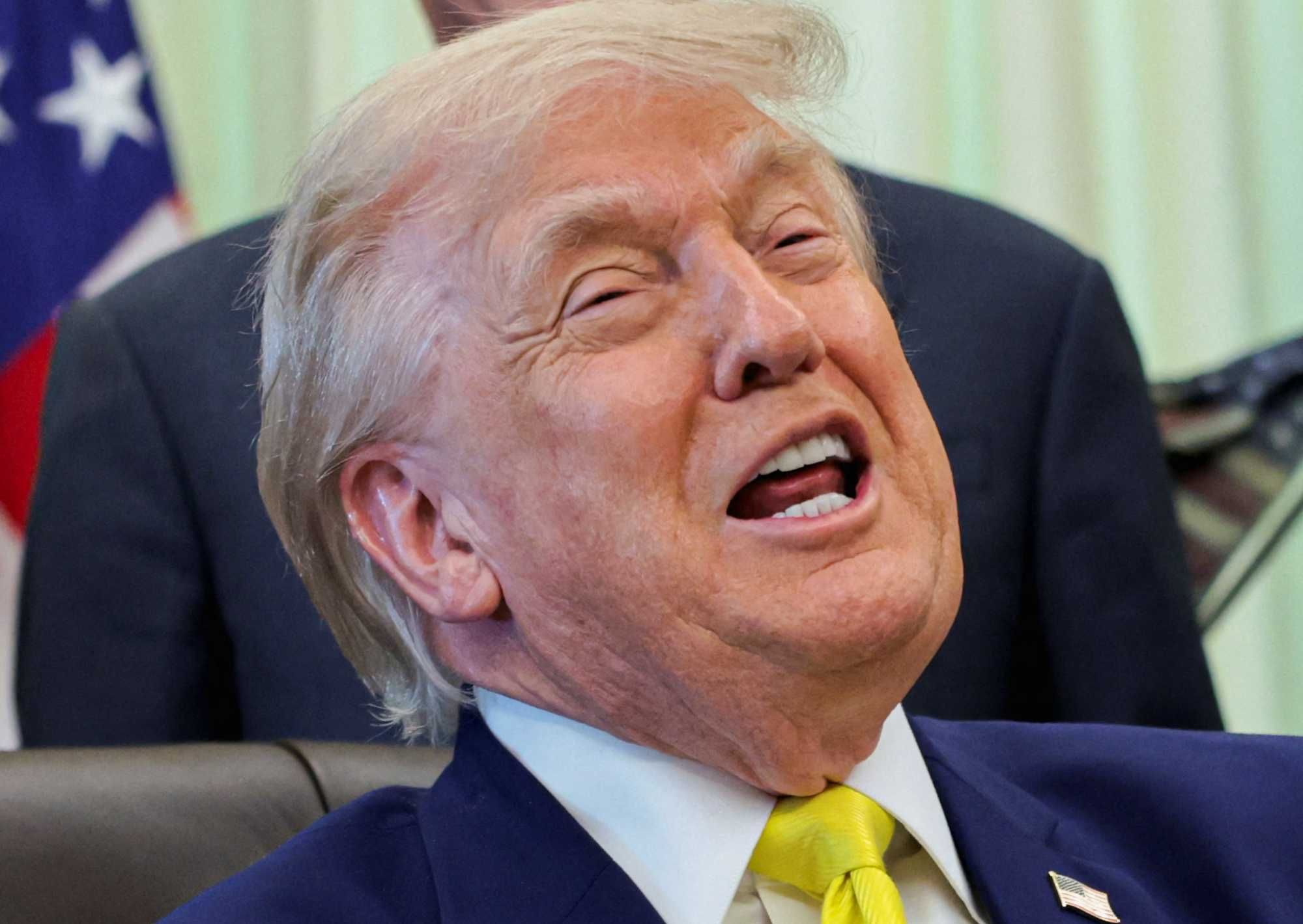
US President Donald Trump reacts topics in the Oval Office at the White House in Washington, D.C., U.S., June 4, 2026. REUTERS_Jonathan Ernst
Over the past several months, President Donald Trump has declared the passage of his voter ID law — called the SAVE American Act — his top legislative priority, saying that he will not sign any other bills until it is passed. Critics have argued that the bill will disenfranchise millions of voters, and that it’s part of Trump’s effort to manipulate the midterm elections in which Republicans are projected to take major losses. But as one top GOP insider has noted, Trump’s bill very well could “hurt” his party in the end.
“There's so much dumb about this fight, but the fact that the SAVE Act might well hurt the GOP electorally is the chef's kiss,” posted former Republican congressional staffer and DOJ lawyer Gregg Nunziata, who is currently the Executive Director at the Society for the Rule of Law.
He made this assertion along with a retweeted screenshot from a Washington Post op-ed published on Monday, in which University of Notre Dame law professor Derek T. Muller argues some of the more practical limitations to Trump’s SAVE Act. Among these, as Nunziata notes, is the fact that a law requiring voter ID could backfire for Republicans.
As Muller writes, “The bill’s design prefers IDs that Democrats tend to have more than Republicans do. It privileges passports, which Democrats own at higher rates than Republicans, and removes concealed carry licenses as permissible ID in several states. The bill also adds paperwork for married women who change their names, who are disproportionately Republicans. And it ends online voter registration for rural — mostly Republican — voters. If Republicans are hoping to gain an electoral edge with this bill, they are sorely mistaken.”
In other words, while the SAVE America Act is Trump’s effort to trim off pesky Democratic voters, it could have the exact opposite effect. The president and his MAGA loyalists are the only ones who don’t seem to realize this, as other Republican lawmakers have made it clear that they would rather SAVE disappear from the discourse.
As Muller’s op-ed elaborated, Republican state lawmakers in places like Texas and Florida are “hardly indifferent to election security, but the bill would tell them their ID laws are inadequate — not because they failed to verify voters, but because they used a different list of IDs.” Texas, for example, has its own voter ID laws that allow the use of recently expired driver's licenses, while Florida allows concealed carry licenses.
And not only would the creation of a standardized ID system across the country be a complicated, disruptive process, but with a consequential midterm election looming, attempting to implement such a complex endeavor could result in massive electoral chaos.
“Election law works best when rules are clear before voting begins,” says Muller. “If the bill passes in its present form, voters from Texas to Florida will be surprised this November that long-standing IDs are no longer acceptable. Lawmakers have not thought through the details of this bill. If Congress wishes to secure elections, it should set reasonable guardrails and allow the states to fill in the gaps.”