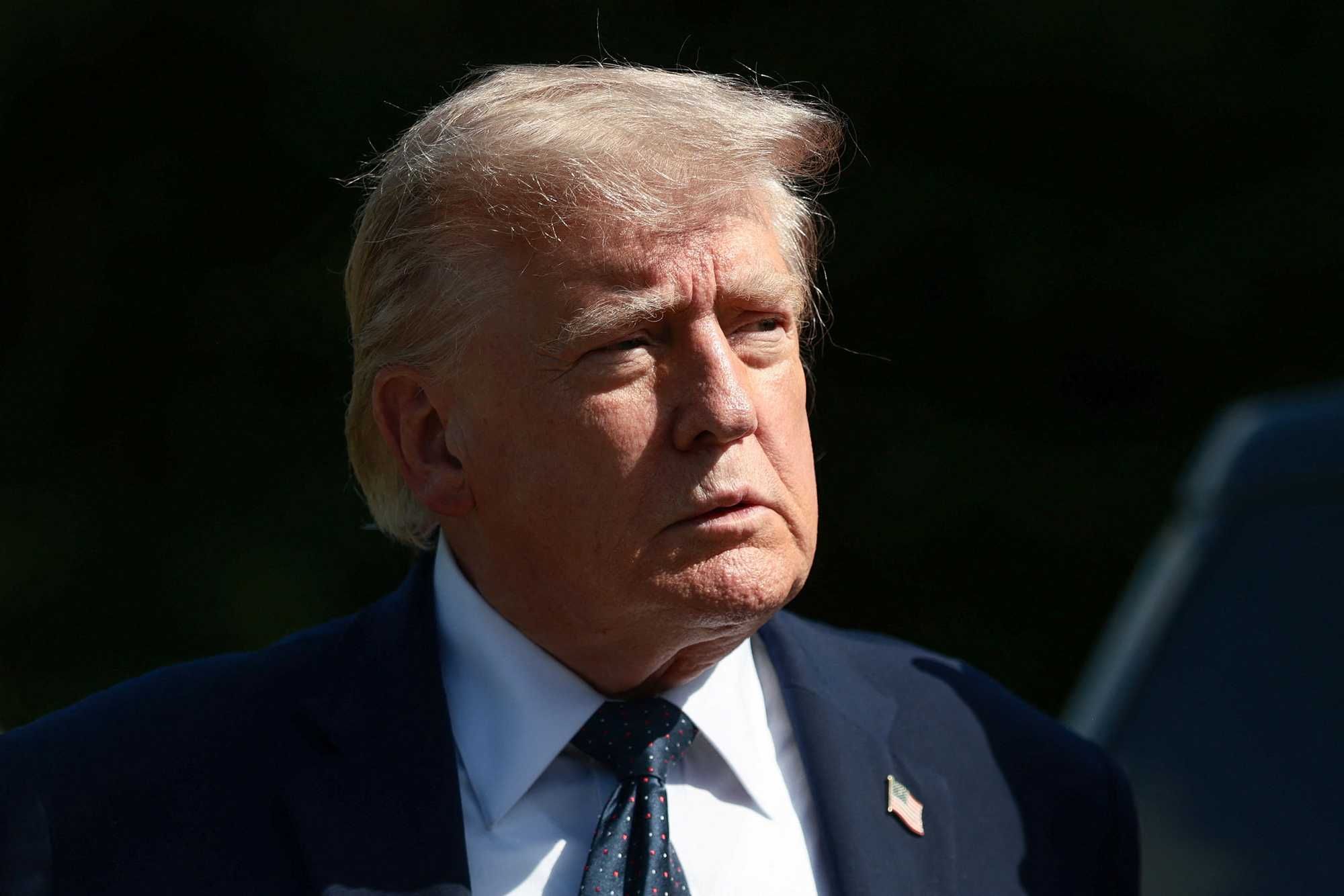
U.S. President Donald Trump arrives to attend the G7 Summit, in Evian-les-Bains, France, June 15, 2026. REUTERS/Evelyn Hockstein
A Politico analysis argues that Trump's second-term foreign policy signifies a fundamental departure from his nationalist messaging, undermining his political brand and effectiveness on the worldwide stage.
The piece contends that Trump, who built his political identity around nationalist principles—particularly his 2016 endorsement of Brexit—has lost sight of the power of national sovereignty and patriotism in other countries. During his first campaign, Trump positioned himself as "Mr. Brexit," championing the principle that nations ought to prioritize self-determination over international institutions.
In his second term, however, Trump has repeatedly attempted to override other nations' sovereignty through aggressive economic and military pressure, failing to recognize that the same nationalist sentiment he once championed would provoke resistance rather than compliance. His strategy of bullying and coercion has backfired consistently:
The analysis notes that even Trump's allies on the global right have grown critical. French far-right politician Jordan Bardella publicly rejected Trump's backing, describing the current administration as "extremely unsteady and constantly shifting" and comparing U.S. actions to those of an empire rather than a nationalist ally.
The piece identifies a key strategic change: Trump has obscured the distinction between legitimate nationalist politics—prioritizing national identity over international institutions—and unilateral American imperialism that seeks to impose American will globally. This confusion has weakened his standing with international right-wing movements that formerly admired him, the Politico piece argues.
Trump's strong-arming has succeeded primarily in economically dependent nations like Argentina, Honduras, and Venezuela, but has proven ineffective against stable democracies with great national pride. The example of former Canadian Prime Minister Stephen Harper, who declared willingness to "impoverish the country" rather than accept annexation, illustrates how patriotic sentiment transcends partisan politics.
The report states that Trump may have permanently lost the political clarity that defined his "Mr. Brexit" era, possibly opening space for alternative nationalist leaders in both American parties who can more accurately understand the universal power of national sovereignty and pride.