The president who once said space wasn't important now wants to remake it in his image
31 March
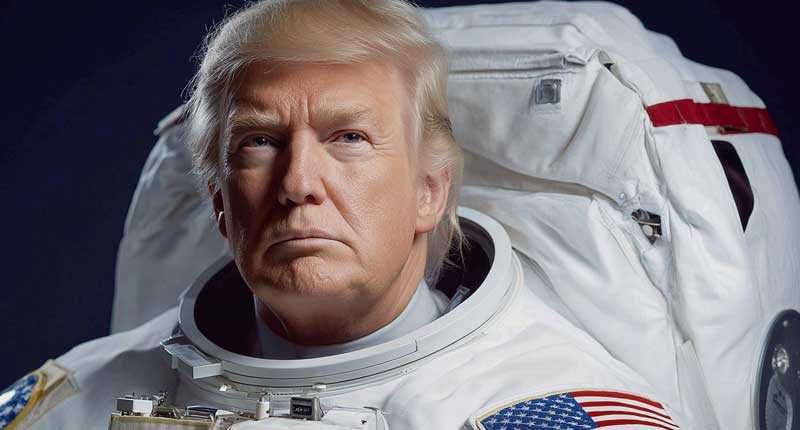
Illustration of Donald Trump as an astronaut (Roxanne Cooper/MidJourney)
President Trump is positioning the upcoming Artemis II moon mission as a potential centerpiece of his second-term legacy, according to a New York Times report by Peter Baker. The mission, scheduled to launch this week, will send four astronauts farther from Earth than any humans have traveled since the Apollo program ended more than 50 years ago.
Trump's enthusiasm for space exploration marks a dramatic reversal from his 2015 campaign stance. When asked about space during a New Hampshire campaign stop, Trump dismissed the subject, saying: "Right now, we have bigger problems — you understand that? We've got to fix our potholes." By the time he entered office, however, he had embraced space exploration as integral to American greatness, and no president since Kennedy and Johnson has pushed NASA as aggressively.
Trump's ambitions extend well beyond Artemis II. Shortly after Jared Isaacman became NASA administrator in January, Trump called to ask about Mars missions and nuclear rockets, inquiring: "Are we doing something in the 2028 window for Mars? What do you think about the nuclear rocket?" Isaacman indicated that Trump envisions sustained lunar presence and infrastructure rather than brief visits. Trump emphasized: "We better be doing more than getting rocks this time."
Trump's public attention to the Artemis II launch has been notably limited. Though the four astronauts were seated in the gallery during his February State of the Union address, Trump did not acknowledge them or mention the mission. He has said little about it in recent days despite the launch's imminence.
Trump's space agenda faces fiscal constraints. The Trump administration proposed cutting NASA funding by 24 percent last year, a reduction that would have terminated more than 40 missions. Though Congress protected the Artemis program through budget legislation, nearly 4,000 NASA employees are departing through federal workforce reductions.
Questions remain about Trump's sustained commitment to the long-term program. Retired astronaut Cady Coleman expressed concerns about losing experienced personnel, while Apollo 17 moon walker Harrison H. Schmitt stressed the importance of presidential leadership. Schmitt noted: "You have to have the White House and the president acting as the spokesman for it. There's just no question about that."