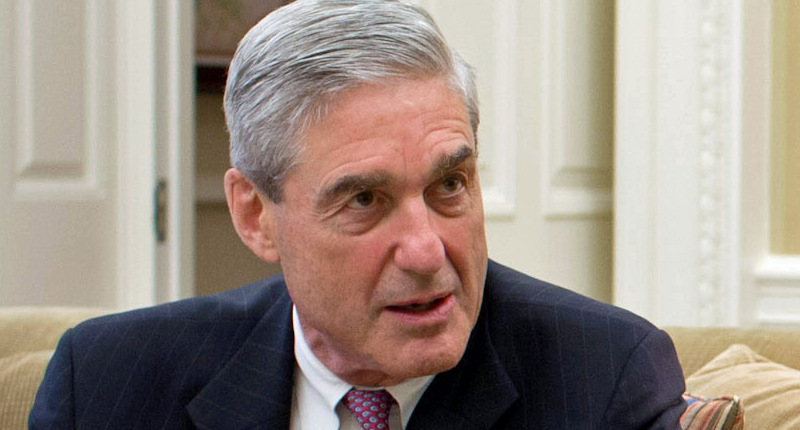
Former FBI Director Robert Mueller, who led the high-profile investigation into Russian interference in the 2016 presidential election and potential coordination between the Trump campaign and Moscow, passed away Saturday, prompting an immediate and inflammatory response from President Donald Trump on his Truth Social platform.
Mueller, 79, had served as the FBI's director from 2001 to 2013 under both Republican and Democratic administrations. He was appointed special counsel in May 2017 to investigate Russian meddling in the 2016 election and potential obstruction of justice by Trump. The investigation lasted nearly two years and resulted in the Mueller Report, which detailed extensive Russian interference efforts and numerous contacts between Trump campaign officials and Russian operatives, though it stopped short of making a prosecutorial judgment on obstruction charges.
Mueller was born in New York City and graduated from Princeton University, where he studied science and mathematics. After college, he volunteered for the United States Marine Corps during the Vietnam War, serving as an officer and spending a year recovering from a knee injury before deploying to combat. He was wounded in action and received a Bronze Star for his service. After leaving the Marines, Mueller attended law school and built a distinguished career in law enforcement, serving as a federal prosecutor and later as head of the FBI's Criminal Division before becoming director.
The Mueller Investigation
Mueller's special counsel investigation, formally titled the "Investigation into Russian Government Efforts to Interfere in the 2016 United States Presidential Election," examined whether the Trump campaign coordinated with Russian interference efforts and whether Trump obstructed justice by interfering with the investigation. The probe resulted in multiple indictments, including those of Trump's former campaign manager Paul Manafort, national security advisor Michael Flynn, and Trump's personal lawyer Michael Cohen.
The 448-page Mueller Report, released in April 2019 with significant redactions, found that Russia conducted a "sweeping and systematic" interference campaign aimed at helping Trump's candidacy. It documented over 100 contacts between Trump campaign officials and individuals with ties to the Russian government. However, Mueller stated that while his investigation "did not establish" that members of the Trump campaign "conspired or coordinated" with the Russian government, it also did not exonerate Trump on obstruction charges. Mueller noted that while the evidence did not compel an outright prosecution, it presented difficult questions about whether Trump had obstructed justice through his actions, including firing FBI Director James Comey and attempting to limit the scope of the investigation.
Mueller's decision not to make a prosecutorial judgment on obstruction—leaving the matter to Congress and future legal proceedings—became a point of intense political debate. Critics argued Mueller should have been more decisive, while Trump and his allies pointed to the report as exoneration.
Within minutes of news breaking of Mueller's death on Saturday, Trump posted on Truth Social: "Robert Mueller just died. Good, I'm glad he's dead." The inflammatory remarks immediately drew sharp criticism from across the political spectrum.
Ed Krassenstein, a prominent liberal political commentator with over 1 million followers on X, responded swiftly to Trump's post. "This is disgusting and despicable," Krassenstein wrote. "Trump literally just celebrated Robert Mueller dying. Mueller did so much good for America."
Ken Dilanian, a justice and intelligence correspondent for MS NOW, highlighted the contrast between Mueller's military service and Trump's Vietnam War history. "In an era when many young men – including President Trump – were trying to avoid serving in Vietnam, Mueller not only volunteered for the Marines after graduating from Princeton – he spent a year waiting for an injured knee to heal so he could serve," Dilanian wrote on X. "I have always found that [to] be the most compelling fact about him."
Trump received a medical deferment from military conscription in 1968, citing bone spurs in his heels. The deferment was issued by a podiatrist who rented office space from Trump's father, leading The New York Times to suggest the diagnosis may have been granted as a professional courtesy to the elder Trump.
Fox sports analyst Ryan Satin pointed to what critics characterized as a double standard in Trump's administration. "Remember when they made a database of people who said anything slightly deemed as negative about Charlie Kirk?" Satin wrote on X, referencing Trump's stated intention to revoke visas and deport individuals who make negative comments about right-wing influencer Charlie Kirk.
From Your Site Articles
- One word describes what Trump has done ›
- Trump's lawsuit against the Pulitzer Prize Board backfires with latest subpoenas ›
- The Mueller Report's menacing warning about Trump that America forgot - Alternet.org ›
- Mueller prosecutor stuns with theory on why Trump skipped his son’s wedding - Alternet.org ›
Related Articles Around the Web