How Trump’s maneuvering on his IRS suit lets him bypass judicial review: expert
18 May
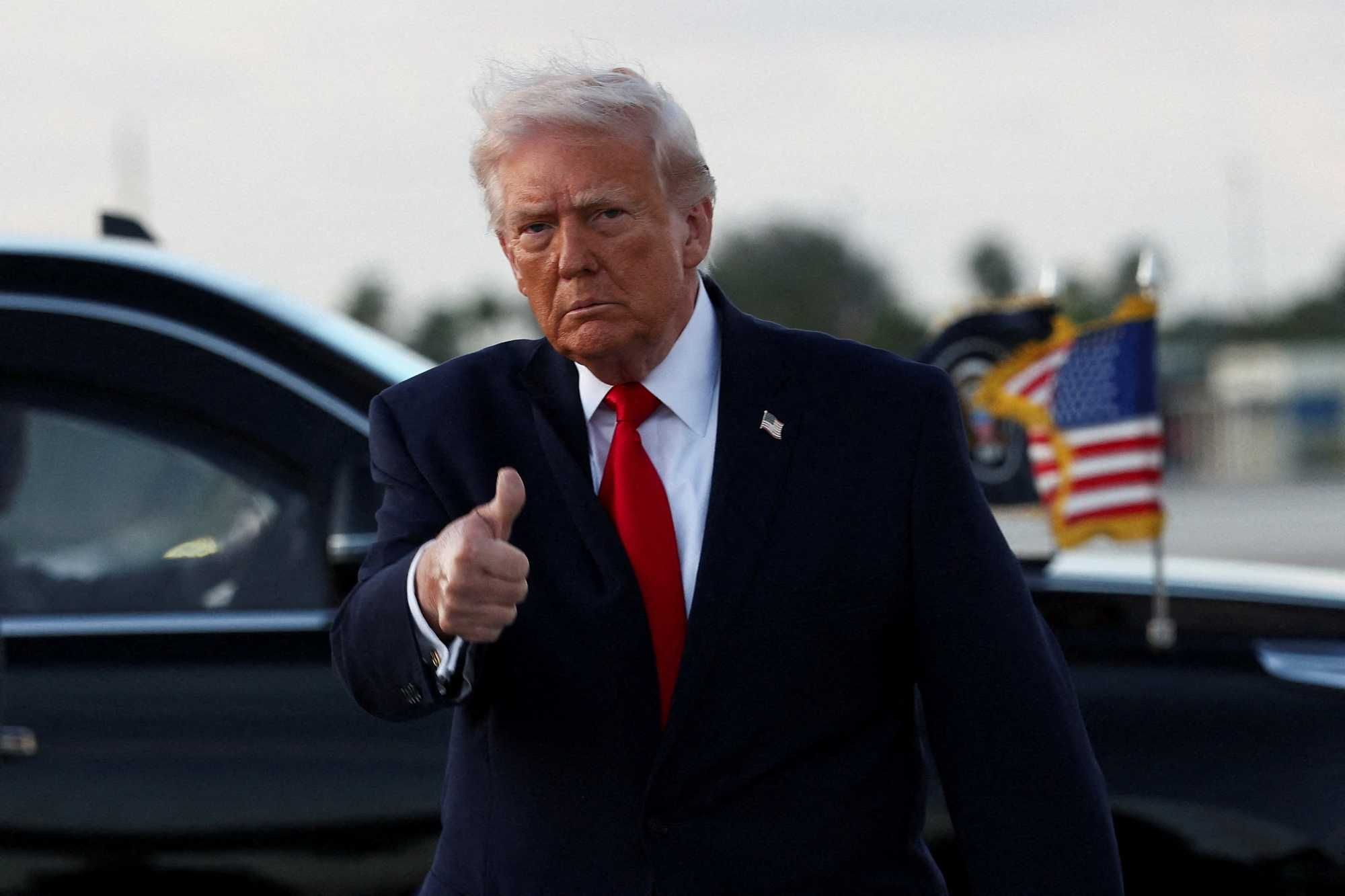
U.S. President Donald Trump gives a thumbs up as he arrives at Miami International Airport in Florida, U.S., April 11, 2026.
President Donald Trump has agreed to drop his $10 billion lawsuit against the IRS. On Thursday, Trump said he wanted the government to set up a fund that would give money to anyone who claimed that they were unfairly targeted by the previous Democratic administration.
"Upon the filing of this Notice, no judicial analysis is appropriate, and any 'subsequent order purporting to dismiss "all claims" . . . [would be] a nullity,'" the court filing says.
Lawfare senior editor Roger Parloff commented, "Trump apparently trying to get out from under any potential judicial supervision of his proposed $1.776 B slush fund settlement of Trump v. IRS."
He also pointed out a footnote in the filing, "Trump's [attorneys] say his motion to dismiss his $10 billion lawsuit against IRS is 'self-executing' —a done deal. He's just giving notice and no 'judicial action' is required. (He's saying there will be no judicial supervision of his settlement with DOJ.)"
Speaking out on it, Rep. Jamie Raskin (D-Md.) explained to ABC News that the fund is unconstitutional.
"Only Congress has the power to appropriate money, and Congress never voted on creating this $1.7 billion political slush fund at the Department of Justice, and Congress would never pass that," Raskin told host George Stephanopoulos on Sunday.
He said that if people believe they have been wronged by the federal government in any way, a fund already exists to help them. They can go to court and ask a judge.
“If these people have a valid cause of action, they should bring it to the court like every other American does, and use the system of due process, and proving things by clear and convincing evidence, or a preponderance of evidence, go and prove it. But the idea that Donald Trump can just pass it out like a pardon is absurd,” Raskin said.
Critics questioned what Trump is getting behind the scenes.
"It's against the law for Trump to sue himself [and] then settle for a huge sum. The court has the power to put a stop to these shenanigans [and] should do so," said Trump legal foe and ethics expert Norm Eisen on BlueSky.
"No president should be able to sue himself for taxpayer money, rush a settlement before a judge can throw the case out, and bypass Congress to reward political allies and January 6 rioters," added Rep. Raja Krishnamoorthi (D-Cal.).
"What we don’t yet know: What he’s getting in exchange. That said, there’s every reason to believe we’ll soon learn the details of the deal and the $1.7 billion slush fund," wrote MS NOW's Steve Benen.
“Trump’s claim that he would “drain the swamp” is a cosmic joke. His administration is an ongoing shakedown of the American people," wrote Mona Charen in a post on The Bulwark.
Legal analyst Benjamin Kabak took a screen capture of the breaking news alert on the matter from the New York Times. Their alert read, "President Trump withdrew his $10 billion lawsuit against the IRS, in an apparent effort to effectively settle the case." Ben responded, "The words you want are 'corrupt, self-dealing,' not 'apparent.'"