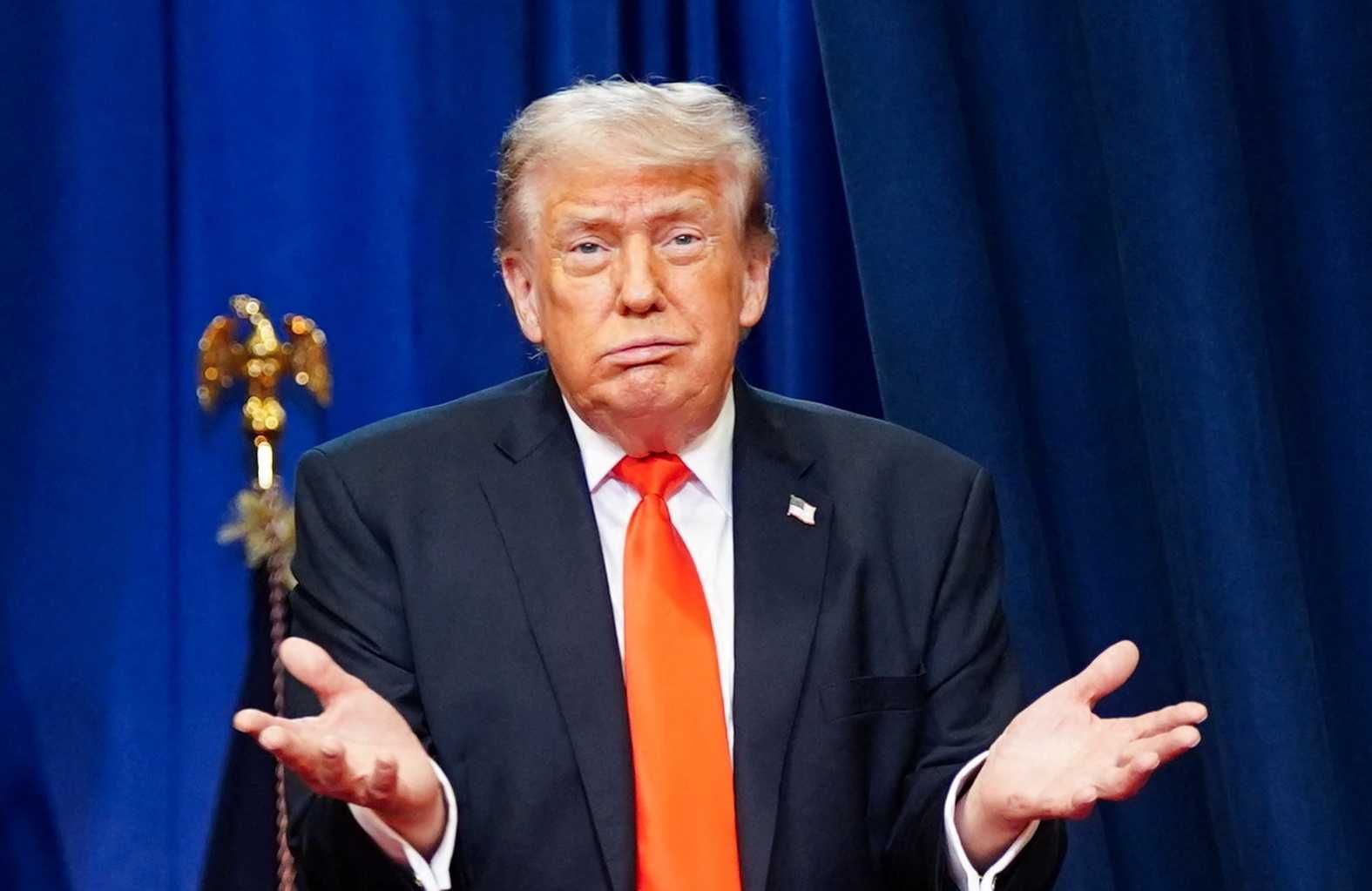
U.S. President Donald Trump gestures during an event at The Villages Charter School at The Villages, Florida, U.S., May 1, 2026. REUTERS_Nathan Howard
In August 2025, President Donald Trump took the “unusual” step of making the U.S. government one of the largest shareholders in a major tech company by buying a 10 percent stake in Intel. While many questioned the move, with critics — including conservatives — noting that it was a blatantly “socialist” policy, Trump argued that he “should have asked for more.” On Friday, however, that claim was tested when the company’s stock cratered, slashing the Commerce Department’s Intel holdings by over $10 billion in a single day.
“I hope U.S. Treasury sold at the top,” remarked Marc Short, former Chief of Staff to Vice President Mike Pence. According to analysts, no Treasury sales have been disclosed, so the American taxpayer appears to have been left holding the bag. Intel’s stock dropped by 28 percent on Friday alone, cutting the Commerce Department's 433-million-share stake by roughly $11 billion in a single session. The sudden collapse — driven by a poor Q4 earnings and guidance report in which Chief Financial Officer Dave Zinsner warned that the company will not see a positive cash flow next year — followed a month of steady downtrend. Friday’s plunge represented the company’s biggest decline on record, beating even the infamous Dot-Com bubble burst that rocked the tech industry in the late 1990s.
While the government’s stake is still technically at a profit, with the stock’s price approaching the original buy level fast, “Trump's investment in Intel is not looking quite so smart,” says Telegraph financial columnist Matthew Lynn. And as Cato Institute economist Scott Lincicome notes, "One of the many problems with the government's Intel stake — and Trump bragging about big stock gains over the summer -- is that the 'gains' are an illusion: they're only realized when the government sells, but the government can't sell." Were the government to pull out, the resulting investor panic would destroy the company.
Trump’s efforts in this regard represent a radical shift in U.S. market policy. The conservative American Enterprise Institute calls Trump’s strategy “venture socialism,” warning that government investment will weaken targeted companies and result in the need for bailouts if they fail. The Wall Street Journal described his approach as “a hybrid between socialism and capitalism in which the state guides the decisions of nominally private enterprises," calling it a "sea change from the free market ethos the U.S. once embodied.” According to A. Scott Bolden, contributor to the far-right outlet NewsNation, these policies have not only undercut the GOP’s conservative principles, but expand Trump’s presidential powers in a manner that is “threatening our freedoms, interfering in businesses and the free market in an unprecedented manner."