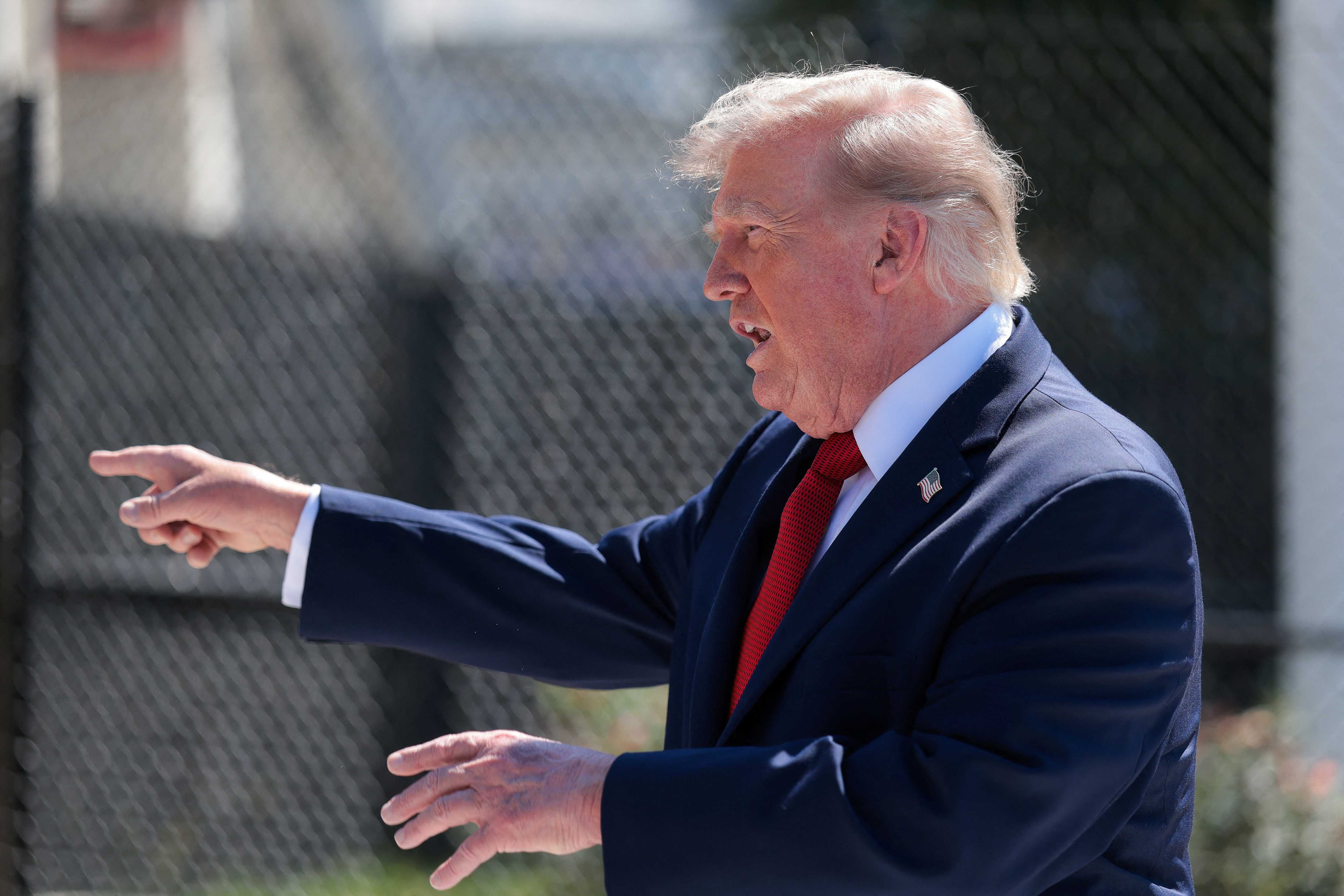
U.S. President Donald Trump at the White House in Washington, D.C., U.S., August 19, 2026. REUTERS/Kylie Cooper
President Donald Trump has suffered another legal humiliation in his ongoing effort to rig the 2026 midterm elections for his Republican Party over the competing Democrats.
"BREAKING: Federal Court REJECTS lawsuit seeking to compel Vermont to provide the DOJ with access to its complete statewide voter registration database," Democracy Docket's Marc E. Elias posted on X on Thursday. "Another victory for Elias Law Group and our clients."
He added, "DOJ is now 0-24. ELG is undefeated."
Reporting on the issue on the Democracy Docket website, the pro-voting rights organization wrote "the U.S. Department of Justice (DOJ) filed a lawsuit against Secretary of State Sarah Copeland Hanzas for refusing to turn over Vermont’s full, unredacted statewide voter registration list and related records."
Democracy Docket continued, "In summer 2025 the DOJ demanded the complete voter file — including voters’ full names, dates of birth, residential addresses, and either driver’s license numbers or the last four digits of Social Security numbers — as part of a nationwide investigation into alleged non-compliance with federal voter list-maintenance requirements under the National Voter Registration Act (NVRA) and Help America Vote Act (HAVA)."
In addition to trying to access states' voter rolls, seemingly in order to purge potential anti-Trump voters, the president has also asked the Supreme Court to suppress mail-in voting by allowing the Postal Service to deny ballots to individuals who do not appear on Trump's lists of accepted voters. Although the Supreme Court ultimately sided against Trump, the president has suggested other measures to stop Republicans from losing either chamber of Congress, including seizing ballot boxes, declaring a national emergency, sending law enforcement to polling places and imposing stricter voter ID laws.
“I think there are two things to consider,” Pooja Chaudhuri, Senior Counsel/Deputy Legal Director at Democracy Defenders Fund who specializes in voting rights as well as election law litigation and advocacy, told AlterNet in June. “One is that the election is made up of voters, and so the outcome depends on people turning out to the polls and voting. The problem is ... the chilling effect on voters.”
Chaudhuri concluded, “When voters hear that ICE may be deployed to the polls, that mail-in voting rules are changing close to the election, a lot of voters might say, ‘I'm just not going to go out and vote.’ That could happen in many different ways. There are vulnerable communities — people may come from mixed-status families — they're US citizens, but they might decide, "I'm not going to vote." So one aspect is the chilling effect on voters that all of these actions would have.”