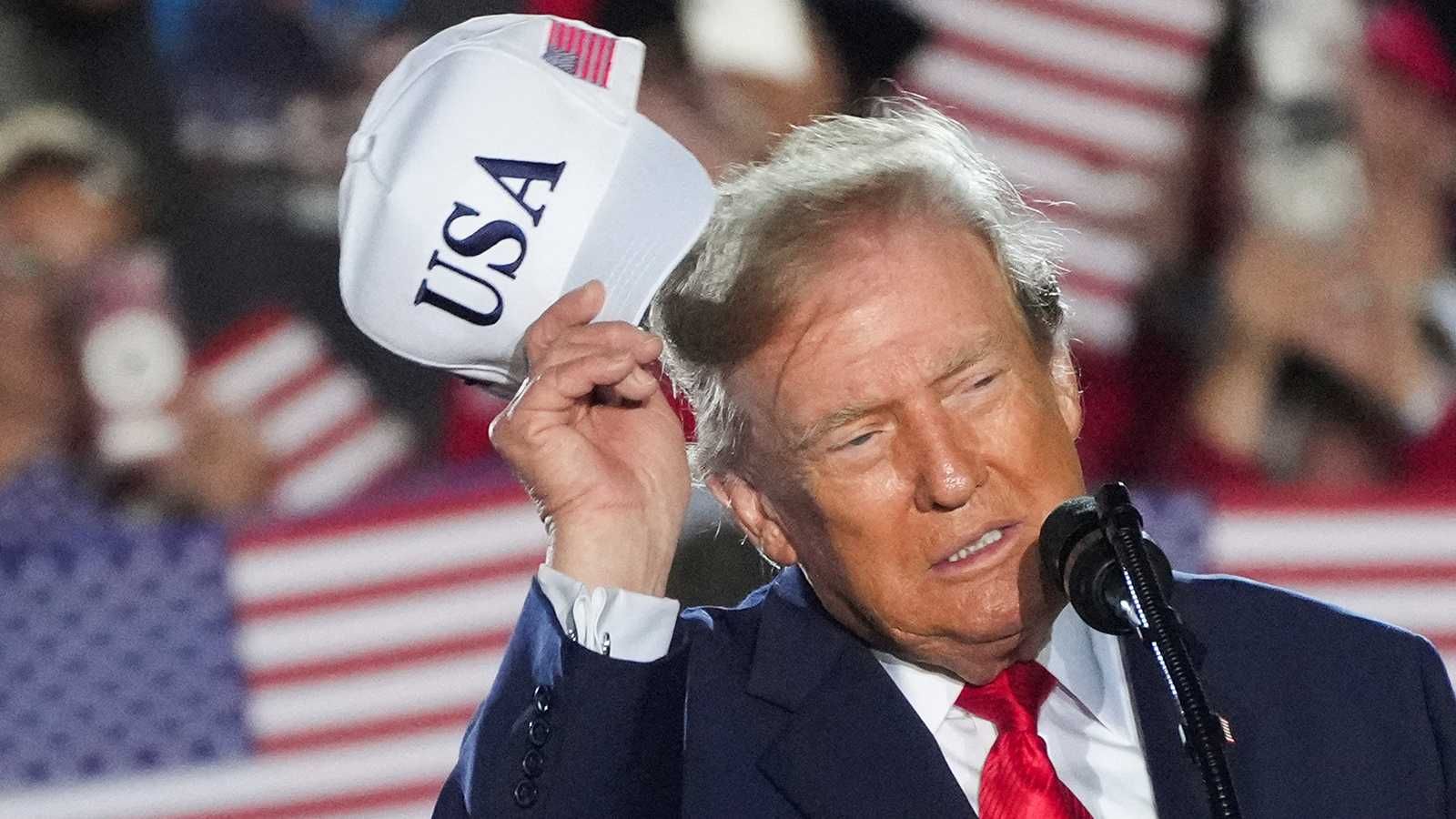
US President Donald Trump adjusts his cap as he speaks during a midterm campaign rally at Salina Regional Airport in Salina, Kansas, US, November 1, 2026. REUTERS/Nathan Howard
US President Donald Trump adjusts his cap as he speaks during a midterm campaign rally at Salina Regional Airport in Salina, Kansas, US, November 1, 2026. REUTERS/Nathan Howard
Biographer Michael Wolff wrote Monday that President Donald Trump’s political career has always rested more on performance than on his actual accomplishments. That ends Tuesday, he predicted.
The long-time researcher wrote on his Substack that Trump’s only real talent has been in dominating attention while making himself the central character in every political story. With that, he can obscure weak results, including his 2020 loss, Wolff said.
He described Trump's first year through the lens of a book by New York Times reporters Maggie Haberman and Jonathan Swan, which paints Trump's return to power as redefining and expanding presidential power in a significant way.
Wolff explained that the nail in the coffin of Trump's power was that he began believing his own spin.
"But, in fact, this performance came to rely so much on illusory accomplishments that Trump seemed to actually believe he had accomplished something," wrote Wolff. "Or, in that always fatal mistake, he came to believe his own bulls——. So much so that, by the second year, the accomplishments, or lack of, came to overshadow the performance. His power grab made him believe he was all powerful — but his performance kept highlighting what he had done, or failed to do, with his power."
When the lack of results overshadows the showmanship, an increase in showmanship won't help save Trump from disaster.
The midterm elections are a referendum on Trump’s record rather than merely his persona, whether or not he sees it that way. Wolff listed policy failures, issues like economic pressures worsened by tariffs and war, an Iran conflict that has lasted far longer than Trump promised, and a border policy that he said shifted into fear and intimidation of immigrants and Hispanic Americans as part of this referendum.
Meanwhile, he and his family are growing increasingly wealthy using his power and control over government contracts and putting his name and financial interests behind digital tokens, while offering access or perks to people who buy and hold them. It has become a significant enough issue that "government corruption" is among the top three issues in the 2026 election cycle. Ethics experts have said that Trump's ploy created a channel in which wealthy supporters and foreign investors can financially support Trump while seeking proximity to him.
Wolff goes on to criticize Trump for using the Justice Department to pursue his own personal grievances. While some of those efforts failed, Wolff said, Trump’s repeated attempts only exposed his bitterness, and it ultimately drew even more attention to his failures.
Wolff’s broader warning is that Republicans tied their political future so close to Trump that all of his failures have become their failures too. Trump's demand for the party’s obedience has forced the GOP to shoulder the burden of Trump’s incompetence, grudges, financial self-dealing and erratic behavior.
He closed by explaining that history might be fascinated with Trump's ability to draw attention, but attention will also be drawn when those voters are booing "him off the stage" on Election Day.