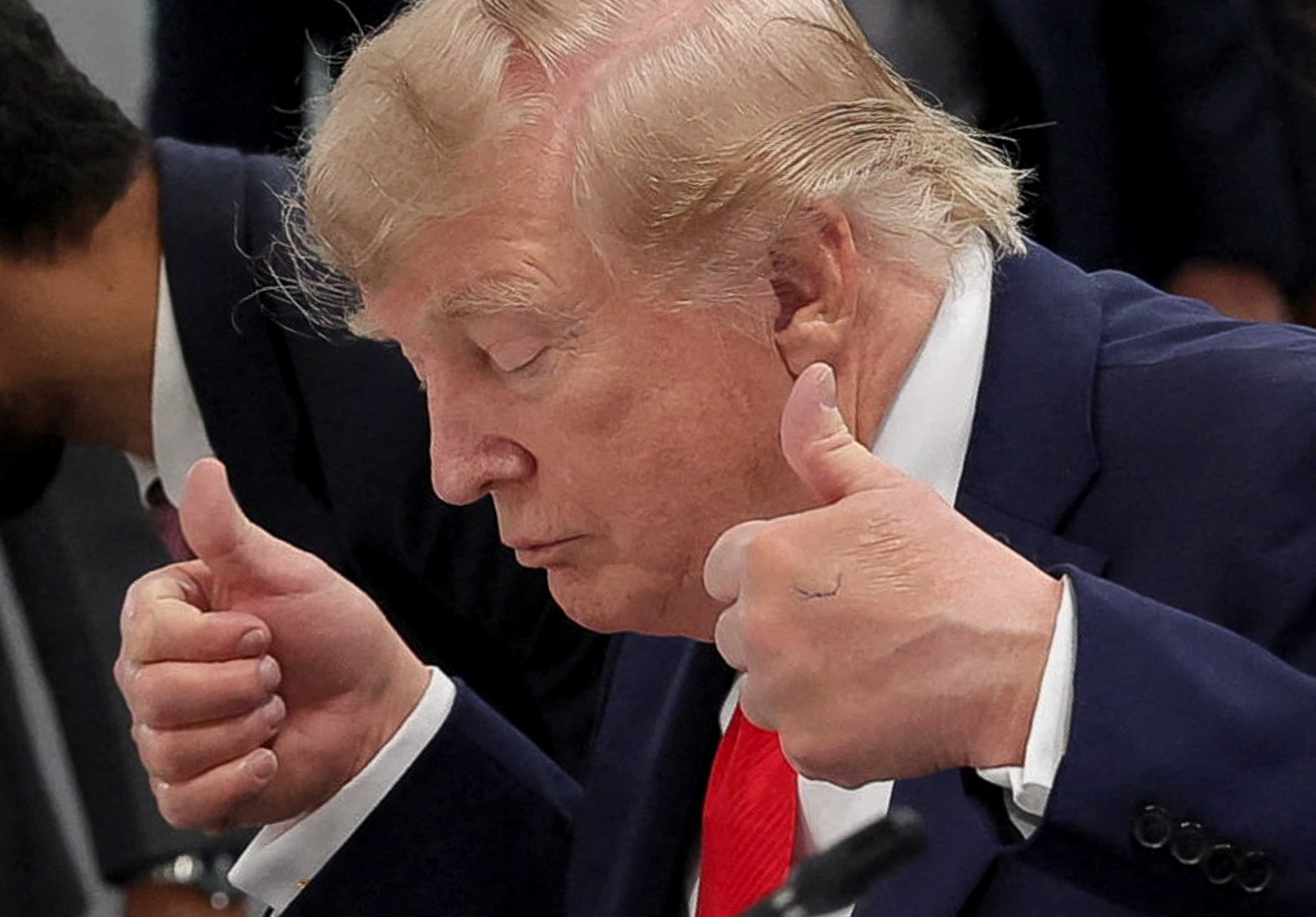
U.S. President Donald Trump gestures during a working session with G7 leaders and outreach partners on international investment partnerships at the G7 summit in Evian-les-Bains, France, June 16, 2026. REUTERS Christian Ha
The New York Times reports that China is playing chess while President Trump appears to be throwing rocks.
“One of the most important lessons from the war with Iran is one that few saw coming,” reports NY Times writers Rebecca Elliot and Keith Bradsher. “The conflict has made clear that China, which has long been highly vulnerable to oil supply shocks, has managed to transform that weakness into a surprising source of geopolitical power.”
According to the Times Chinese leaders saw the problem far in advance and began stockpiling huge amounts of oil, building extra oil refining capacity and investing heavily in fossil fuel alternatives. Then, in the early months of Trump’s entirely voluntary war on Iran, it cut off supplies of jet fuel, gasoline and diesel to neighboring countries to preserve supplies for itself.
This, reports the Times, has “big implications for the global energy industry, where oil producers like Saudi Arabia and the United States — not importers like China — have traditionally held most of the cards.”
But former U.S. officials tell the Times that it also means Chinese target and U.S. ally Taiwan is now in incredible danger due to Trump’s unilateral war.
Already dominant in solar panels, batteries and electric vehicles, China now appears to have an unparalleled position across the energy landscape. As a result, officials say U.S. threats to restrict Chinese access to oil “may no longer deter leaders in Beijing from taking aggressive steps like invading or blockading Taiwan.”
“If they come to feel that in this domain, they are less vulnerable than they and many others may have assessed previously, that is a profound and important shift in one of the key inputs to how China makes decisions about its global strategy,” said Julian Gewirtz, a former White House and State Department official who worked on China issues in the Biden administration.
While Trump was cracking down on renewable energy alternatives to fossil fuel in the U.S., China was pairing up its massive oil reserves and refining capacity with its ability to pound resources into new fuel alternatives, allowing the country to “slash oil purchases by 23 percent in the first six months of the war with Iran” compared with the same period the year before, according to customs data. Meanwhile, other countries — many of them U.S. allies — still heavily rely on Middle East crude oil. This leaves them either with less access to oil or tottering on bankruptcy to buy it at higher global prices.
China was not even internationally recognized as a major global player in oil exports — so sudden ability to throttle oil imports “caught nearly everyone in the oil industry by surprise,” reports the Times.
“This is a power that nobody thought China had,” said Erica Downs, a senior research scholar at Columbia University’s Center on Global Energy Policy. “Going forward, it’s going to be really interesting to see: What does China do with this newfound power?”
And China is already using its upper hand to deftly maneuver exports away from U.S. allies like Australia and the Philippines this spring, reports the Times.