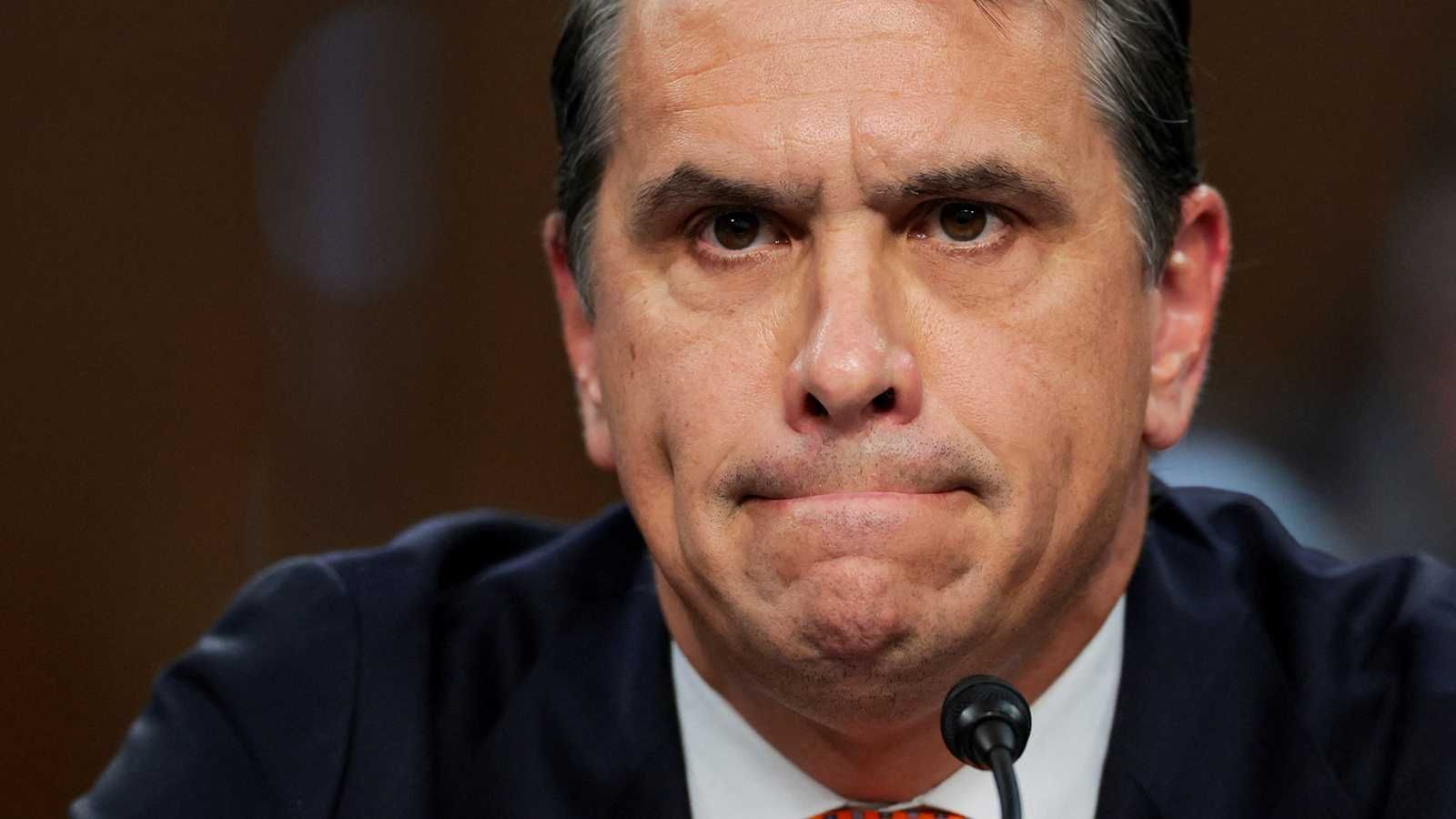
Sen. John Cornyn (R-Texas) on Wednesdya cornered President Donald Trump's nominee to be attorney general over the "weaponization" slush fund that the Justice Department and White House tried to set up as part of a settlement against the IRS.
Cornyn was defeated in his Republican primary last month by Trump-endorsed Ken Paxton, despite Cornyn's strong pro-Trump voting record.
Blanche has maintained for the past several weeks that the fund is "dead" and that would not be created. The problem, Cornyn said, is that the agreement that Blanche and Trump came to about the IRS would still establish the fund.
After Blanche asserted the fund was "moot," Cornyn asked, "Well, would refer you to the settlement agreement. Do you happen to have a copy of that in front of you?"
Cornyn read the language verbatim from page four of the agreement: "This settlement agreement can be modified, may be modified only upon the written agreement of the parties. Has there been a written agreement of the parties to modify the settlement fund?"
Blanche said that the fund was not going forward, so there is no modification.
"Well, so the settlement agreement remains as it was originally. But I hear what you're saying is it — is the settlement agreement enforceable as a contract by the parties?" he asked.
Blanche said that it was and would be considered an "enforceable document."
"So, I suppose if President Trump's counsel sought to enforce it, they potentially could," said Blanche.
Cornyn asked if that also meant the weaponization fund provision. Blanche said they could try to enforce it, but that they couldn't force the DOJ to move forward with the fund.
"They could potentially say that, I suppose, that we breached by not moving forward. They haven't done that. And I'm not aware that they're planning on doing that. Like I said, senator — and Senator [Dick] Durbin talked about this — but I have talked extensively with with you and other colleagues about potentially," said Blanche, claiming this had already been questioned.
"But just to be clear, the president of the United States, who was the plaintiff in this lawsuit, has not agreed in writing to delete the weaponization fund. And there's no guarantee that he or one of the other plaintiffs might raise that issue by way of a lawsuit and a breach of contract lawsuit in the future?" Cornyn asked.
Blanche said that Trump has "no power over the fund" and that only the "five commissioners" would control it. He said that they could certainly litigate it.
Cornyn then dragged out a large cardboard with the words of the agreement between Trump and the U.S. government. He asked if the agreement would "releaseparties or people who were notparties to the lawsuit?"
Blanche said "no."
"Well, it says here that claims asserted by defendants or any of the plaintiffs or related or affiliated individuals, including, without limitation, family or others filing jointly or parties, including trusts, parent, sister or related companies, affiliates or subsidiaries. They weren't a party to the lawsuit, were they?" Cornyn asked.
"The only parties that were — that had any release, um, as respect to any potential audits, even if they existed, were the plaintiffs in the lawsuit," Blanche replied.
Blanche then said that it wasn't he who spoke with the president about the matter but others in the DOJ. He then followed up, saying that he did speak to the president, but only after there was a lawsuit over the "settlement."
Ultimately, Cornyn didn't buy it.
"Well, I hear what you're saying, but I certainly don't read that in the agreement," he closed.