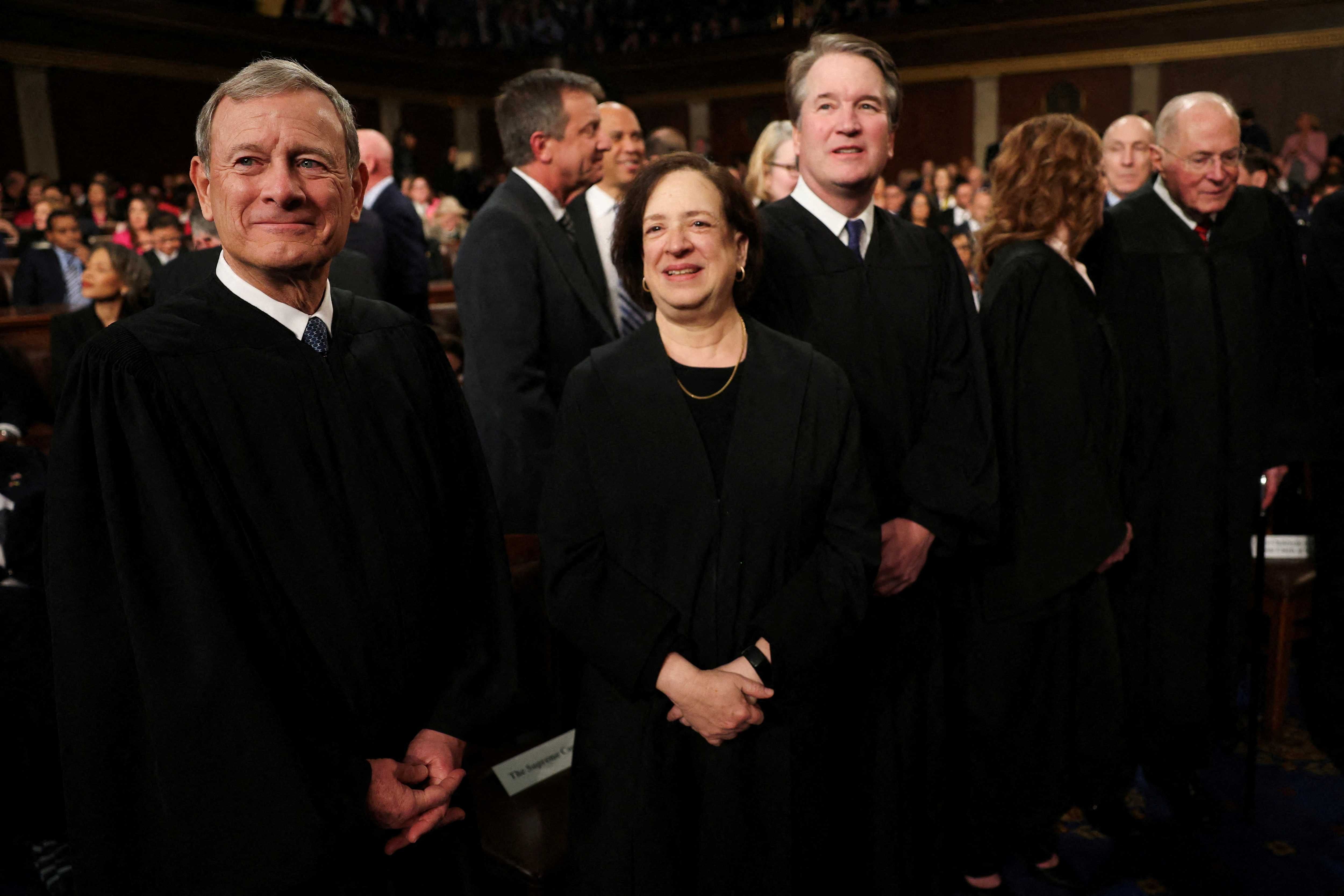
A ruling from the U.S. Supreme Court Thursa likely made life more difficult for the Department of Justice, legal experts say.
Abouammo v. United States is a case that dealt with a former Twitter employee who passed private information of Saudi dissidents to a staffer of Crown Prince Mohammed bin Salman. But one detail in the decision decided it on a technicality.
"We hold that a defendant charged with violating [18 U.S. Code § 1519] must be tried in the district where the falsification occurred; he cannot be tried in a different district where the investigation was located," wrote Justice Elena Kagan, writing for the majority.
As MS NOW legal analyst Barbara McQuade said on BlueSky, "Today’s SCOTUS decision in Abouammo could derail DOJ’s 'grand conspiracy' probe in Florida into alleged conduct that occurred in D.C. Crimes must be charged where they occurred, not where they were investigated."
Slate legal analyst Mark Joseph Stern commented that it could impact the case involving the Rhode Island hospital, which refuses to turn over the personal details of patients being treated for gender issues. That case is currently in Texas, not Rhode Island.
"This may have implications for the Trump administration's unlawful persecution of Rhode Island Hospital for treating transgender minors. DOJ has conducted this 'investigation' from Texas to get the assistance of a lunatic MAGA judge. But it's not at all clear DOJ can charge the hospital in Texas," said Stern.
The libertarian-leaning Cato Institute submitted an amicus brief in support of Abouammo’s cert petition, arguing that "the Government’s plea for effectively unbounded prosecutorial forum shopping is incompatible with the original meaning of the Constitution’s provisions limiting venue (where the trial occurs) and vicinage (who sits on the jury). The Ninth Circuit’s ruling invites prosecutors to weaponize these rules to select favorable jury pools. Furthermore, by decoupling a trial from its locale, the government strips the local community of its voice and grants prosecutors the power to effectively skew the outcome of a case before a single juror is even seated."
Wendy Norris, associate professor of information science, asked legal analyst Chris Geidner whether "the Abouammo ruling have implications for an eventual prosecution of say … stealing classified documents from the White House, where the initial crime occurred, rather than where the documents were stored?"