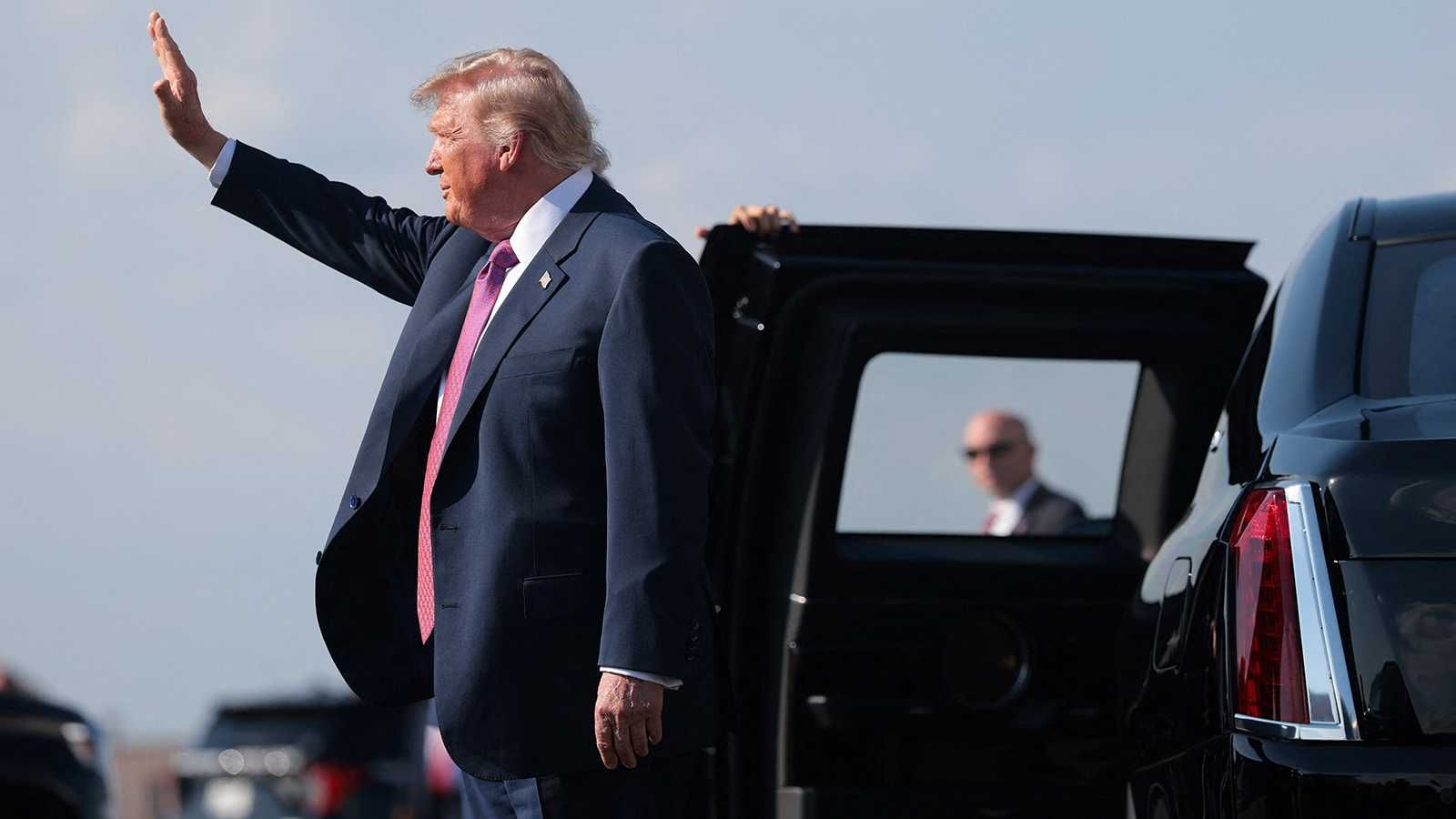
U.S. President Donald Trump waves to supporters after disembarking Air Force One at Ellington Field Joint Reserve Base in Houston, Texas, U.S., August 27, 2026. REUTERS/Kylie Cooper
U.S. President Donald Trump waves to supporters after disembarking Air Force One at Ellington Field Joint Reserve Base in Houston, Texas, U.S., August 27, 2026. REUTERS/Kylie Cooper
President Donald Trump appears to be preparing to find a scapegoat for the possible election failures of the Republican Party. It certainly cannot be him, explained Jennifer Rubin, editor-in-chief of The Contrarian.
Trump this week reposted an anti-GOP screed that read: “I don’t think the GOP fully grasped how badly they are f—— up right now. I’m talking to people who normally have zero interest in politics who are legitimately pissed off. They’re not seeing the major reform they thought would happen and are really mad about it. I’m very worried the GOP is sleepwalking toward a midterm reckoning they don’t see coming.”
Speaking toThe New Republic's Greg Sargent for his Friday podcast, the two reacted to that post.
Trump’s own policies — tariffs, the Iran war, mounting debt and what they describe as chaos across federal agencies — are what produce the political problems confronting the GOP, the analysts argued. But rather than acknowledging that his decisions have costs, Trump is amplifying complaints that Republicans have failed him.
The new strategy Trump announced is to run a slew of ads promoting himself and his accomplishments. Essentially, he wants to defend Republicans by amplifying everything he has done to hurt the economy. Sargent said that it's an outright "self-own."
Rubin joked, "I think our work is done here, Greg. Perhaps you just have this guy on your show. He perfectly embodies the reality, which is: the Republicans have f—— up. They’ve done nothing. Now, the irony, of course, is that they’ve just deferred to Trump. And Trump’s the one who’s done nothing. Trump is the one who has raised prices with tariffs."
"Trump’s the one who started a war that no one wanted," Rubin added. "Trump is the one who has made hash out of every government agency. So, yes, on one hand, the Republicans are to blame. But they’re to blame because they have blindly followed Trump into one blind alley after another."
Trump thinks that the Republicans "slow-walked" his agenda and that failures come from Republicans not being loyal enough to him. Republicans want the midterms to focus on Congress, local candidates or attacks on Democrats; Trump instead wants an election centered on his own record.
Sargent and Rubin see a political contradiction at its center: congressional Republicans have largely followed Trump’s priorities, while Trump nevertheless treats them as the culprits for the administration’s disappointing results.
The two argued that Trump is blaming the party because he anticipates defeat and simply can't accept personal responsibility. Rubin noted the inconsistency of Trump declaring a “golden age” for the economy while boosting claims that the GOP has failed to deliver. She framed this as a preemptive effort to distance himself from a looming loss: first blame election fraud, then blame the party, but never concede that his own tariffs raised prices, his war choices created instability or his agenda alienated voters.
Trump’s message could hurt Republicans even before Election Day. When he tells reporters that his supporters are “angry at Republicans” but “not angry at me,” the conversation interprets this as a signal to MAGA voters that Republican candidates don't deserve their turnout.
"It’s a thing of beauty that they’re going to get screwed by this too," said Sargent. "By the way, there’s another element to this that people are missing, I think. The screed from this guy that Trump amplified also said this: 'No meaningful decrease in the deficit. People are p—— off that they voted Trump into office, and then the GOP continues to slow-walk every reform people want.'"
Rubin agreed. Republicans were the deficit hawks, but over the past 25 years, it has become clear that the only presidents lowering the deficit have been Democrats.
That is an especially risky move for close Senate races in deeply Republican states such as Texas, Alaska, Iowa and Ohio, where GOP candidates depend on highly motivated Trump voters. By encouraging the belief that the party has betrayed his supporters, Trump may depress the very turnout Republicans need.
The speakers also argued that Trump’s instinctive solution, spending super PAC money on ads celebrating Trump himself, could only make things worse. With his approval ratings falling to historic lows and his standing weak on major issues, Sargent and Rubin think the Trump-centered campaign is almost an “in-kind gift” to Democrats.
It's a trap of Trump’s making. To win back alienated MAGA voters, he may have to sharpen the rhetoric and promote unpopular policies, which could further repel independents, moderates, Latinos voters and younger voters.
Still, Rubin warned Democrats against complacency even if Republicans are down. Senate races remain close, gerrymandering limits House pickup opportunities and confusion around voting rules could suppress turnout because people simply don't want to deal with it.
Regardless, Trump’s attempt to save himself by throwing his party under the bus may instead deepen the GOP’s electoral crisis.